
Loading, please wait...
LOT 1312
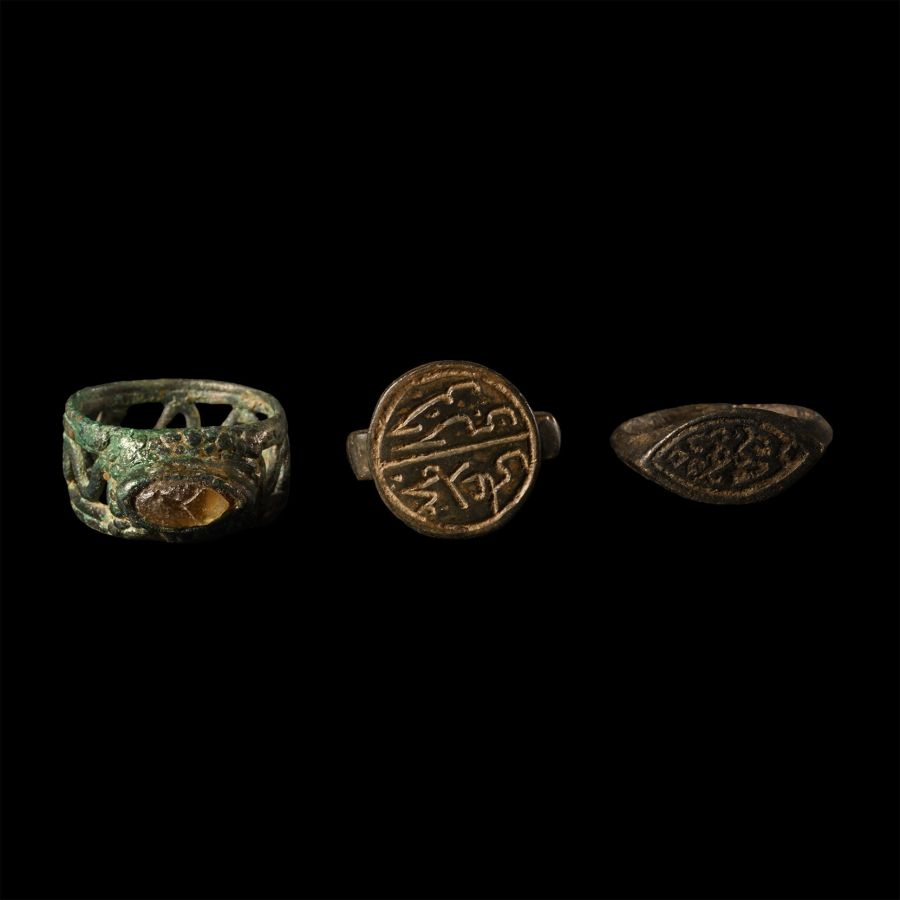
Western Asiatic Bronze Ring Group
CIRCA 14TH-16TH CENTURY A.D.
7/8 - 1 in. (19 grams total, 22-26 mm).
Comprising three rings: one with an openwork hoop and raised bezel set with a glass intaglio; one with keeled hoop and lentoid bezel with incised foliate design; one with a D-section hoop supporting a raised bezel with inscription in two lines. [3, No Reserve]
ProvenanceUK private collection before 2000.
On the UK art market.
Property of a London gentleman.
TimeLine Auctions follows a vetting process to ensure the authenticity and legality of all items, reinforcing our commitment to integrity and responsible trading. Each antiquity, antique, and coin lot undergoes thorough examination by a vetting committee of at least ten external specialists, professional trade association members, scientists, and archaeologists: Our Vetting Process
AUCTIONS:
TimeLine is a leading auction house specialising in antiquities, ancient art, collectables, natural history, coins, medals, and books. Our auctions offer museums, collectors, historians, and enthusiasts the opportunity to acquire unique and historically significant pieces.
-
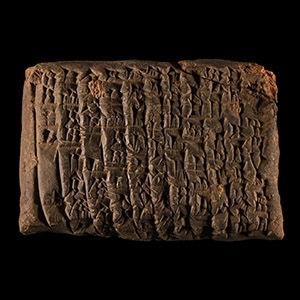
Old Babylonian Cuneiform Letter Tablet
Circa 20th-18th century B.C.Sold for (Inc. bp): £1,300
Pillow-shaped clay tablet with cuneiform text to both broad faces and one edge; chipped. 101 grams, 64 mm
Specialised collection of cuneiform texts, the property of a London gentleman and housed in London before 1992. Thence by descent to family members. Examined by Professor Wilfrid George Lambert FBA (1926-2011), historian, archaeologist, and specialist in Assyriology and Near Eastern archaeology, in the late 1980s and early 1990s. The collection is exceptional for the variety of types, including some very rare and well preserved examples. -
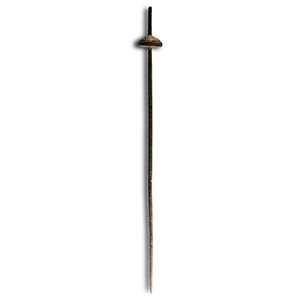
Western Asiatic Bronze Spindle Whorl on Distaff
2nd millennium B.C.Sold for (Inc. bp): £33
Distaff with spiral slot to the thicker end, separate domed whorl and tapering shank. 60 grams, 32 cm
Collected from 1969-1999. From the collection of the late Mr S.M., London, UK.
Spindle whorls are one of the most durable traces of textile craft in the archaeological record. They can be found in copious quantities and diverse types. Whorls in the shape of discs, cylinders and cones of clay, bone, stone and other more precious materials are widespread in all areas and periods, evidencing the skills of craftswomen engaged in textile production. -
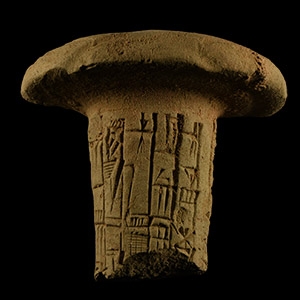
Mesopotamian Cuneiform Foundation Nail
3rd-2nd millennium B.C.Sold for (Inc. bp): £442
Conical foundation nail fragment with broad domed top, columns of cuneiform text to the shank. 322 grams, 96 mm
Acquired in London in 1995. European private collection.
Temple nails or cones were placed in the foundations of newly-built temples. Their form imitates nails or pegs and they bear inscriptions stating the name of the reigning king and regnal year, and the god(s) to whom the temple was dedicated.
