
Loading, please wait...
LOT 0219
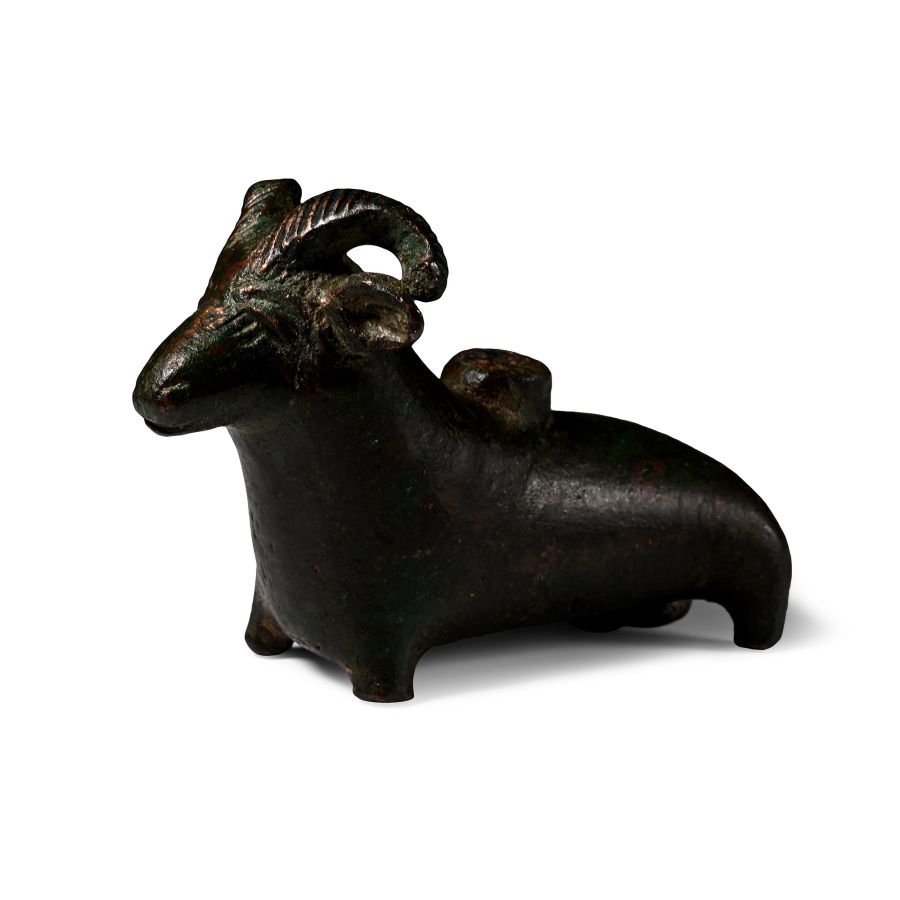
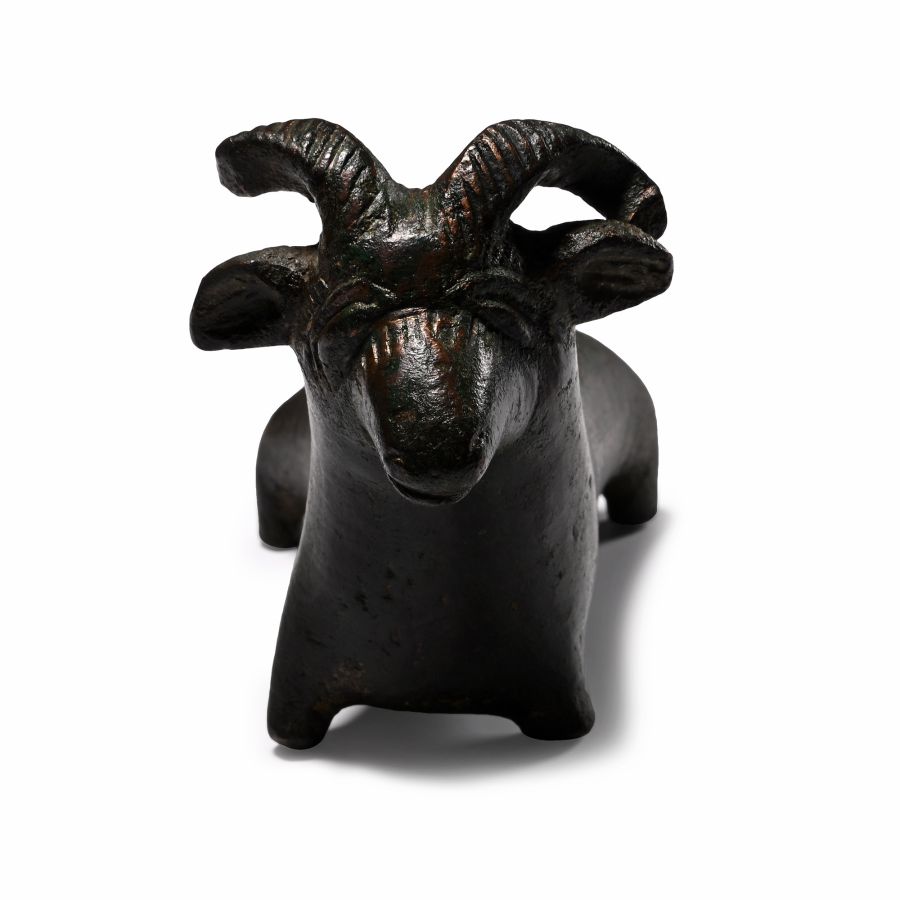
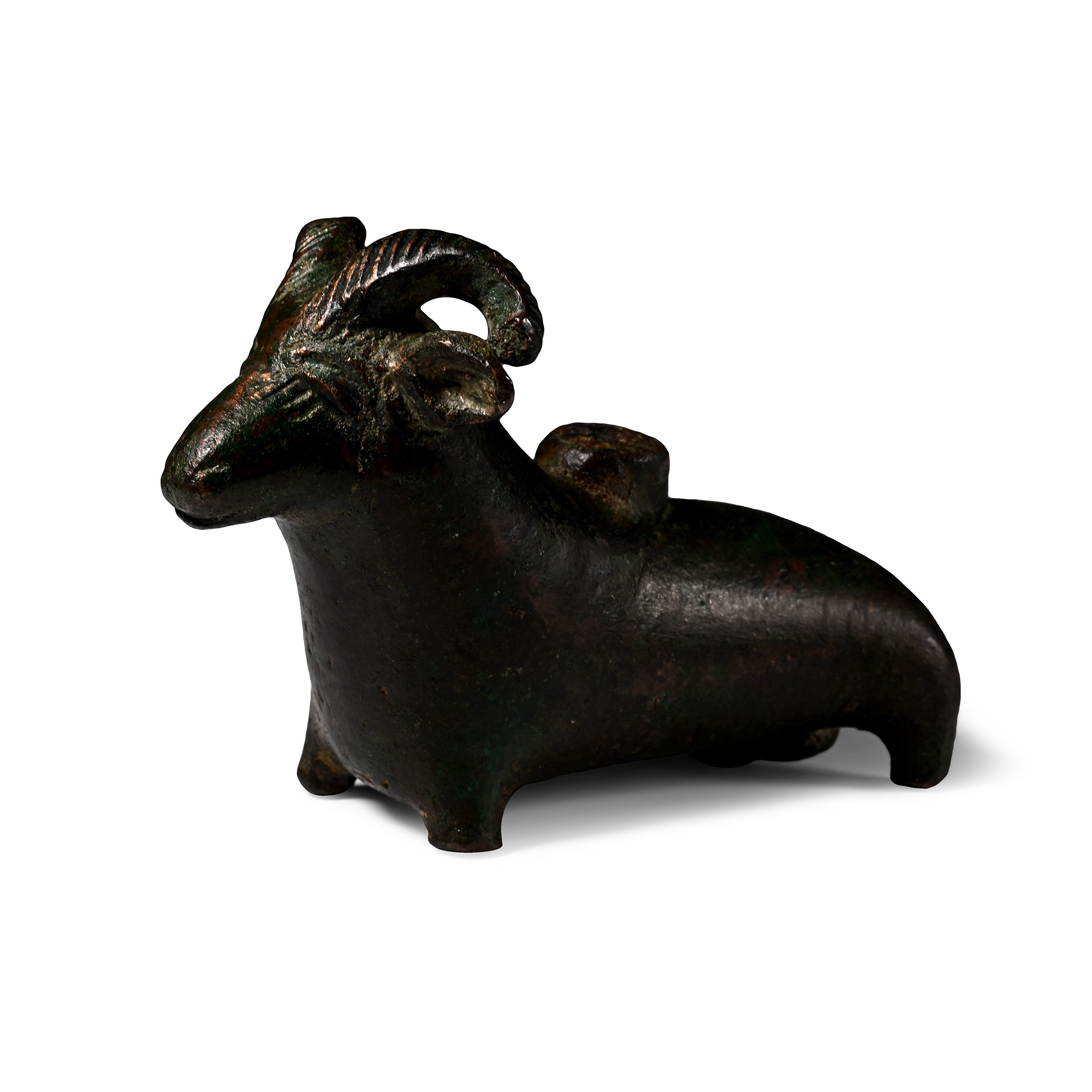
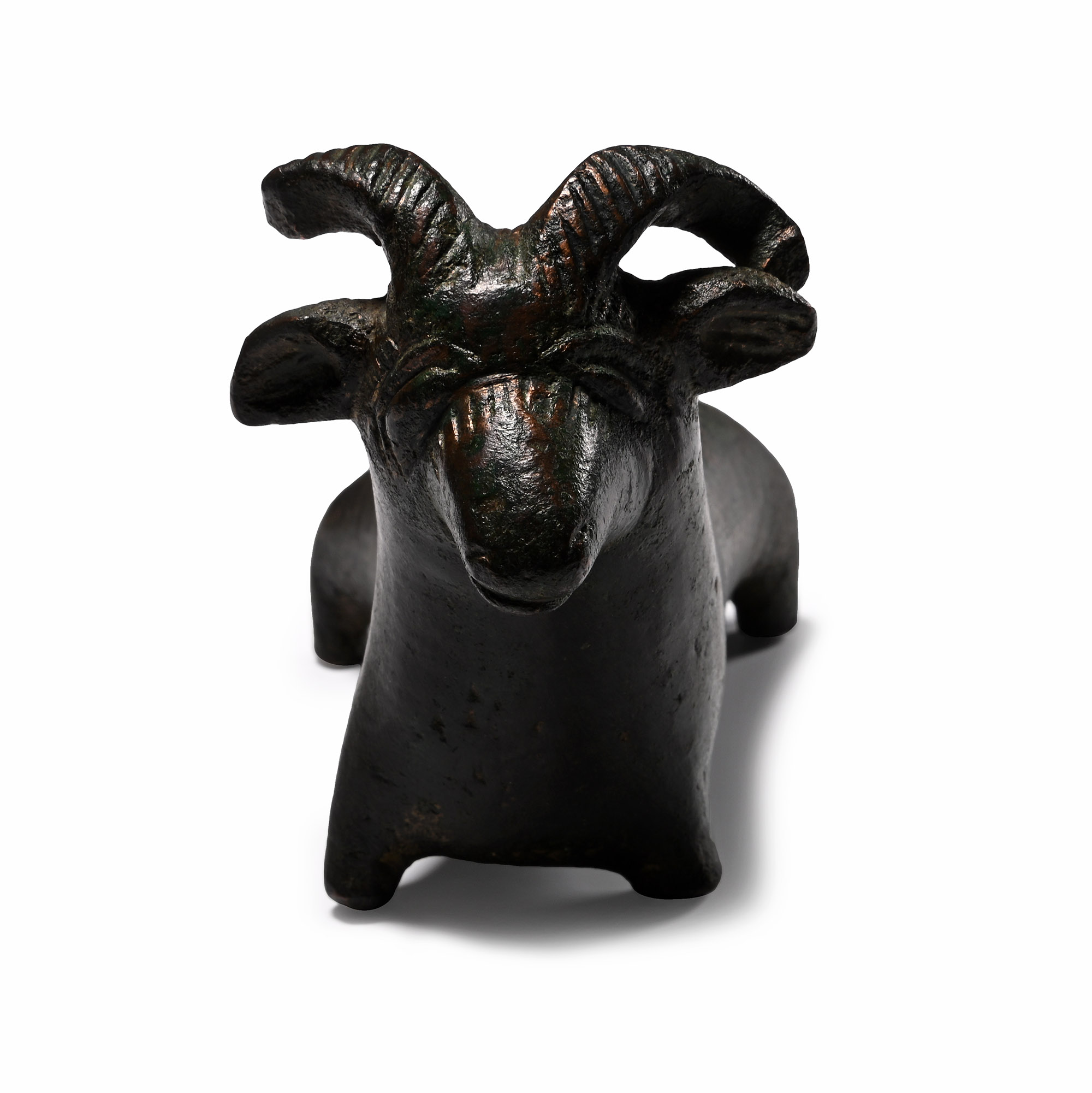
Western Asiatic Bronze Ram-Shaped Kohl Vessel
CIRCA 1500 B.C.
4 1/2 in. (425 grams, 11.4 cm).
Modelled as a stylised ram with stocky body and short legs, exaggerated head with curving horns and large ears, tubular mouth with remains of the applicator closing the opening.
ProvenancePrivate collection Dr Rudolf and Leonora Blum, Zumikon, Switzerland.
with Galerie Rhéa, Zurich, Switzerland.
TimeLine Auctions follows a vetting process to ensure the authenticity and legality of all items, reinforcing our commitment to integrity and responsible trading. Each antiquity, antique, and coin lot undergoes thorough examination by a vetting committee of at least ten external specialists, professional trade association members, scientists, and archaeologists: Our Vetting Process
AUCTIONS:
TimeLine is a leading auction house specialising in antiquities, ancient art, collectables, natural history, coins, medals, and books. Our auctions offer museums, collectors, historians, and enthusiasts the opportunity to acquire unique and historically significant pieces.
LOT 0219
Western Asiatic Bronze Ram-Shaped Kohl Vessel
Estimate £800 - 1,000€930 - 1,160 (for guidance only)$1,080 - 1,350 (for guidance only)
-
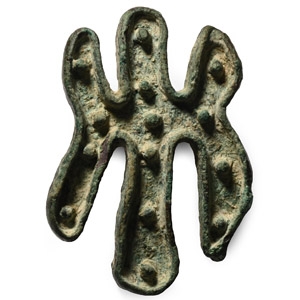
Central Asian Bronze Stamp Seal with Stylised Four-Winged God
Circa 2300-2000 B.C.Estimate: £200 - 300 (+bp*)
Opening Bid: £100
Formed as three vertical bars joined near the base; accompanied by an old scholarly note, typed and signed by W.G. Lambert, late Professor of Assyriology, University of Birmingham, 1970-1993, which states: 'Stamp Seal of Bronze 54 x 48 x 26mm This bears the shape of the design, with flat face and flat back, on which is mounted a handle of angular shape with rounded top. The piece has roughly three parallel vertical segments, which join in the middle, the whole being surrounded by a rim. Each segment has a row of dots in it: four in the two outer segments, six in the middle one, which is longer. This comes from western central Asia and dates to c. 2300-2000 B.C. It is extremely rare for its design, which may be understood as a stylized depiction of a standing four-winged god, but this is not completely certain.The piece is generally in good condition, but is a little bent.' 25 grams, 53 mm
Ex S collection, deceased, London, UK, 1990s. Accompanied by an original scholarly note, typed and signed by Professor Wilfrid George Lambert. -
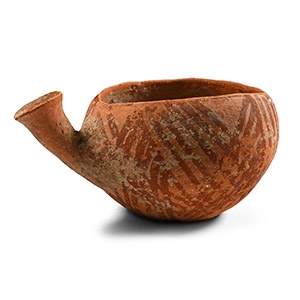
Amlash Painted Terracotta Vessel with Spout
1st millennium B.C.Sold for (Inc. bp): £208
With rounded body and narrow base, tubular spout with everted rim; the body with intersecting linear decoration. 252 grams, 14.6 cm
with Galerie Rhéa, Zurich, Switzerland. -
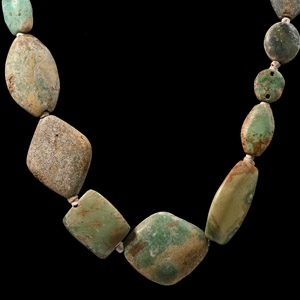
Western Asiatic Turquoise-Coloured Stone Bead Necklace
1st millennium B.C. and laterSold for (Inc. bp): £520
Restrung designer group of flat-diamond, lentoid-section tabular, and other types. 99 grams, 66 cm
From the collection of a late Japanese gentleman, 1970s onwards.
