
Loading, please wait...
LOT 1315
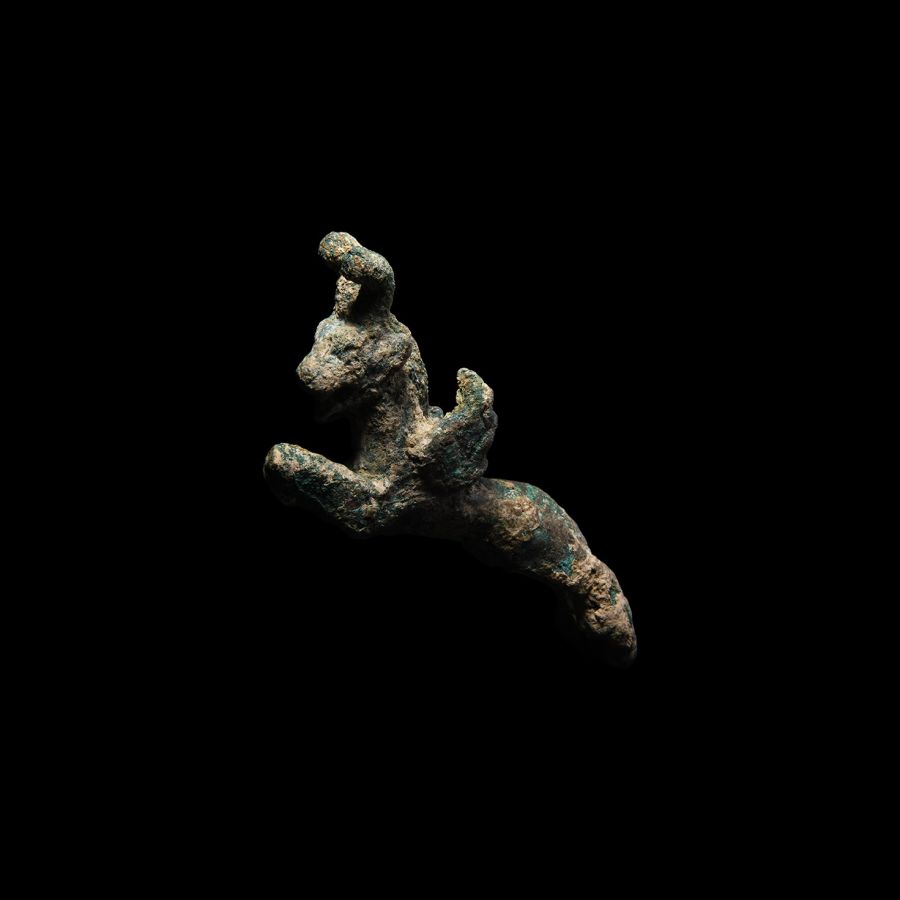
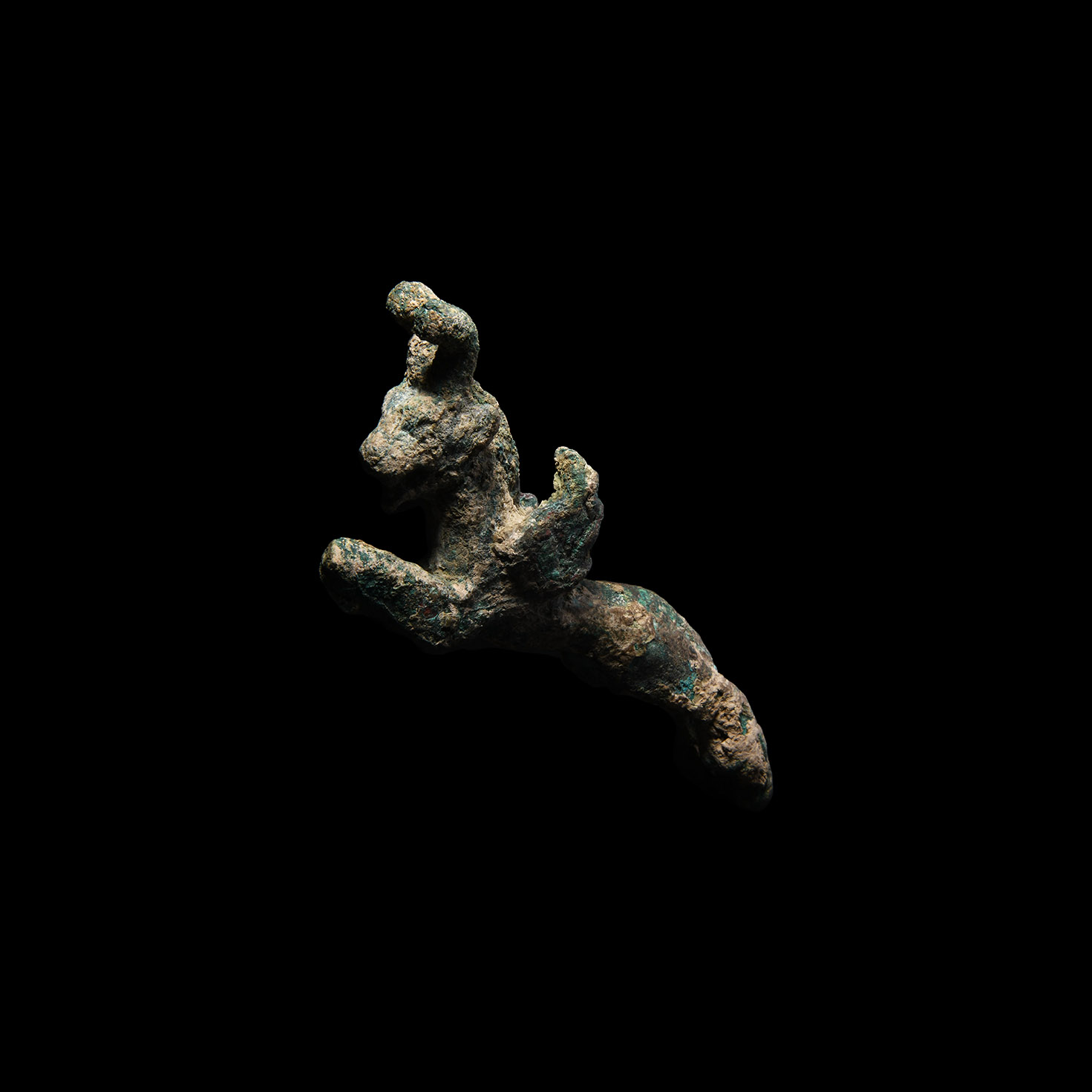
Western Asiatic Bronze Leaping Horned and Winged Lion
MID 1ST MILLENNIUM B.C.
4 5/8 in. (160 grams, 11.8 cm).
With small wings and curved horns; possibly Kushan.
ProvenanceLondon collection since the 1980s.
Property of a Canadian family.
TimeLine Auctions follows a vetting process to ensure the authenticity and legality of all items, reinforcing our commitment to integrity and responsible trading. Each antiquity, antique, and coin lot undergoes thorough examination by a vetting committee of at least ten external specialists, professional trade association members, scientists, and archaeologists: Our Vetting Process
AUCTIONS:
TimeLine is a leading auction house specialising in antiquities, ancient art, collectables, natural history, coins, medals, and books. Our auctions offer museums, collectors, historians, and enthusiasts the opportunity to acquire unique and historically significant pieces.
LOT 1315
Western Asiatic Bronze Leaping Horned and Winged Lion
Estimate £180 - 240€210 - 280 (for guidance only)$240 - 320 (for guidance only)
-
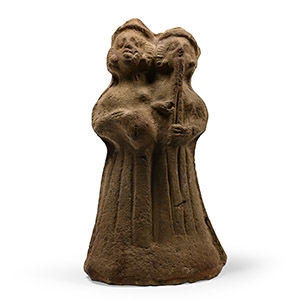
Old Babylonian Terracotta Figure of Musicians
1900-1600 B.C.Sold for (Inc. bp): £650
Moulded as two females posed side-by-side with long flared skirts, one holding a small percussion instrument and the other with a pipe raised to her mouth, each with segmented hair and conical cap, casting seams to the lateral edges, hollow underside. 116 grams, 10.5 cm
Ex Monique Sancey Collection, Neuchâtel, Switzerland. with Bonhams, 14 May 2003, no.229. European private collection. -
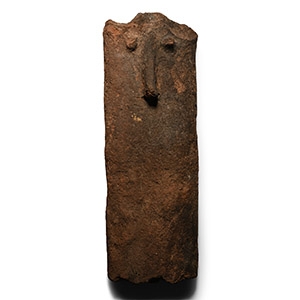
South Arabian Terracotta Face Stele
Mid-late 1st millennium B.C. or laterSold for (Inc. bp): £286
Rectangular in profile and plano-convex in section with applied triangular nose and pinched eyes; part of socket to reverse at lower end. 1.82 kg, 34.5 cm
From a collection acquired on the UK art market from various auction houses and collections mostly before 2000. From an important Cambridgeshire estate; thence by descent. -
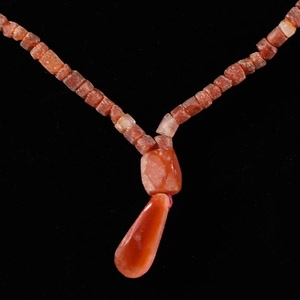
Western Asiatic Carnelian Bead Necklace String
1st millennium B.C. and laterSold for (Inc. bp): £65
Restrung group of mainly annular beads with a teardrop dangle centrepiece. 8.52 grams, 39.5 cm
Acquired 1980-2015. Ex Abelita family collection.
