
Loading, please wait...
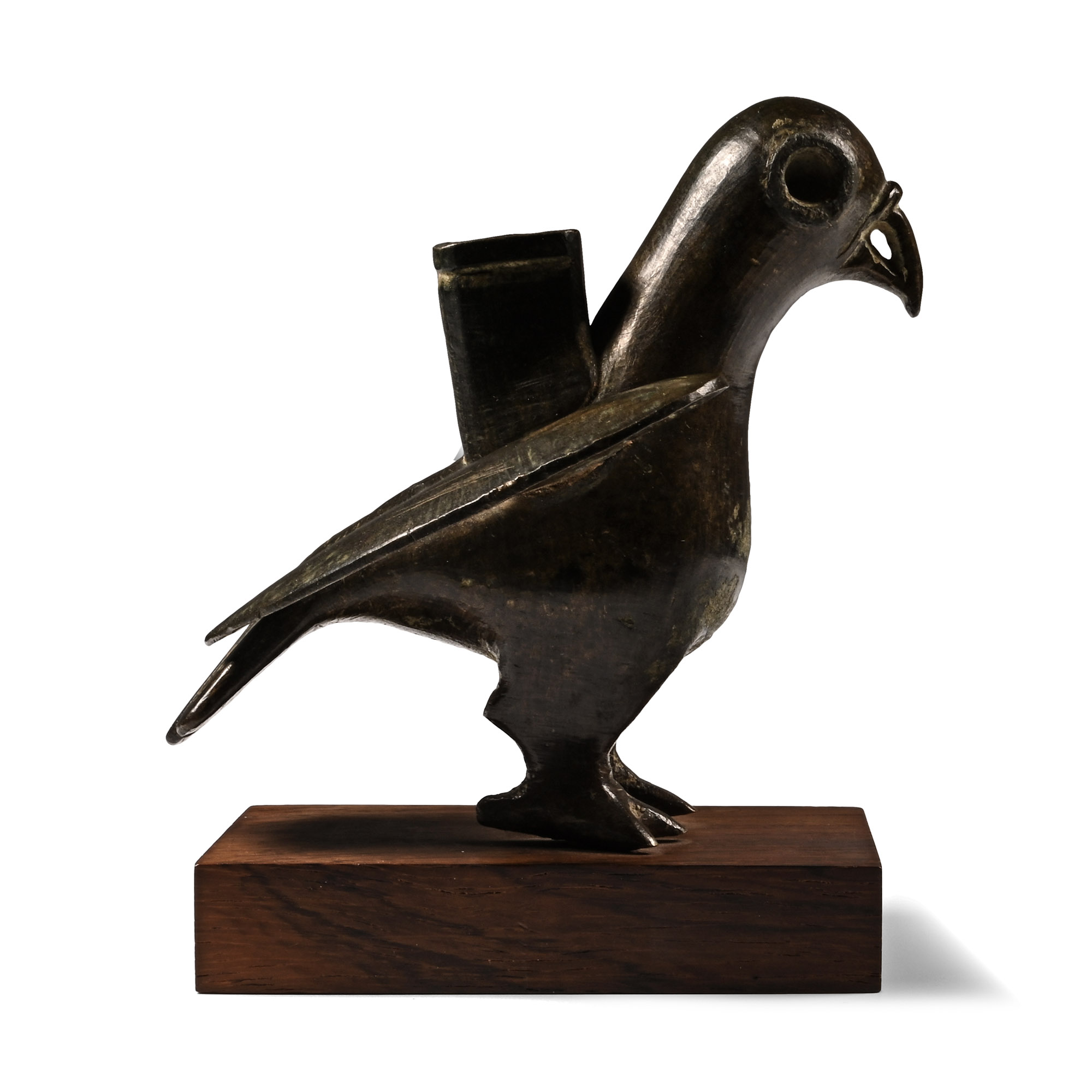
LOT 0246
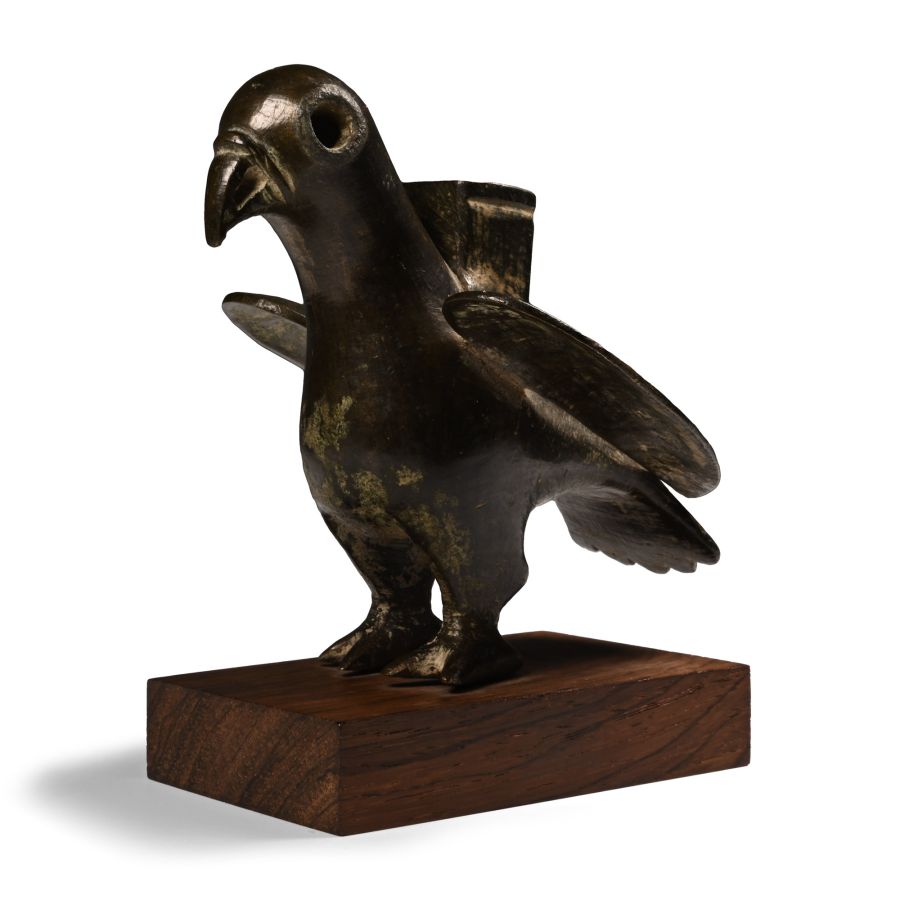
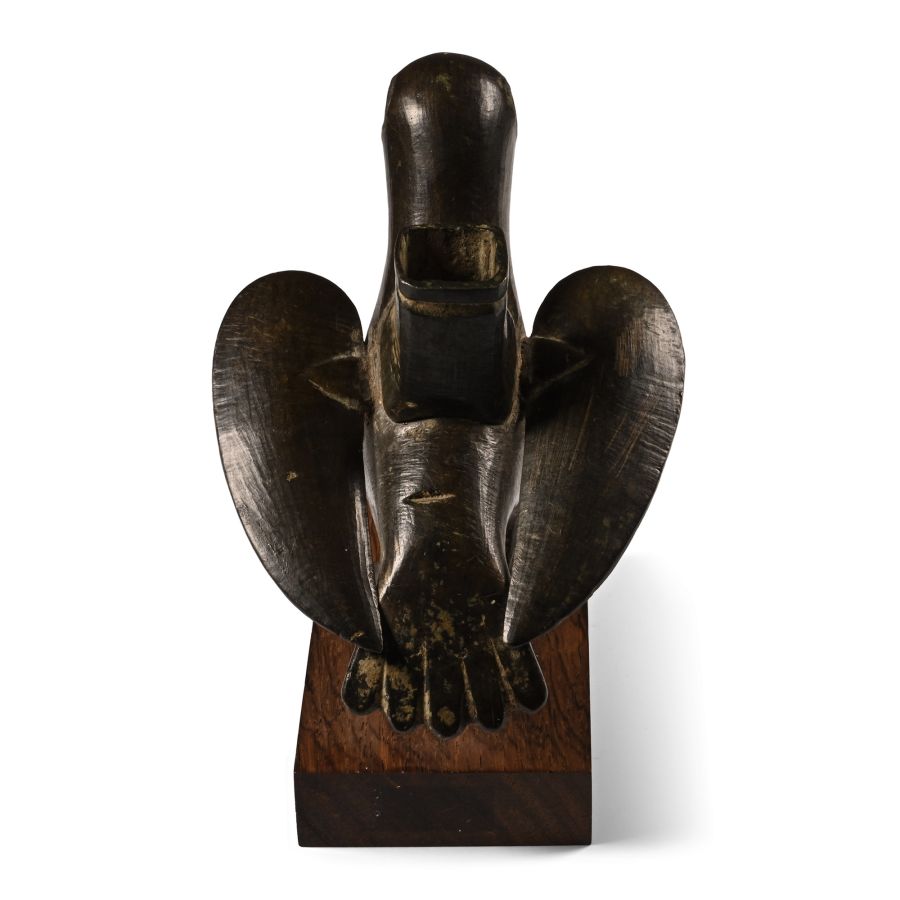
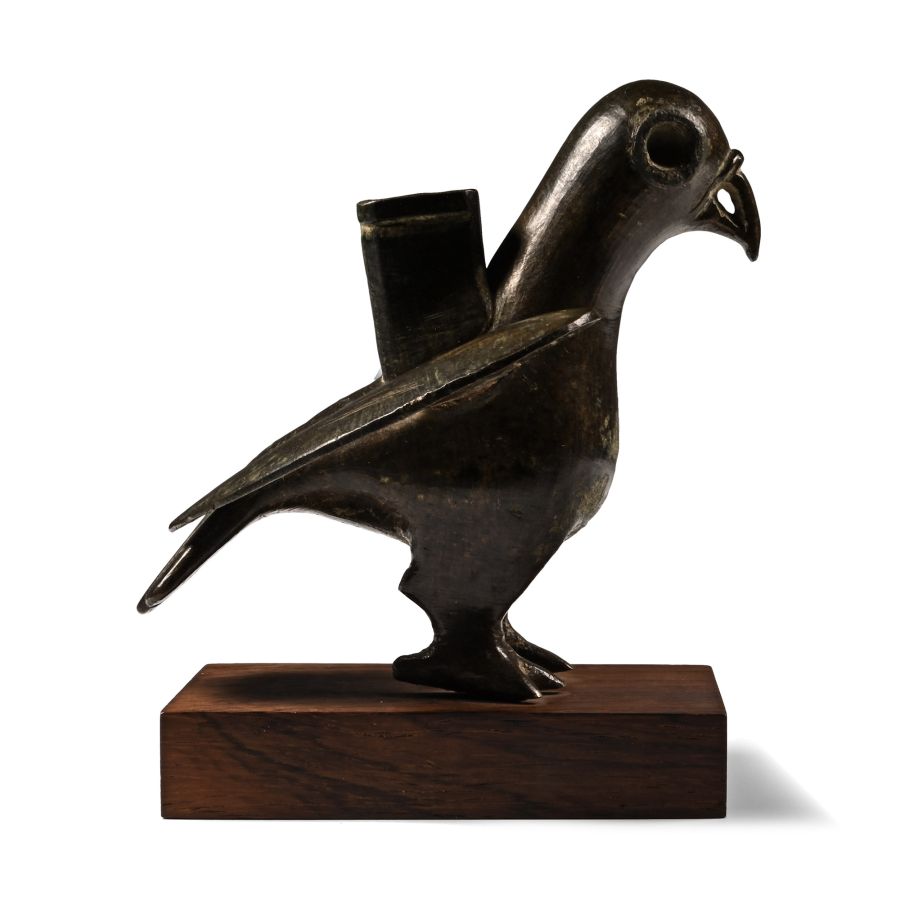
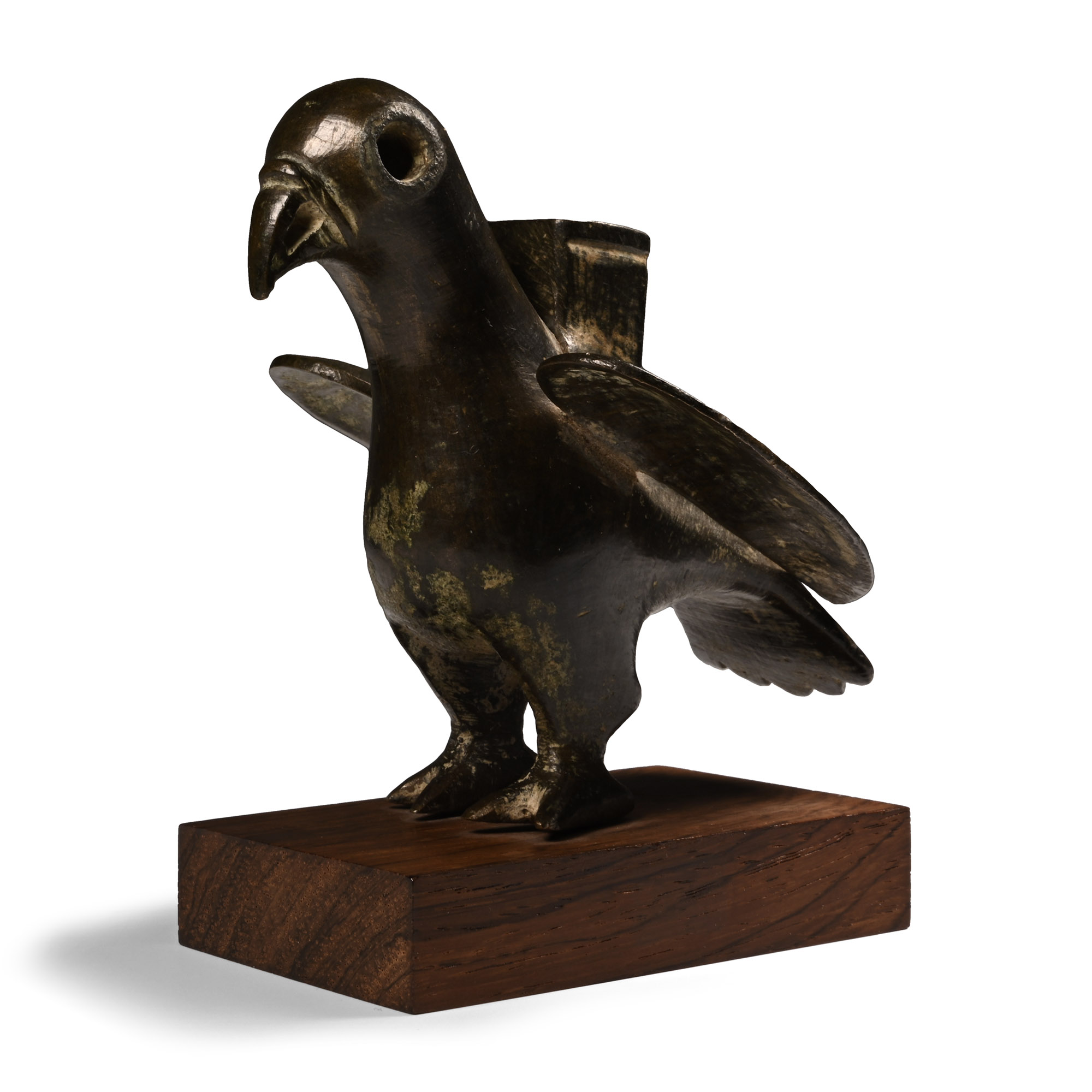
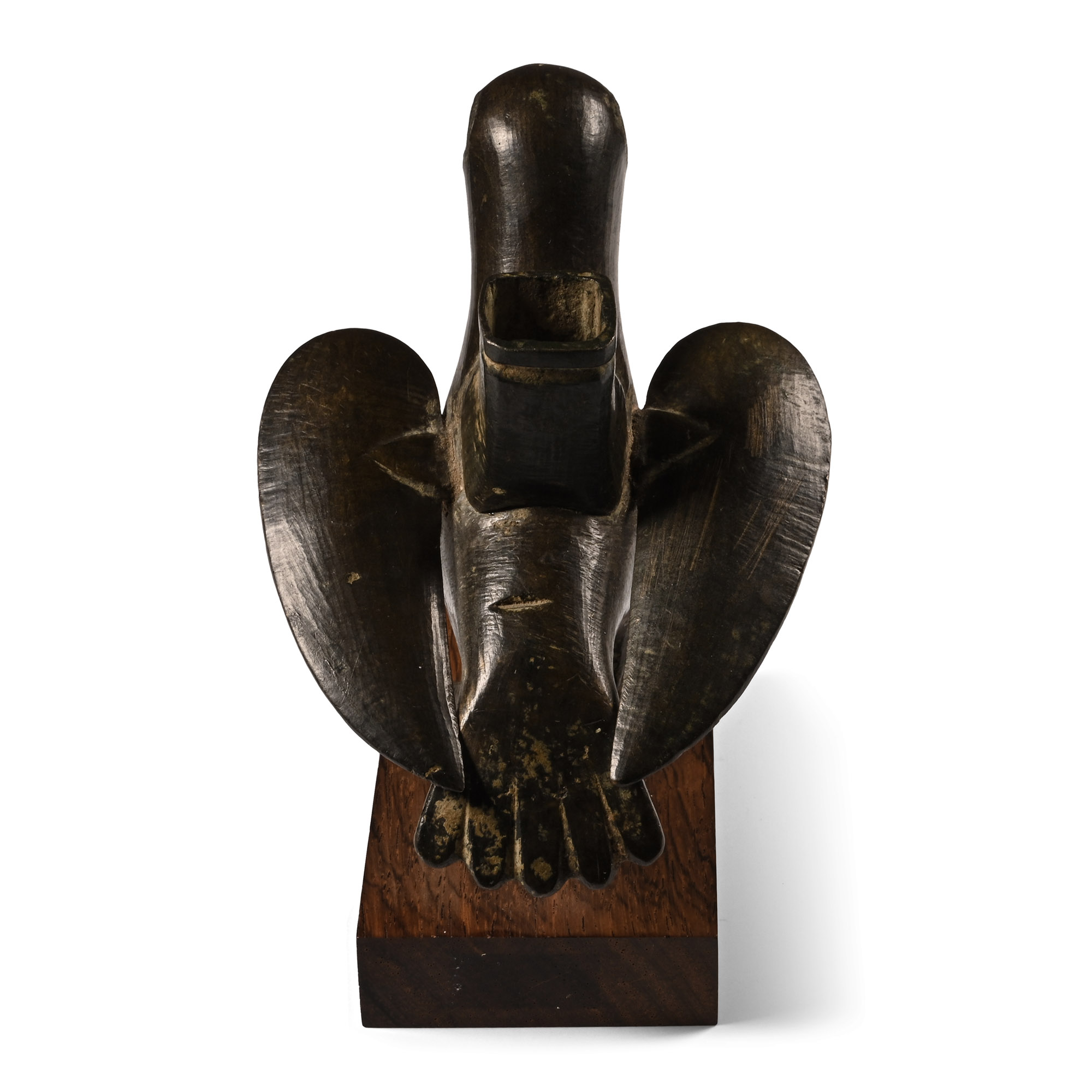
Western Asiatic Bronze Incense Burner in the Shape of an Eagle
9TH-11TH CENTURY A.D.
4 3/8 in. (430 grams total, 11 cm including stand).
With outstretched wings and erect body, open beak and eyes hollowed to accept inserts, five-feather spread tail and a rectangular socket to the back; mounted on a custom-made display stand.
ProvenanceBéla Hein collection, Paris, France, before 1931.
Accompanied by an academic report by Dr Raffaele D’Amato.
This lot has been checked against the Interpol Database of stolen works of art and is accompanied by a search certificate number no.12569-232077.
Cf. for parallels Gabrieli, F. & Scerrato, U., Gli Arabi in Italia, Milano, 1989, fig.530; Allan, J.W., The Metalworking Industry in Iran in the Early Islamic Period, volume II, Oxford, 1976, fig.59, for similar incense holder; see also Allan, J.W., Nishapur: Metalwork of the Early Islamic Period, New York, 1982.
FootnotesBéla Hein (1883-1931) was a prominent dealer and collector of African art in early 20th century Paris. In the early 1920s, he founded a gallery specialising in African art, contemporary sculpture, and a variety of curiosities, including antiquities. Hein's influence extended across the art world, and his collection reflected a keen eye for both historical and aesthetic significance.
CONDITIONTimeLine Auctions follows a vetting process to ensure the authenticity and legality of all items, reinforcing our commitment to integrity and responsible trading. Each antiquity, antique, and coin lot undergoes thorough examination by a vetting committee of at least ten external specialists, professional trade association members, scientists, and archaeologists: Our Vetting Process
AUCTIONS:
TimeLine is a leading auction house specialising in antiquities, ancient art, collectables, natural history, coins, medals, and books. Our auctions offer museums, collectors, historians, and enthusiasts the opportunity to acquire unique and historically significant pieces.
LOT 0246
Western Asiatic Bronze Incense Burner in the Shape of an Eagle
Sold for (Inc. bp): £5,980
-
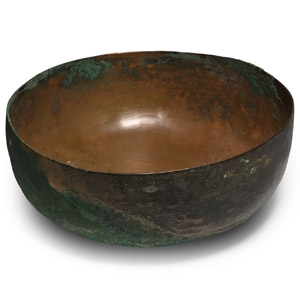
Large Western Asiatic Bronze Bowl
Circa 12th century A.D.Sold for (Inc. bp): £117
Raised from a single sheet with rounded base and slightly inturned walls. 427 grams, 20.5 cm
Acquired 1980-2015. Ex Abelita family collection. This lot has been cleared against the Art Loss Register database, and is accompanied by an illustrated lot declaration signed by the Head of the Antiquities Department, Dr Raffaele D'Amato. -
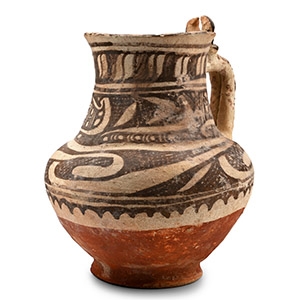
Large Western Asiatic Terracotta Painted Jug
8th-9th century A.D.Estimate: £400 - 600 (+bp*)
Opening Bid: £200
With squat profile, broad shoulder, wide neck and flared rim; strap handle with thumb-pad to the rim; bands of reserved tendrils on a hatched field. 818 grams, 18.5 cm
UK collection, 1990s. Acquired on the UK art market, before 2000. Private collection, Mr M.V., a London-based businessman. -
.jpg)
Western Asiatic Agate Bead Necklace String
20th century A.D.Sold for (Inc. bp): £33
A long restrung string composed of spherical beads. 115 grams, 82 cm
Ex collection of a late London, UK, collector, 1970s.
