
Loading, please wait...
LOT 0311
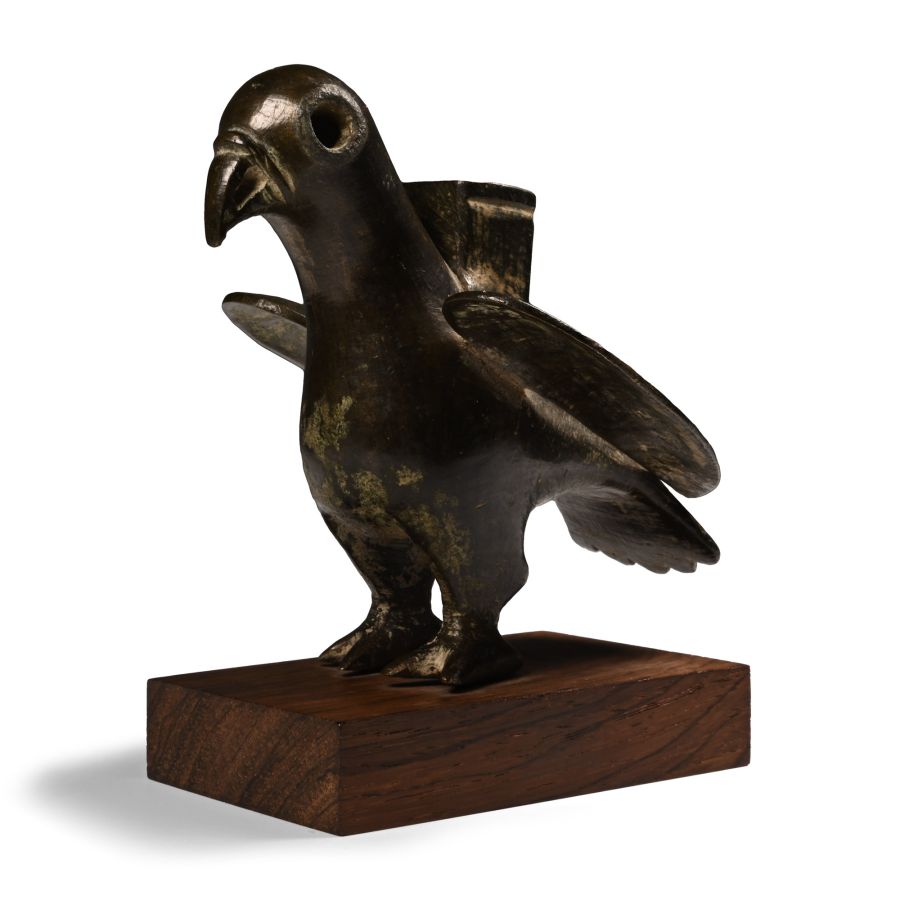
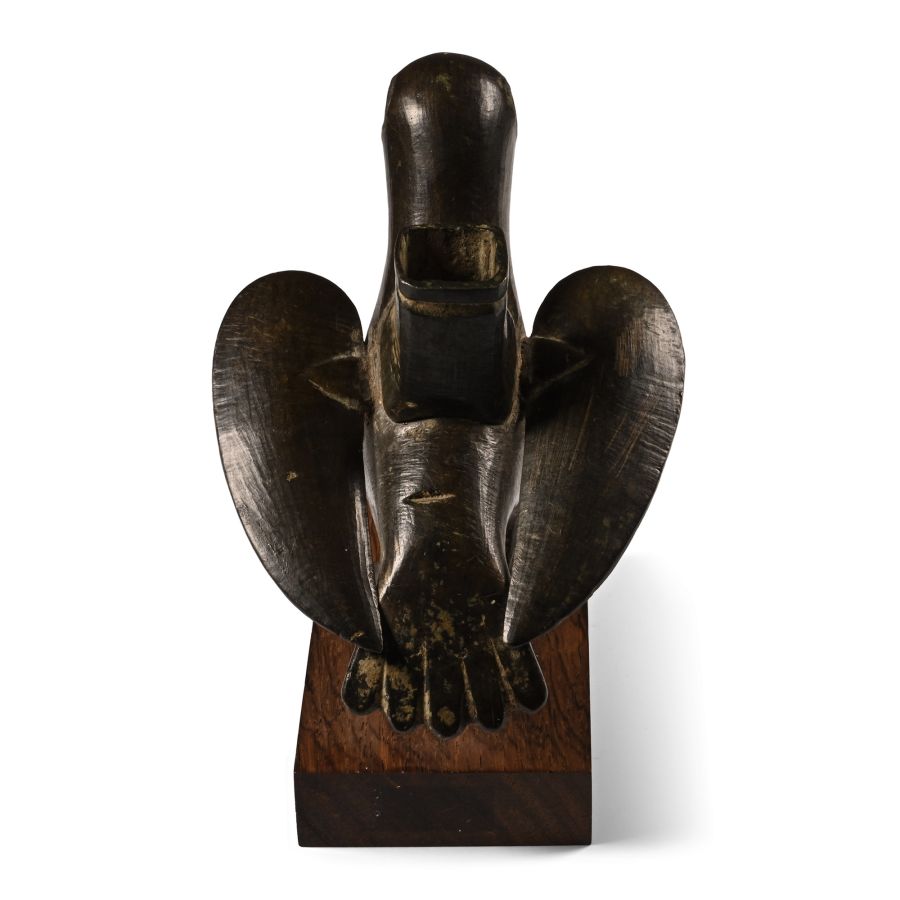
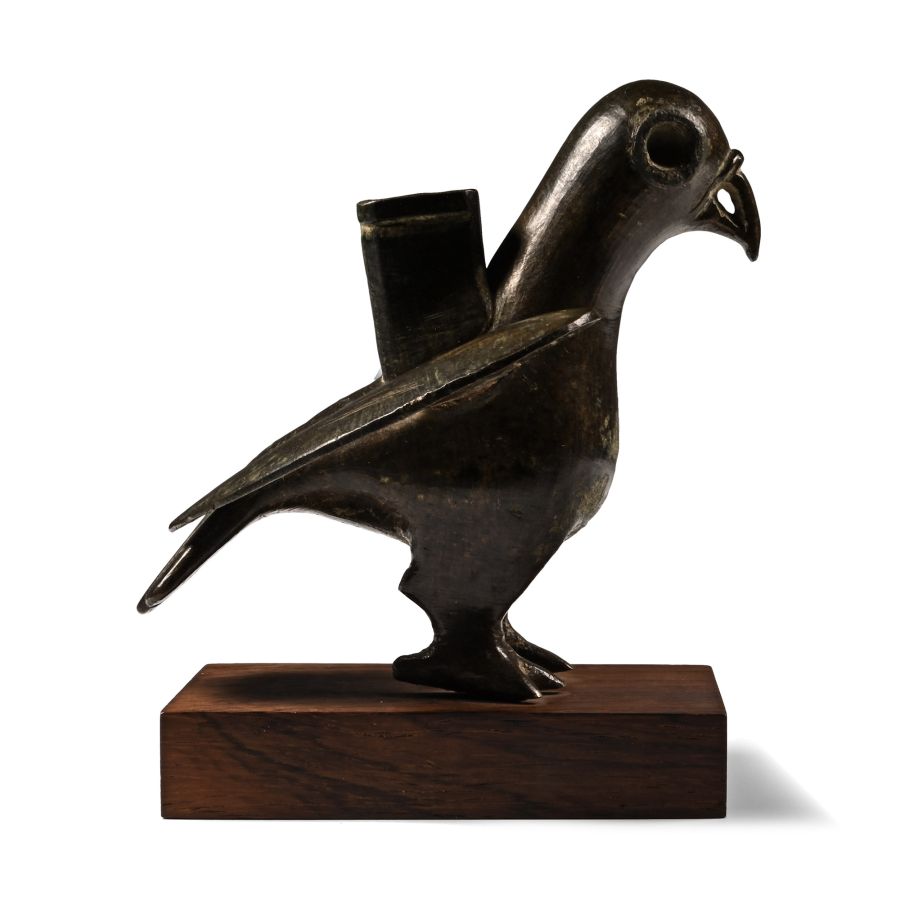
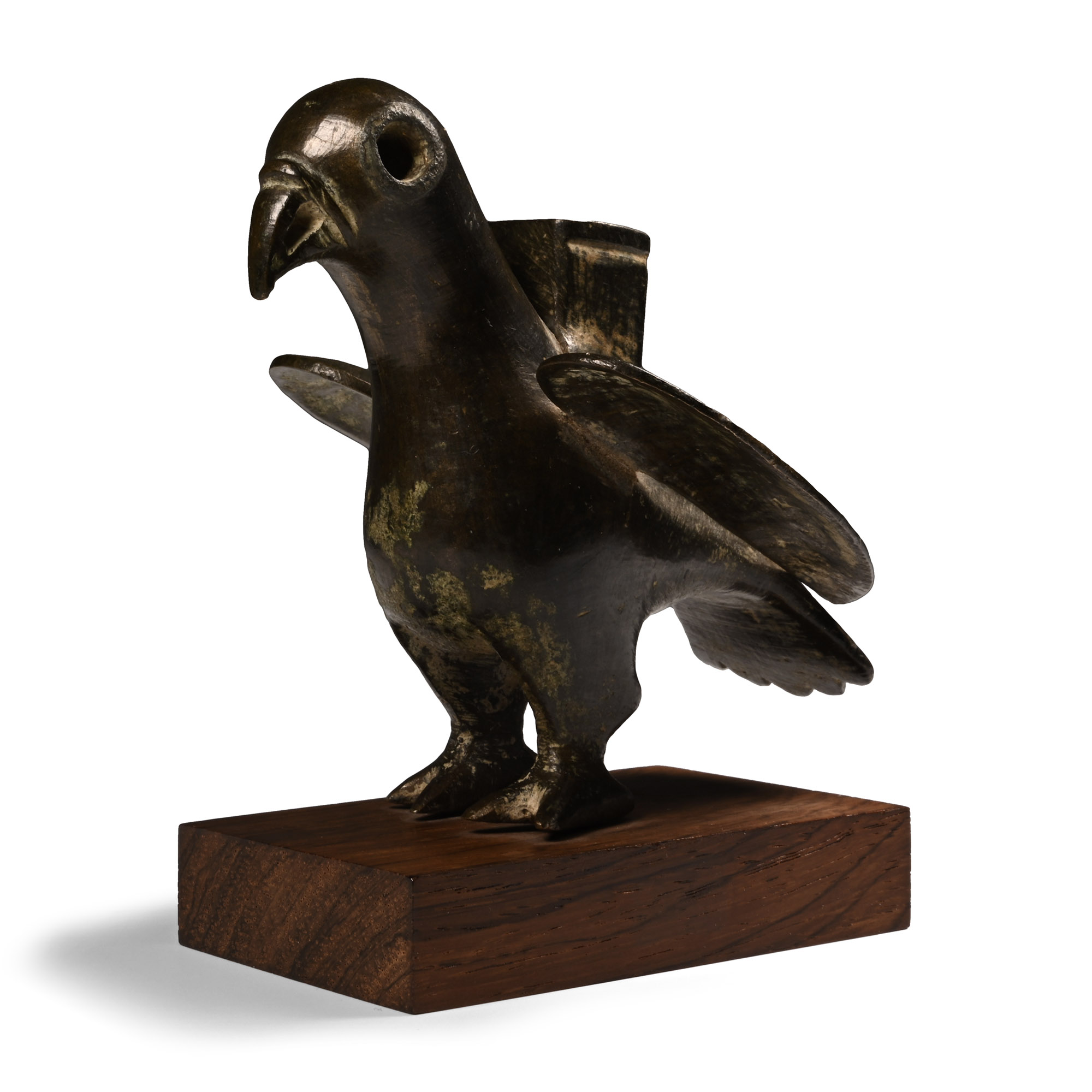
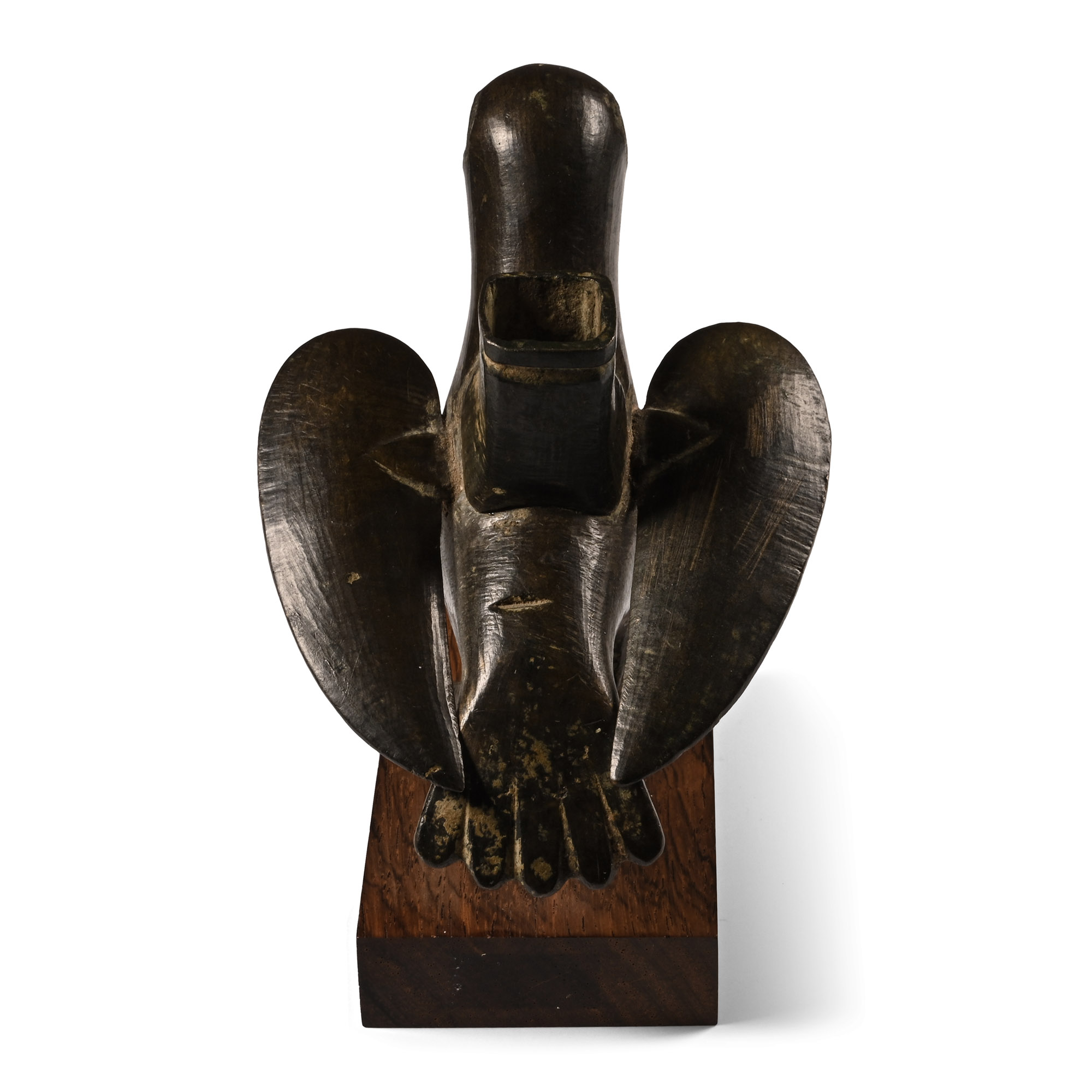
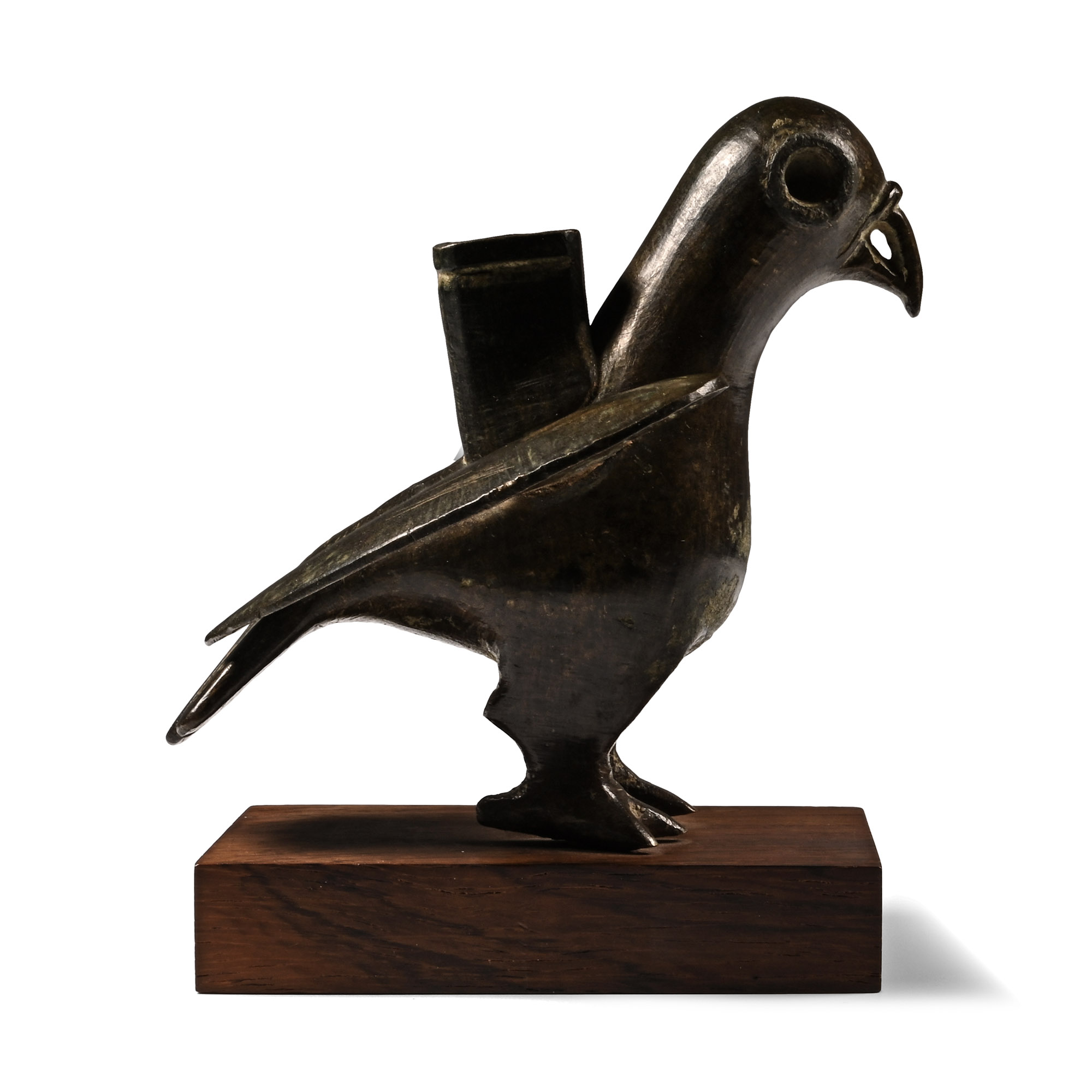
Western Asiatic Bronze Incense Burner in the Shape of an Eagle
9TH-11TH CENTURY A.D.
4 3/8 in. (430 grams total, 11 cm including stand).
With outstretched wings and erect body, open beak and eyes hollowed to accept inserts, five-feather spread tail and a rectangular socket to the back; mounted on a custom-made display stand.
ProvenanceBéla Hein collection, Paris, France, before 1931.
Accompanied by an academic report by Dr Raffaele D’Amato.
This lot has been checked against the Interpol Database of stolen works of art and is accompanied by a search certificate number no.12569-232077.
This lot has been cleared against the Art Loss Register database, and is accompanied by an illustrated lot declaration signed by the Head of the Antiquities Department, Dr Raffaele D'Amato.
Cf. for parallels Gabrieli, F. & Scerrato, U., Gli Arabi in Italia, Milano, 1989, fig.530; Allan, J.W., The Metalworking Industry in Iran in the Early Islamic Period, volume II, Oxford, 1976, fig.59, for similar incense holder; see also Allan, J.W., Nishapur: Metalwork of the Early Islamic Period, New York, 1982.
FootnotesBéla Hein (1883-1931) was a prominent dealer and collector of African art in early 20th century Paris. In the early 1920s, he founded a gallery specialising in African art, contemporary sculpture, and a variety of curiosities, including antiquities. Hein's influence extended across the art world, and his collection reflected a keen eye for both historical and aesthetic significance.
CONDITIONTimeLine Auctions follows a vetting process to ensure the authenticity and legality of all items, reinforcing our commitment to integrity and responsible trading. Each antiquity, antique, and coin lot undergoes thorough examination by a vetting committee of at least ten external specialists, professional trade association members, scientists, and archaeologists: Our Vetting Process
AUCTIONS:
TimeLine is a leading auction house specialising in antiquities, ancient art, collectables, natural history, coins, medals, and books. Our auctions offer museums, collectors, historians, and enthusiasts the opportunity to acquire unique and historically significant pieces.
LOT 0311
Western Asiatic Bronze Incense Burner in the Shape of an Eagle
Estimate £4,000 - 6,000€4,640 - 6,960 (for guidance only)$5,400 - 8,100 (for guidance only)
-
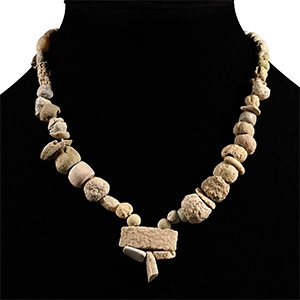
Western Asiatic Mixed Bead Necklace String
1st millennium B.C. and laterSold for (Inc. bp): £7
Restrung group of tubular, melon, drum-shaped and other beads in stone and ceramic. 44 grams, 38 cm
Ex London, UK, collection, 1990s. This lot has been cleared against the Art Loss Register database, and is accompanied by an illustrated lot declaration signed by the Head of the Antiquities Department, Dr Raffaele D'Amato. -
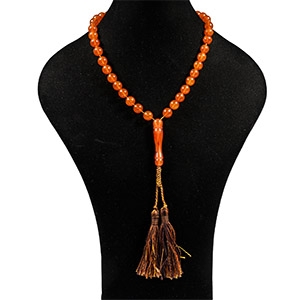
Western Asiatic Amber-Coloured Prayer Beads
20th century A.D.Sold for (Inc. bp): £72
Composed of forty-one spherical beads with two oblate beads, and a large minaret bead with two tassels to the bottom. 54 grams, 58 cm
Acquired in the 1990s. Ex Abelita family collection. This lot has been cleared against the Art Loss Register database, and is accompanied by an illustrated lot declaration signed by the Head of the Antiquities Department, Dr Raffaele D'Amato. -
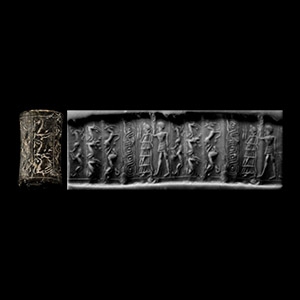
Syrian Stone Cylinder Seal with Figure Wearing Kilt
Circa 1800-1700 B.C.Sold for (Inc. bp): £416
Cylinder with cord and bead handles; accompanied by a copy of an old scholarly note, typed and signed by W.G. Lambert, late Professor of Assyriology, University of Birmingham, 1970-1993, which states: 'Cylinder seal of dark-brown stone with white inclusions, 14 x 8.5 mm. Slight chipping on top, otherwise condition fine. Male figure wearing short kilt and raising one hand, in front of him female figure wearing long, flounced garment and raising both hands; both facing four bands containing (i) guilloche, (ii) backwards-facing rampant horned quadruped above sideways recumbent lion, (iii) recumbent stage between two other recumbent horned quadrupeds, (iv) slender dog (?) chasing quadruped with horns or long ears. From Syria, c. 1800-1700 B.C. For similar seals, see D. Collon, "The Green Jasper Cylinder Seal Workshop" in M.K. Buccellati et al. (eds.), Papers in Honor of Edith Porada.'; supplied with a museum-quality impression. 2.88 grams, 14 mm
UK private collection, acquired 1980-1983. Accompanied by a copy of a scholarly note, typed and signed by Professor Wilfrid George Lambert in January 1989. This lot has been cleared against the Art Loss Register database, and is accompanied by an illustrated lot declaration signed by the Head of the Antiquities Department, Dr Raffaele D'Amato.
