
Loading, please wait...
LOT 0850
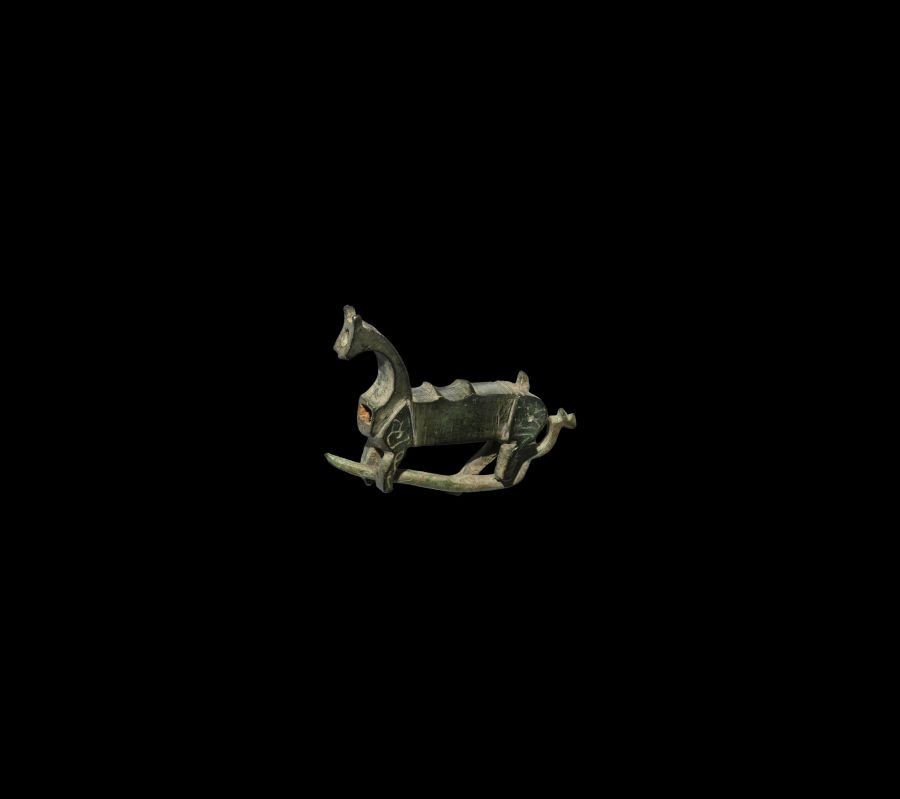
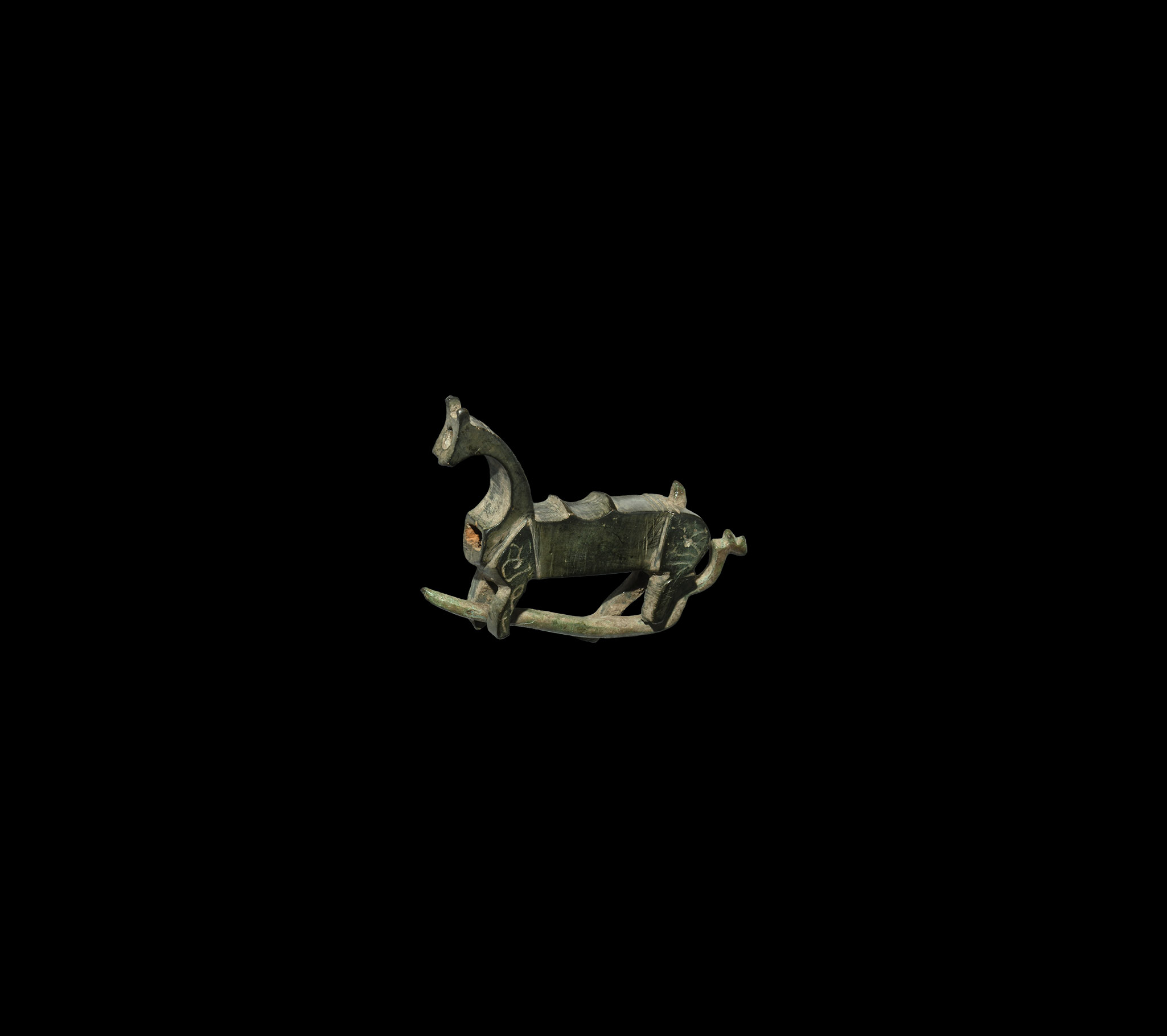
Western Asiatic Bronze Horse Padlock
14TH-16TH CENTURY A.D.
2 in. (21.3 grams, 50 mm).
Formed as a standing beast with decorative panels to the hips and shoulders, holes to the chest and head, bar with spur and second beast-head.
ProvenanceAcquired on the European art market in the 1990s.
Ex property of a Suffolk collector.
TimeLine Auctions follows a vetting process to ensure the authenticity and legality of all items, reinforcing our commitment to integrity and responsible trading. Each antiquity, antique, and coin lot undergoes thorough examination by a vetting committee of at least ten external specialists, professional trade association members, scientists, and archaeologists: Our Vetting Process
AUCTIONS:
TimeLine is a leading auction house specialising in antiquities, ancient art, collectables, natural history, coins, medals, and books. Our auctions offer museums, collectors, historians, and enthusiasts the opportunity to acquire unique and historically significant pieces.
-
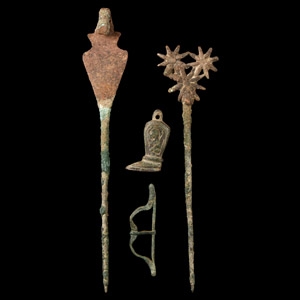
Luristan and Later Bronze Artefact Group
1st millennium B.C. and laterSold for (Inc. bp): £33
Comprising: a bow-shaped buckle; a boot-shaped pipe tamper with suspension loop; pin with trio of rowels or stars; possible Chimu pin with urn-shaped finial and hook. 62 grams total, 3.7-16.5 cm
with a London, UK gallery 1971-early 2000s. -
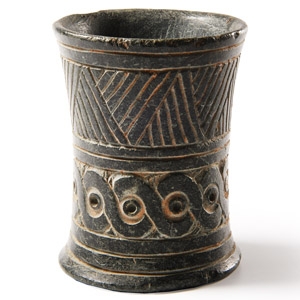
Elamite Chlorite Vessel with Geometric Decoration
3rd-2nd millennium B.C.Estimate: £500 - 700 (+bp*)
Opening Bid: £250
Spool-shaped with a flared rim and splayed foot, the upper body carved with a frieze of combed triangles, two plain bands to the equator, guilloche below. 157 grams, 68 mm high
Ex Robin Symes Ancient Art, pre 1999, inventory no.44. -
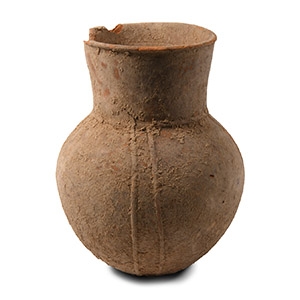
Amlash Terracotta Jar
1st millennium B.C.Sold for (Inc. bp): £65
Bulbous body and broad flared neck with slightly everted rim. 708 grams, 18.5 cm high
London, UK, collection, 1990s.
