
Loading, please wait...
LOT 0993
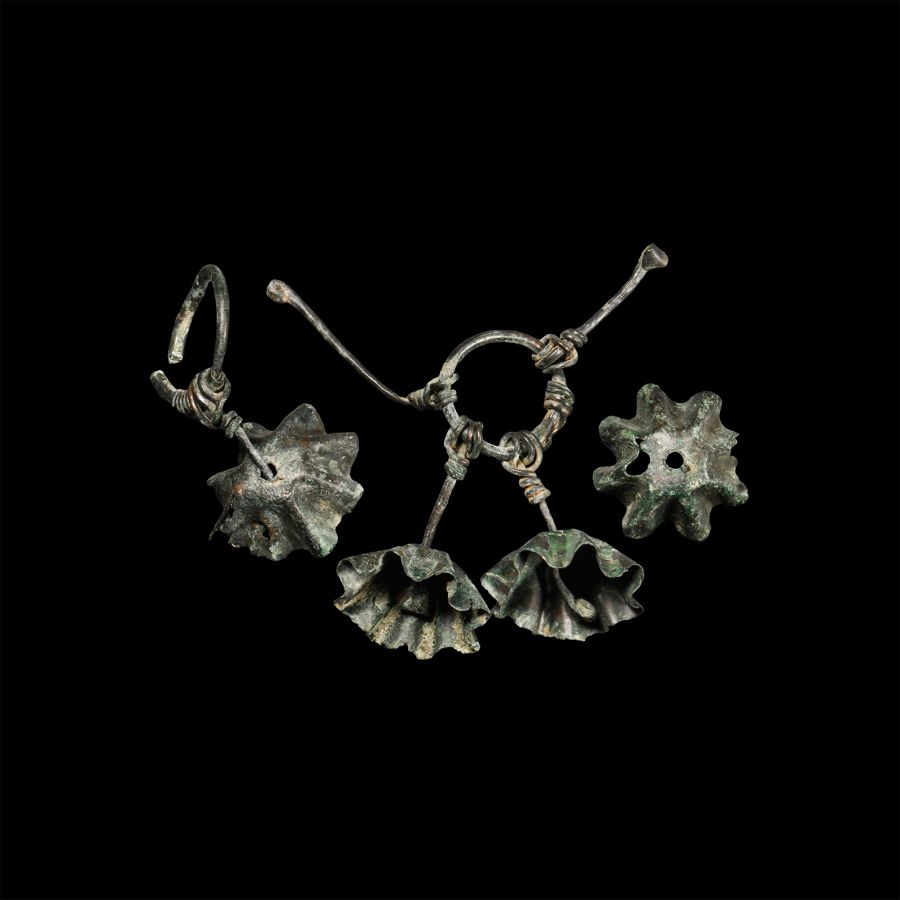
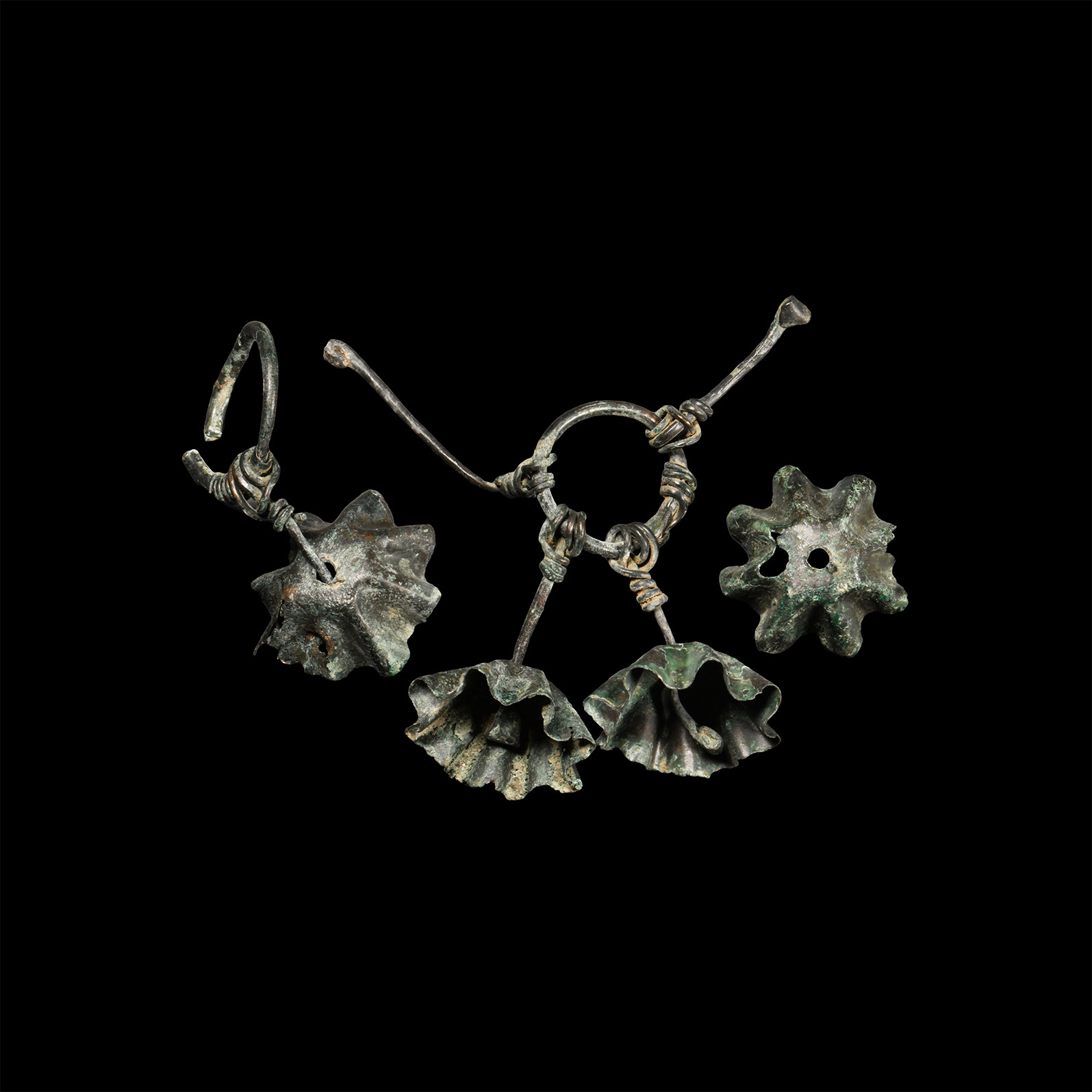
Western Asiatic Bronze Flower Pendant Group
1ST MILLENNIUM A.D. AND LATER
1 - 2 1/8 in. (14 grams total, 24-56 mm).
Comprising hoops with pendant dangles formed as stylised flowers. [3, No Reserve]
ProvenanceUK collection, early 1990s and before.
Acquired on the UK art market since the early 2000s.
From a private collection, Lancashire, UK.
TimeLine Auctions follows a vetting process to ensure the authenticity and legality of all items, reinforcing our commitment to integrity and responsible trading. Each antiquity, antique, and coin lot undergoes thorough examination by a vetting committee of at least ten external specialists, professional trade association members, scientists, and archaeologists: Our Vetting Process
AUCTIONS:
TimeLine is a leading auction house specialising in antiquities, ancient art, collectables, natural history, coins, medals, and books. Our auctions offer museums, collectors, historians, and enthusiasts the opportunity to acquire unique and historically significant pieces.
-
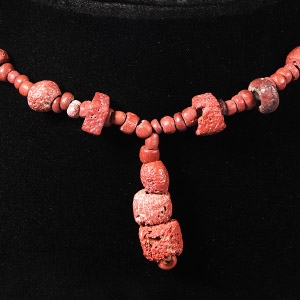
Western Asiatic Deep Red Glass Bead Necklace
1st millennium B.C. and laterSold for (Inc. bp): £26
Composed of opaque red glass and jasper beads of various types, including oblate, annular, barrel and other types; restrung. 17.8 grams, 30 cm long
Ex W.J. collection, 1990s. -
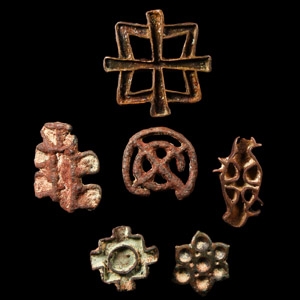
Central Asian Bronze Compartmental and Other Seal Collection
3rd-2nd millennium B.C.Sold for (Inc. bp): £59
Group of six stamps, mainly geometric. 86 grams total, 29-47 mm
English collection, 1990s. Ex North London gallery. -
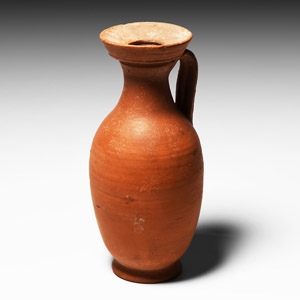
Nabataean Redware Jug
4th century B.C.-1st century A.D.Estimate: £300 - 400 (+bp*)
Opening Bid: £150
With gussetted foot, flared neck and mouth, ribbed strap handle to the reverse. 180 grams, 14.5 cm high
From an important collection of Holy Land pottery formed pre 1988, thence by descent.
