
Loading, please wait...
LOT 1095
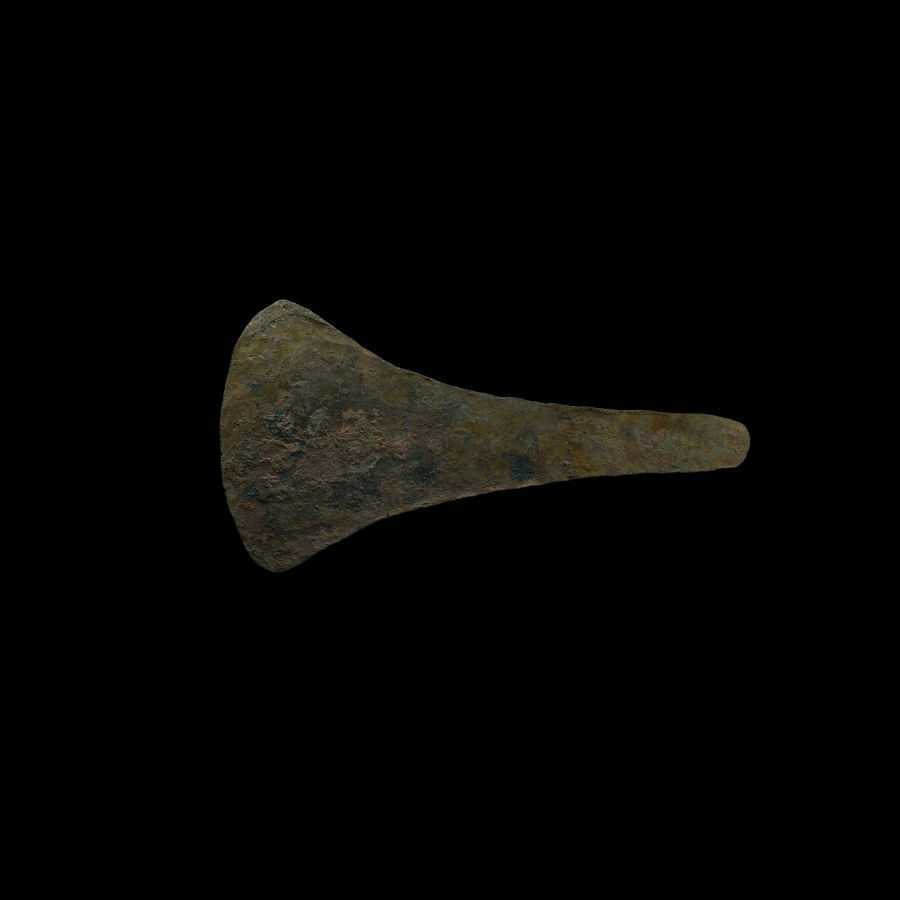
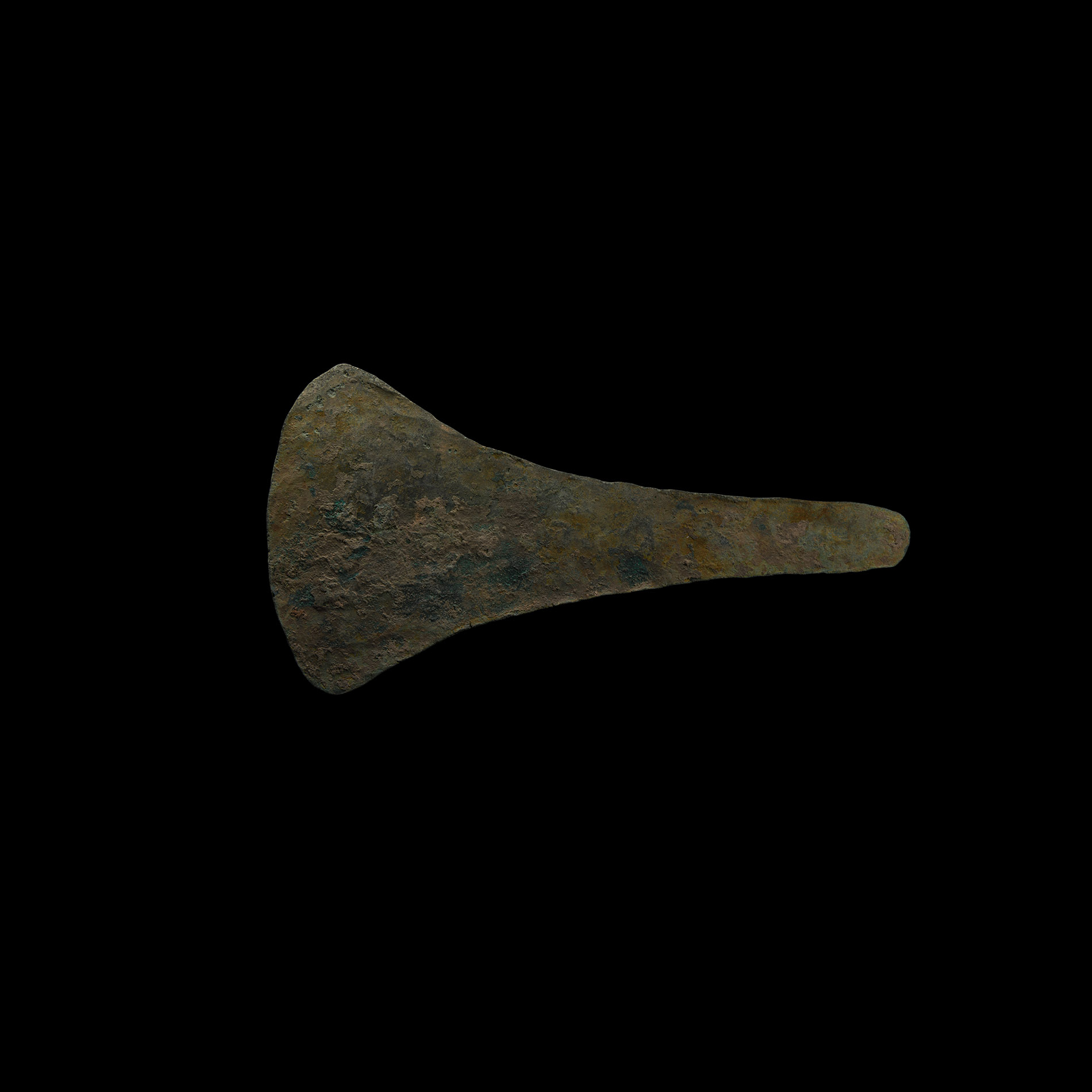
Western Asiatic Bronze Flat Axe
CIRCA 2ND MILLENNIUM B.C.
7 3/8 in. (106 grams, 18.6 cm).
Featuring wedge-shaped cheeks, a convex cutting edge and rounded terminal. [No Reserve]
ProvenanceUK private collection formed before 2000.
Ex North London, UK, gallery.
Cf. Çetin, A., Bilgi, Ö., Weapons of the Protohistoric Age, Istanbul, 1989, figs.21-22, pp.50-51.
FootnotesThe flat axe belongs to Type 1, sub-type a.4 of the Çetin-Bilgi classification of flat axes. They have concave-sided blade, rectangular in section, a splayed cutting edge and a narrow butt. The first examples of axe-type weapons appear in the last phase of the Late Chalcolithic Age in the Middle East and Anatolia.
CONDITIONTimeLine Auctions follows a vetting process to ensure the authenticity and legality of all items, reinforcing our commitment to integrity and responsible trading. Each antiquity, antique, and coin lot undergoes thorough examination by a vetting committee of at least ten external specialists, professional trade association members, scientists, and archaeologists: Our Vetting Process
AUCTIONS:
TimeLine is a leading auction house specialising in antiquities, ancient art, collectables, natural history, coins, medals, and books. Our auctions offer museums, collectors, historians, and enthusiasts the opportunity to acquire unique and historically significant pieces.
-
.jpg)
Nathan Starr 1816 Pattern Musket
1832 A.D.Sold for (Inc. bp): £715
Type III, made under contract by Nathan Starr of Middletown, CT; with .69 calibre, 107 cm (42”) browned barrel with side lock marked with Starr’s earlier style of 'US / (ornate sunburst) / N. STARR' ahead of the cock and 'MIDDTN / CONN / 1832 / (rosette)' to the rear with 'US / JM' over a raised 'P' in sunken circular cartouche to top of breech, with various inspection and other small marks, fitted with sling swivels (upper possibly a replacement), steel ramrod with flared tip, full wood stock with steel butt plate, trigger guard, side-plate, barrel rings and fore-end, lock with brass pan; action in good working order. 4.10 kg, 148 cm
Acquired from M J Noble Ltd, UK, 2015. The Kusmirek Collection, UK. Accompanied by the Noble purchase invoice and listing.
Sold as an exempt item under Section 58 (2) of the Firearms Act, 1968, to be held as a curiosity or ornament. No license required but buyer must be over 18 years of age. Overseas bidders should note that, due to UK regulations governing export of all firearms, overseas buyers will need to make arrangements for shipping this lot out of the UK directly, by air freight, with a specialist company or agent. -
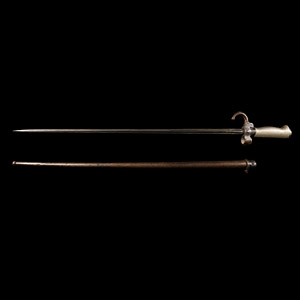
French Lebel 1886 Model 'Rosalie' Epee Bayonet with Scabbard
19th-20th century A.D.Sold for (Inc. bp): £52
Sword bayonet for use with the 8 mm M1886 Lebel rifle; fitted with 'German silver' grip scales; original scabbard. 532 grams, 65 cm
Property of a Luton, UK gentleman, by inheritance.
Known affectionately as “Rosalie” to French troops, the M1886 was the French mainstay during WWI and many were still in service at the Fall of France in 1940. The Lebel also saw extensive use worldwide by native troops in the French colonies. The M1886 introduced the distinctive cruciform blade, which remained a feature of most French bayonets until 1956. This example was made in 1890 at the Manufacture D'Armes St. Etienne (MAS). The scabbard was made by Manufacture Nationale d'Armes de Châtellerault (MAC). This is an early example that escaped later modifications, retaining its long blade, quillon, and raised round press stud. The silver-alloy grip is removable. -
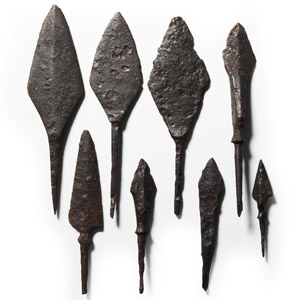
Medieval Iron Arrowhead Group
12th-15th century A.D.Sold for (Inc. bp): £169
Comprising tanged arrowheads of various types, including leaf-shaped, lozengiform, triangular and leaf-shaped examples, together with others. 66 grams total, 41-88 mm
Acquired on the German art market, before 2000. Ex German collection. The Kusmirek Collection, UK.
