
Loading, please wait...
LOT 0865
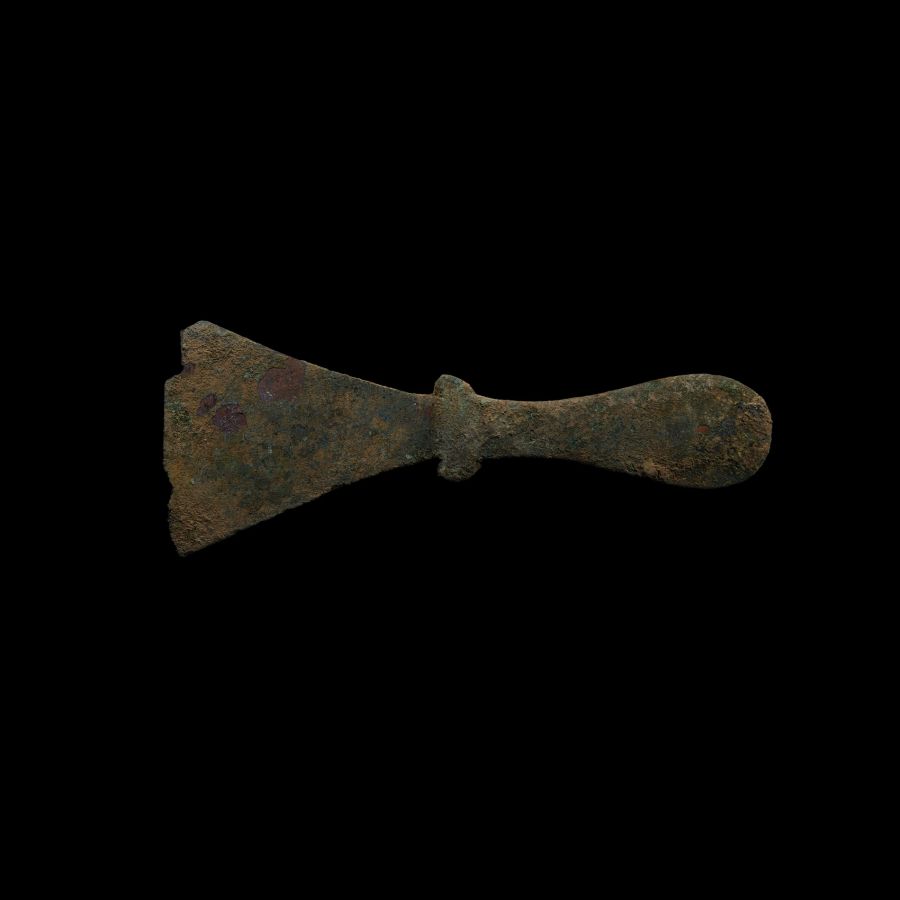
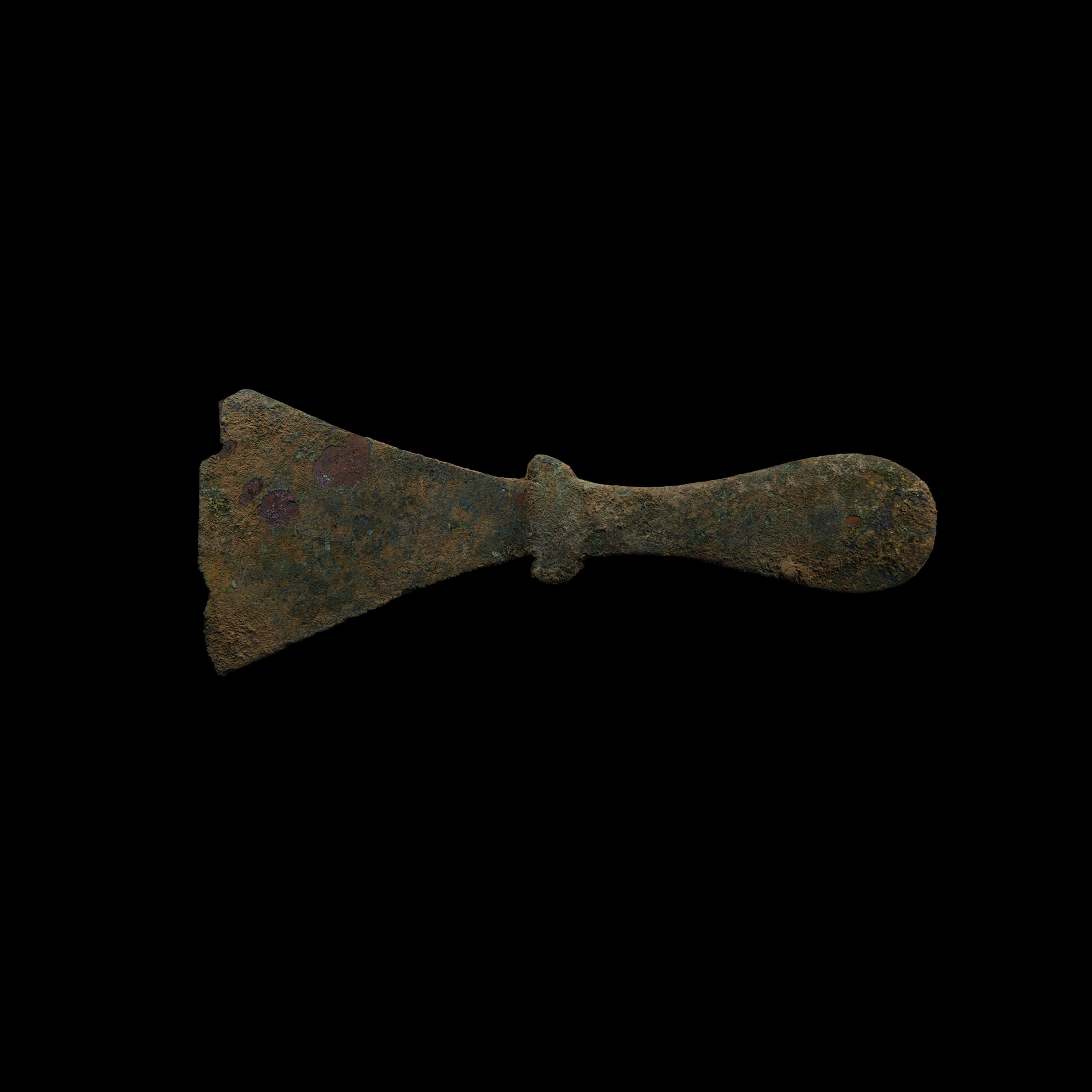
Western Asiatic Bronze Flat Axe
CIRCA 3RD-2ND MILLENNIUM B.C.
7 in. (156 grams, 17.7 cm).
Comprising a wedge-shaped blade and piriform handle. [No Reserve]
ProvenanceUK private collection formed before 2000.
Ex North London, UK, gallery.
Cf. Gernez, G., L’armament en métal au Proche et Moyen-Orient: des origines a 1750 av. J.C., Paris, 2007, fig.2.3, subtype of flat axes H.1..B, for the type.
FootnotesThese blades were fitted directly to the handle or via a sheath. Flat axes, whose axis is parallel to that of the handle, often had a rounded edge like in our specimen, or a flared and bevelled edge, while flat adzes have an axis perpendicular to that of the handle and a bevel edge on one side only. Their shape comes directly from the lithic axes of the Neolithic and Chalcolithic periods.
CONDITIONTimeLine Auctions follows a vetting process to ensure the authenticity and legality of all items, reinforcing our commitment to integrity and responsible trading. Each antiquity, antique, and coin lot undergoes thorough examination by a vetting committee of at least ten external specialists, professional trade association members, scientists, and archaeologists: Our Vetting Process
AUCTIONS:
TimeLine is a leading auction house specialising in antiquities, ancient art, collectables, natural history, coins, medals, and books. Our auctions offer museums, collectors, historians, and enthusiasts the opportunity to acquire unique and historically significant pieces.
-
Amlash Animal-Headed Ceramic Bowl
1st millennium B.C.Sold for (Inc. bp): £46
Formed with a roughly hemispherical body, stylised animal head with hooked head and coiled horns to one side and a lug representing a tail to the other. 225 grams, 14.5 cm
with a London, UK gallery 1971-early 2000s. -
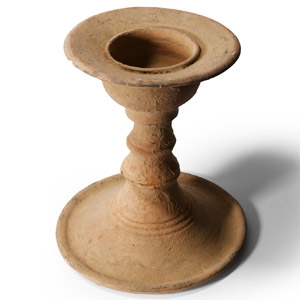
Bactrian Ceramic Vessel
Circa 2nd millennium B.C.Sold for (Inc. bp): £117
Formed as a chalice with broad everted rim, ribbed stem and splayed foot with rolled outer edge; remains of painted bands and chevrons to the foot and mouth. 1.7 kg, 26.5 cm
From a late Japanese specialist collector, 1970-2000s. -
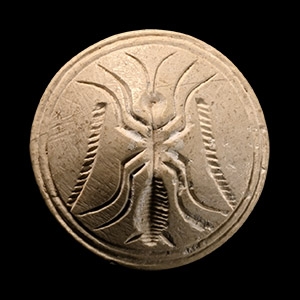
Western Asiatic Double-Sided Biconical Stone Seal
1st millennium B.C.Sold for (Inc. bp): £286
Displaying an ant to one face and a butterfly to the other on a biconvex body; drilled for suspension. 8.77 grams, 2.6 cm
Swiss art market, 2003.
