
Loading, please wait...

LOT 1279
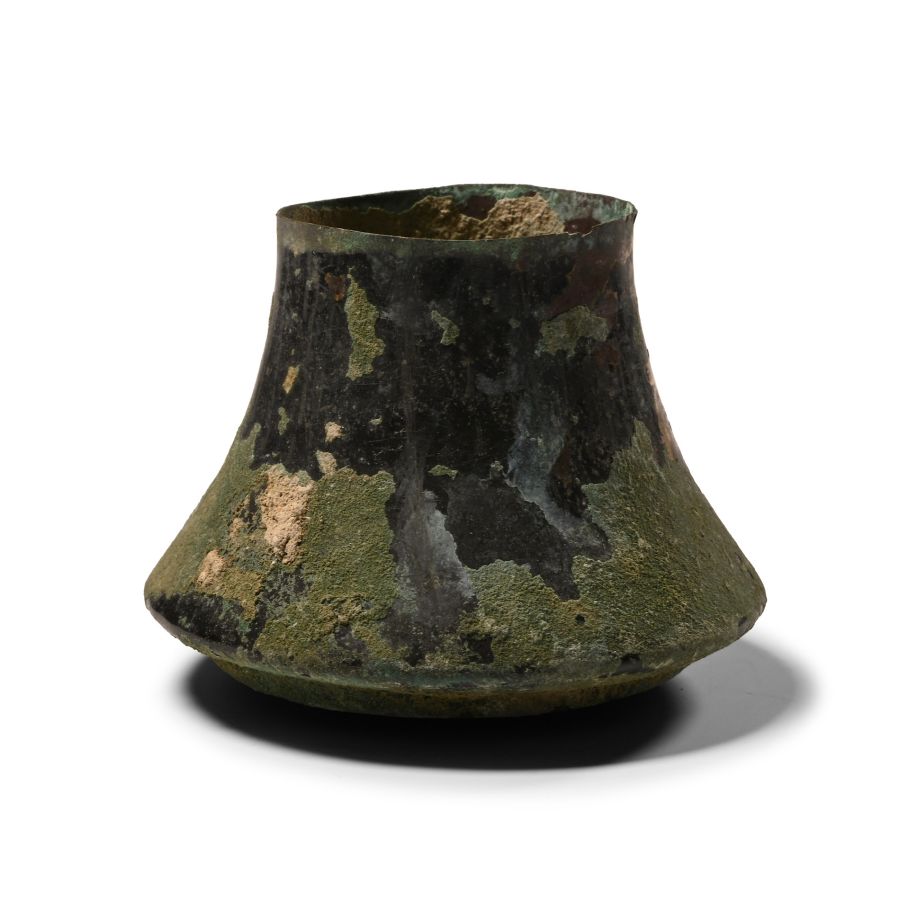
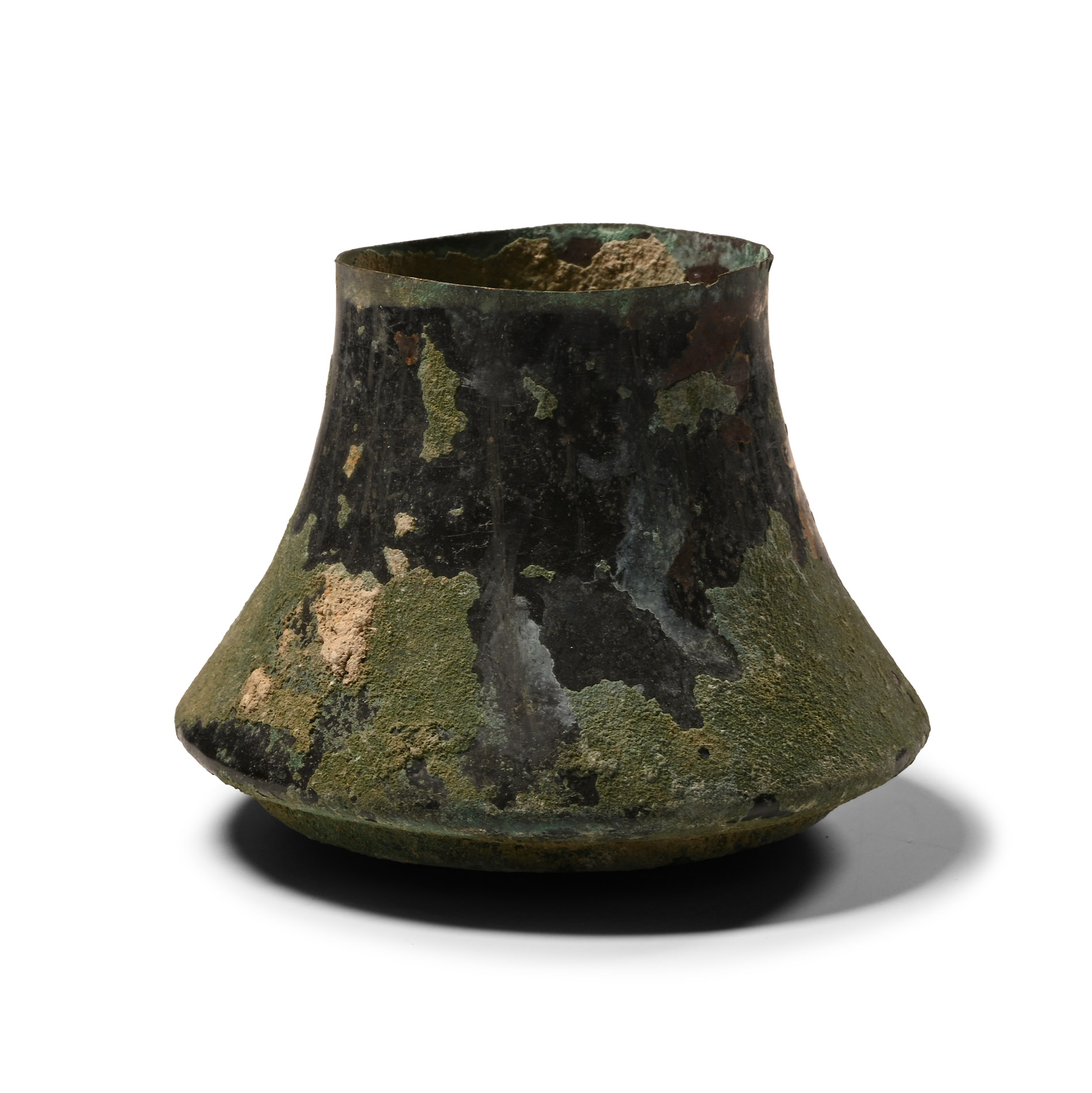
Western Asiatic Bronze Flask
2ND-1ST MILLENNIUM B.C.
3 1/4 in. (80 grams, 83 mm).
Squat and with sloping sidewall, carinated foot and flat basal disc. [No Reserve]
ProvenanceAcquired 1980-2015.
Ex Abelita family collection.
TimeLine Auctions follows a vetting process to ensure the authenticity and legality of all items, reinforcing our commitment to integrity and responsible trading. Each antiquity, antique, and coin lot undergoes thorough examination by a vetting committee of at least ten external specialists, professional trade association members, scientists, and archaeologists: Our Vetting Process
AUCTIONS:
TimeLine is a leading auction house specialising in antiquities, ancient art, collectables, natural history, coins, medals, and books. Our auctions offer museums, collectors, historians, and enthusiasts the opportunity to acquire unique and historically significant pieces.
-
Sumerian Jemdet Nasr Stone Boar Amulet
3rd millennium B.C.Estimate: £500 - 700 (+bp*)
Opening Bid: £250
With a crescentic polished body, head with drilled eyes and slit mouth, pierced through the raised median collar. 11.2 grams, 56 mm
Collected from 1970-1999. From the collection of the late Mr S.M., London, UK. -
.jpg)
Western Asiatic Rock Crystal and Other Necklace Bead Collection
1st millennium B.C. and laterSold for (Inc. bp): £182
Including polished types and including spherical, facetted, amorphous and other shapes. 43 grams total, 5-17 mm
UK gallery, early 2000s. -
Islamic Leather-Bound Manuscript, Two Books on Mathematics
1095 A.H.Estimate: £1,200 - 1,700 (+bp*)
Opening Bid: £600
Rebound as a hardback with full leather binding, central arabesque foliage panel to each cover; title page with triangular block of naskh text with red marks; first set of text pages typically with 31 lines of cramped naskh script in black ink with red highlighting, hand-drawn geometric figures with numerical notation relating to angles, etc; second set with looser script typically in 23 lines with marginal notes and red underscoring, tables and perpendicular text blocks. 232 grams, 16 x 21.5 cm
From an important family collection started in the late 1950s. Property of a West London, UK, gentleman.
The texts are: (1) 'Ghaniat alhisab' (In Arithmetic) the classification by Judge Jamal al-Din Ahmad bin Ali Ibn Thabit (2) 'Alkaayib' (In Calculating Mathematical Copies) by the computer scientist Shihab al-Din Ahmad ibn Muhammad ibn al-Ha'im al-Magdisi, written out by Yusuf ibn Hussein Hamouda Al-Habibi in the year 1095 A.H. (1683 A.D.).
