
Loading, please wait...
LOT 1186
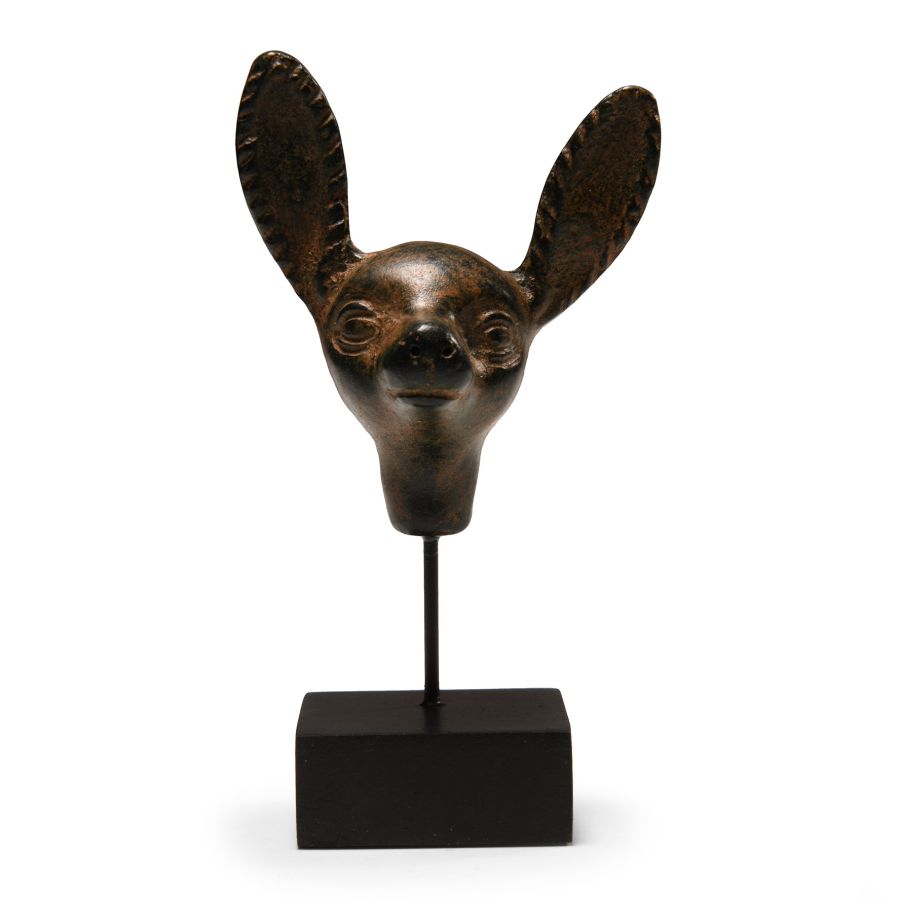
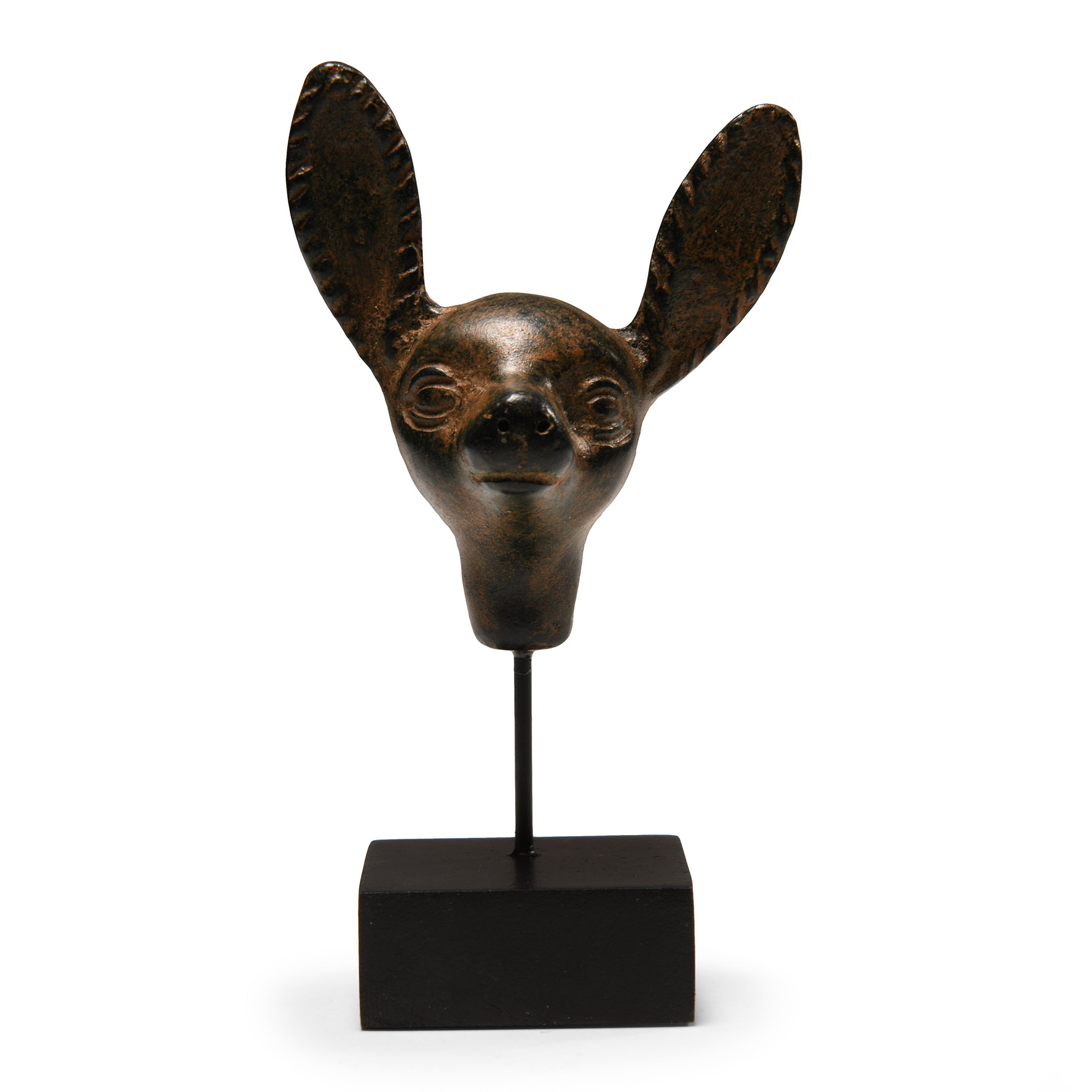
Western Asiatic Bronze Deer's Head
1ST MILLENNIUM B.C. OR LATER
4 in. (154 grams total, 10 cm including stand).
Modelled with hatched edges to the pricked ears, large almond-shaped eyes, pointillé nostrils; mounted on a custom-made stand. [No Reserve]
ProvenanceFrom a collection acquired on the UK art market from various auction houses and collections mostly before 2000.
From an important Cambridgeshire estate; thence by descent.
TimeLine Auctions follows a vetting process to ensure the authenticity and legality of all items, reinforcing our commitment to integrity and responsible trading. Each antiquity, antique, and coin lot undergoes thorough examination by a vetting committee of at least ten external specialists, professional trade association members, scientists, and archaeologists: Our Vetting Process
AUCTIONS:
TimeLine is a leading auction house specialising in antiquities, ancient art, collectables, natural history, coins, medals, and books. Our auctions offer museums, collectors, historians, and enthusiasts the opportunity to acquire unique and historically significant pieces.
-
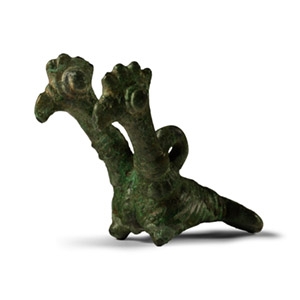
Luristan Bronze Double Peacock Pendant
13th-7th century B.C.Sold for (Inc. bp): £169
Modelled in the round with hollow to the underside, two heads on long necks with collars, loop to the rear. 58 grams, 71 mm
From a North Yorkshire, UK, private collection. Acquired from Adam Partridge Auctioneers, Macclesfield, UK. Property of Mr A.B., an American collector. -
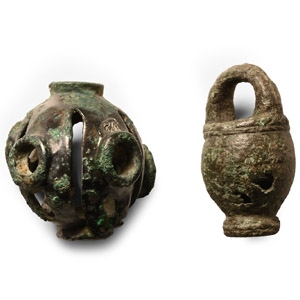
Western Asiatic Bronze Bead Pendant Group
1st millennium B.C.Sold for (Inc. bp): £33
Comprising: one spherical with six radiating holes each with a socket, slots and triangular holes; one barrel-shaped with loop above. 36 mm total, 30-34 mm
From a collection acquired on the UK art market from various auction houses and collections mostly before 2000. From an important Cambridgeshire estate; thence by descent. -
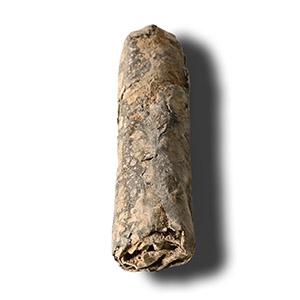
Aramaic Lead Scroll with Magical Text
2nd-8th century A.D.Estimate: £400 - 600 (+bp*)
Opening Bid: £200
A rectangular lead sheet rolled into a tight scroll with the text to the inner face. 31 grams, 58 mm
Collected from 1970-1999. From the collection of the late Mr S.M., London, UK.
The item was possibly meant to be what the Romans called a defixio or 'curse tablet', on which the magical malediction was recorded and then shut away (by being tightly rolled up) so that the victim could not find it or change it.
