
Loading, please wait...


LOT 1344
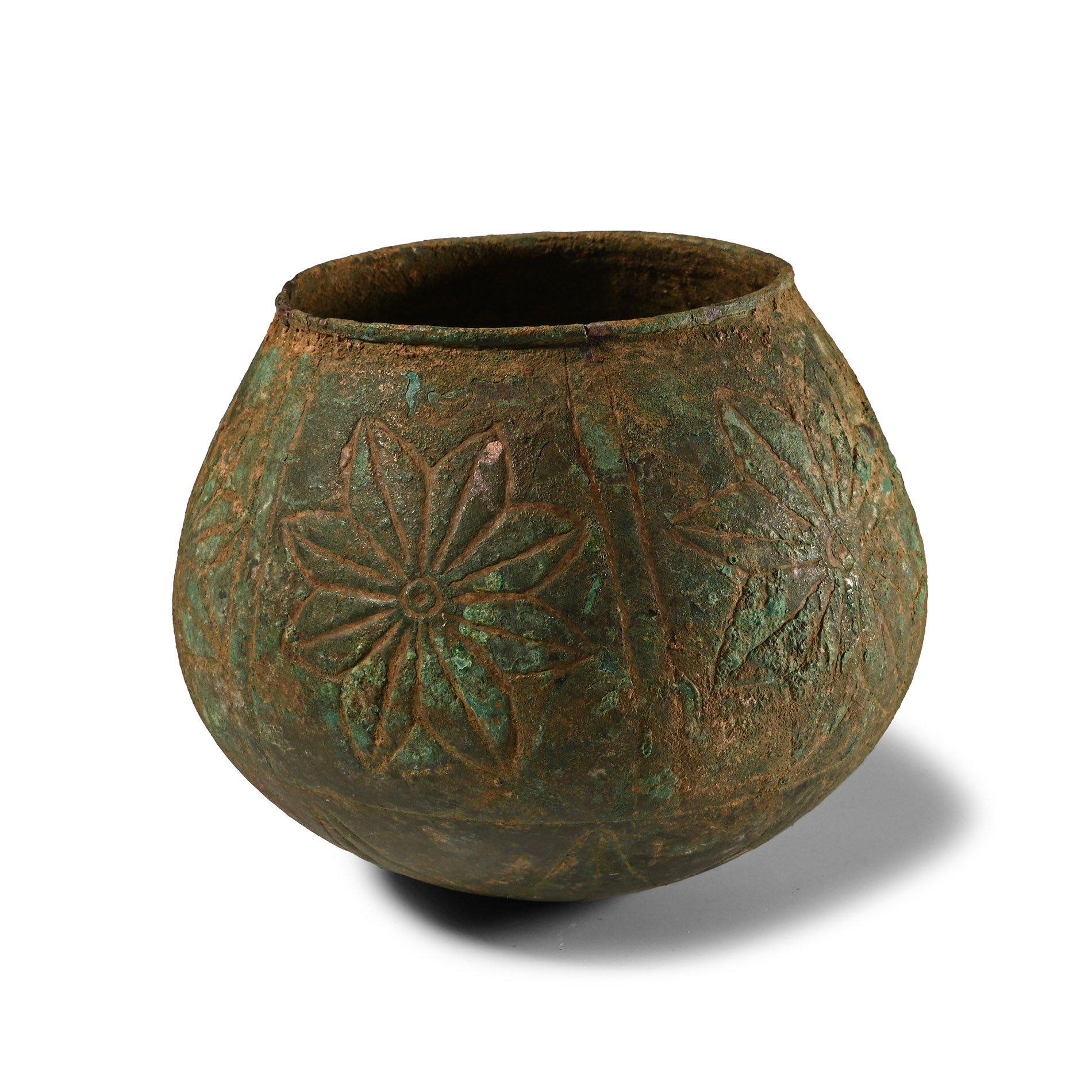
Western Asiatic Bronze Decorated Bowl
2ND-1ST MILLENNIUM B.C.
4 1/2 in. (183 grams, 11.5 cm).
Biconvex in profile with rounded underside and broad mouth; repoussé rosettes to the shoulder, and larger rosette to the base; slightly everted rim. [No Reserve]
ProvenanceAcquired 1980-2015.
Ex Abelita family collection.
TimeLine Auctions follows a vetting process to ensure the authenticity and legality of all items, reinforcing our commitment to integrity and responsible trading. Each antiquity, antique, and coin lot undergoes thorough examination by a vetting committee of at least ten external specialists, professional trade association members, scientists, and archaeologists: Our Vetting Process
AUCTIONS:
TimeLine is a leading auction house specialising in antiquities, ancient art, collectables, natural history, coins, medals, and books. Our auctions offer museums, collectors, historians, and enthusiasts the opportunity to acquire unique and historically significant pieces.
-
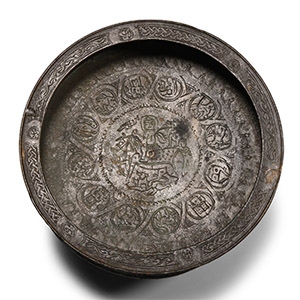
Western Asiatic Decorated Dish with Animal Feet
12th century A.D.Estimate: £400 - 600 (+bp*)
Opening Bid: £200
With low sidewall and flat everted rim, three radiating feet to the underside, each a quadruped with lowered head; sidewall with band of low-relief roundels each containing a perching bird in profile; rim with knotwork and guilloche panels interrupted by roundels; inner face of the bowl with low-relief band of roundels containing profile birds, hounds and other animals, surrounding a scene depicting a huntsman on horseback with billowing cape, a hound running beside the horse's legs and a bird perching above the horse's head, second hound crouching above the horse's rump. 1.15 kg, 18 cm diameter
Ex London, UK, gallery, 1971-early 2000s. Property of a London gentleman. -
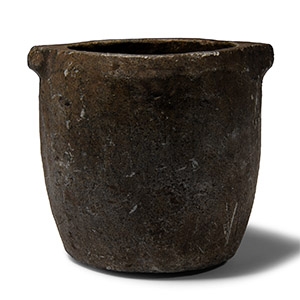
Western Asiatic Grey Stone Vessel
Circa 1st millennium B.C.Sold for (Inc. bp): £33
Barrel-shaped in profile with two lateral lugs below the rim. 812 grams, 10 cm
From a collection acquired on the UK art market from various auction houses and collections mostly before 2000. From an important Cambridgeshire estate; thence by descent. -
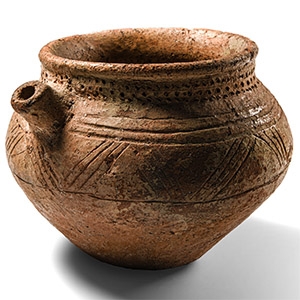
Mesopotamian Terracotta Pouring Vessel
3rd millennium B.C.Sold for (Inc. bp): £520
Formed as a pouring vessel with carinated body and short cylindrical spout, neck decorated with three concentric bands of pricked dots, incised bands below, combed chevrons to the equator featuring three raised knops to the rear. 438 grams, 11.8 cm wide
Acquired in Europe before 1990.
