
Loading, please wait...
LOT 1041
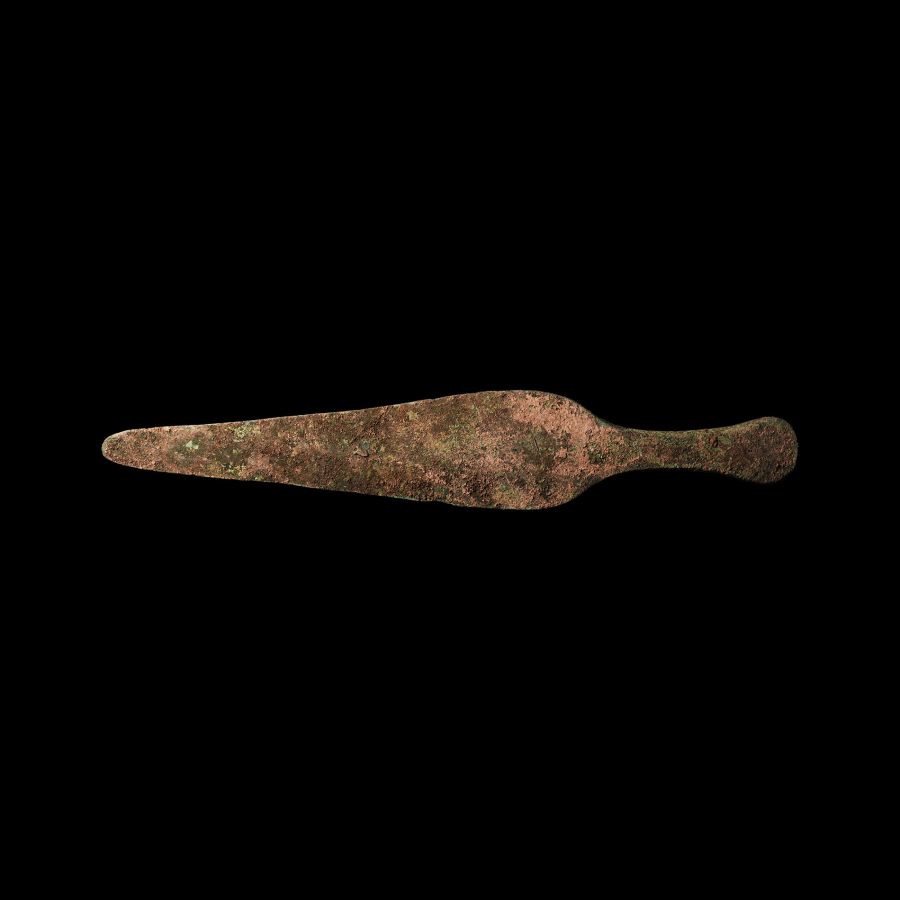
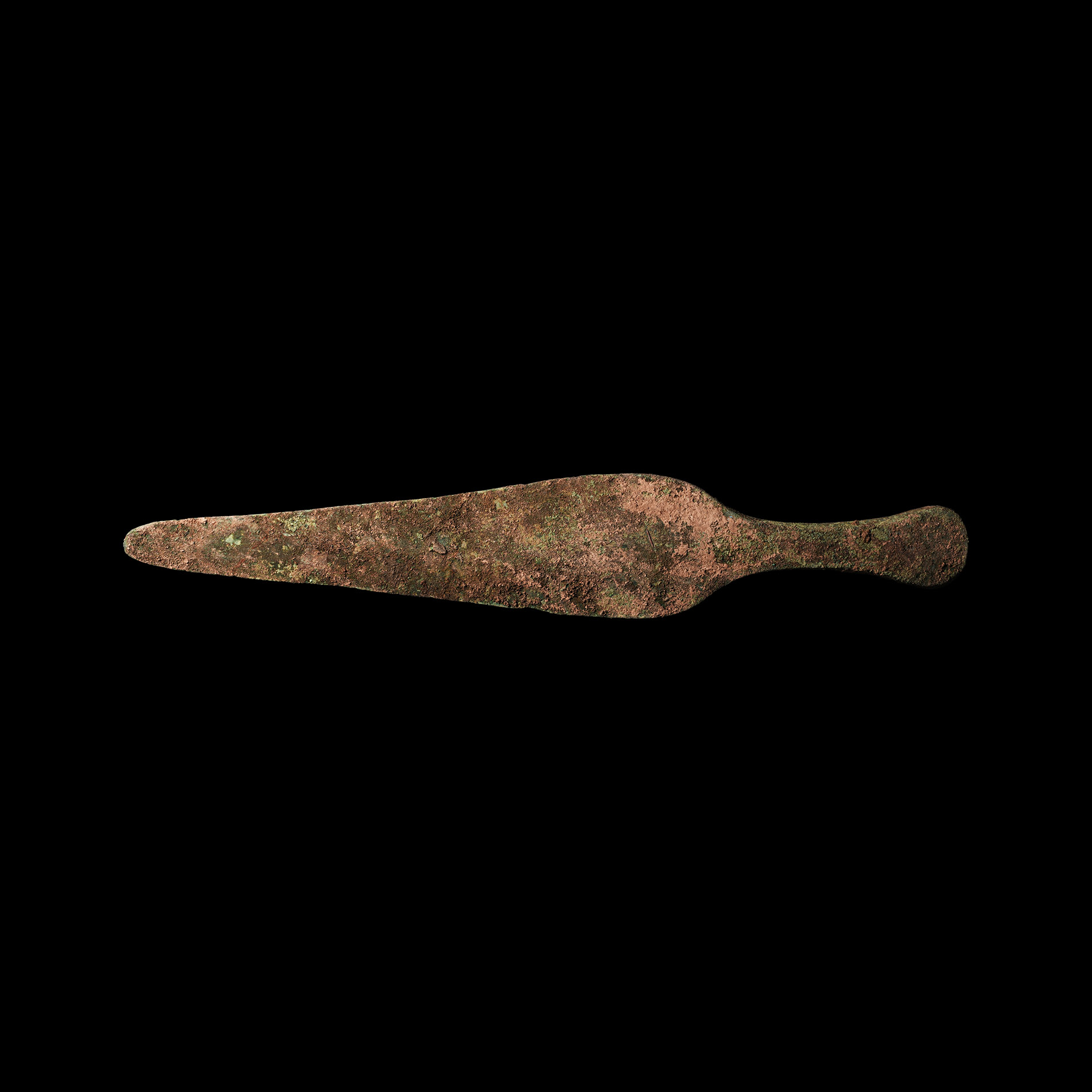
Western Asiatic Bronze Dagger with Integral Hilt
3RD-2ND MILLENNIUM B.C.
15 3/4 in. (740 grams, 40 cm).
Composed of a leaf-shaped blade, round-section grip with wide flat tang and lobe pommel.
ProvenanceAbelita family collection, 1980-2015.
LiteratureSee Gernez, G., L’armament en métal au Proche et Moyen-Orient: des origines a 1750 av. J.C., Paris, 2007, fig.2.138, subtypes P1-2A, for the type.
CONDITIONTimeLine Auctions follows a vetting process to ensure the authenticity and legality of all items, reinforcing our commitment to integrity and responsible trading. Each antiquity, antique, and coin lot undergoes thorough examination by a vetting committee of at least ten external specialists, professional trade association members, scientists, and archaeologists: Our Vetting Process
AUCTIONS:
TimeLine is a leading auction house specialising in antiquities, ancient art, collectables, natural history, coins, medals, and books. Our auctions offer museums, collectors, historians, and enthusiasts the opportunity to acquire unique and historically significant pieces.
LOT 1041
Western Asiatic Bronze Dagger with Integral Hilt
Estimate £100 - 140€120 - 160 (for guidance only)$140 - 190 (for guidance only)
-
Medieval Iron Single-Handed Sword
Late 13th-early 14th century A.D.Sold for (Inc. bp): £3,640
Of Oakeshott Type XII or XIII with a double-edged, well-balanced tapering blade, shallow fullers and a parallel-sided straight lower guard of cross style 2; medium tang and disc pommel of type K with chamfered sides; the blade with later inlaid markings, one side with Passau wolf, the other side with cross within a circle; cleaned and conserved. 1.39 kg, 95 cm
fine condition, restored.
Acquired 1990s-early 2000s. East Anglian private collection. Accompanied by an academic report by Dr Raffaele D'Amato.
The sword’s blade presents analogies with a sword of type XIIIa (Aleksic, 2007, pl.7,1) sharing the same type of pommel and the same length of the fuller. The sword, found in the Danube near the village Visnjica, is now in the City Museum, Belgrad, and presents a cross and a wolf impressed on the blade and inlaid with a yellow metal. -
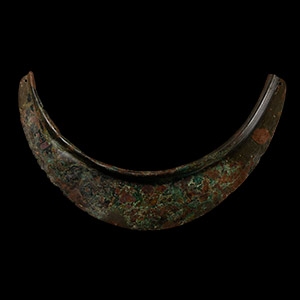
Greek Browband from Bronze Pseudo-Attic Helmet
3rd-2nd century B.C.Sold for (Inc. bp): £117
Semi-circular in shape, flat, the upper part raised, the lower one fitted with two fastening holes for the attachment to the upper bowl of the helmet; restored. 42 grams, 20.6 cm
Restored.
Private collection before 1937. Private collection, acquired February 1937, thence by descent. T.S. collection, UK, 1963.
The browband comes from a pseudo-Attic helmet of Thracian type (example from Brjastovec) or of a pseudo-Attic type with a high cap and fitted with a browband. These helmets, after prototypes already visible in the 5th century B.C., are typical of the Hellenistic era. The browband, if not fixed, was attached under the helmet's bowl, on the sides, by two rivets. -
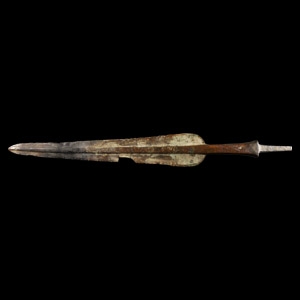
Amlash Tanged Spearhead
12th century B.C.Estimate: £250 - 350 (+bp*)
Opening Bid: £83
Composed of a tapering leaf-shaped blade with raised midrib, splayed neck and tapering tang. 637 grams, 49 cm
Acquired on the London art market, prior to 1980s. The Kusmirek Collection, UK.
The weapon belongs to the type 1 of the Khorasani spearhead classification, mainly from Marlik or Amlash areas. Similar pieces have been dated by Stutzinger to 1200-1100 B.C.
