
Loading, please wait...
LOT 1121
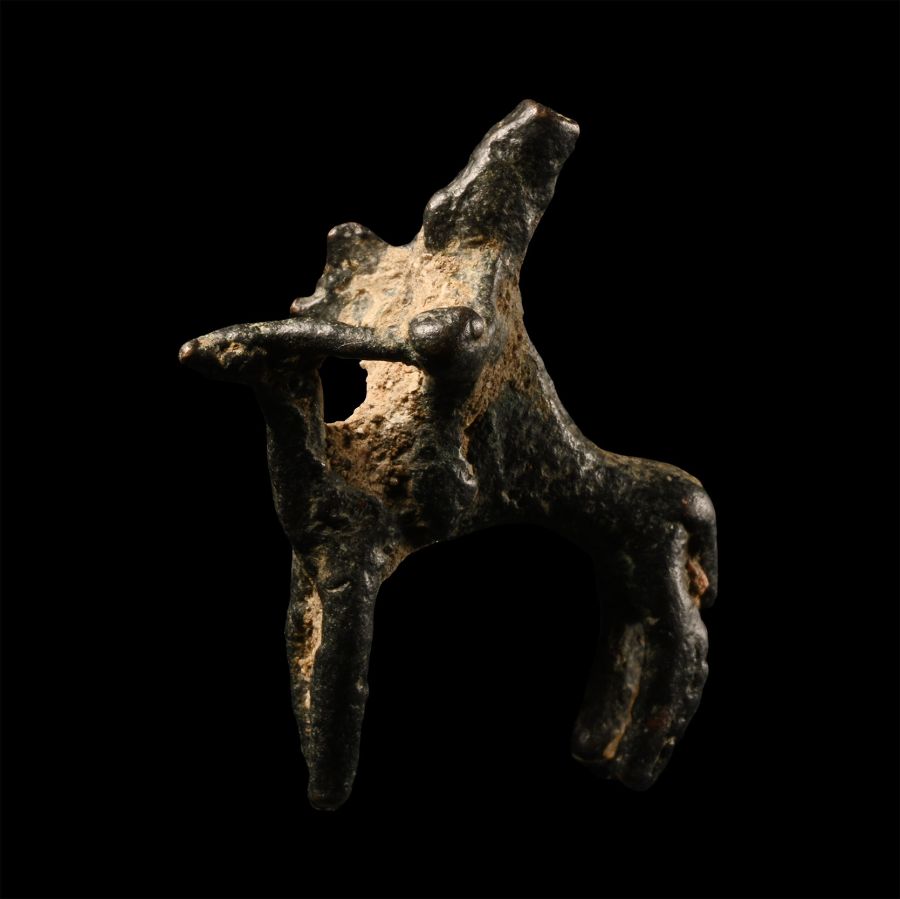
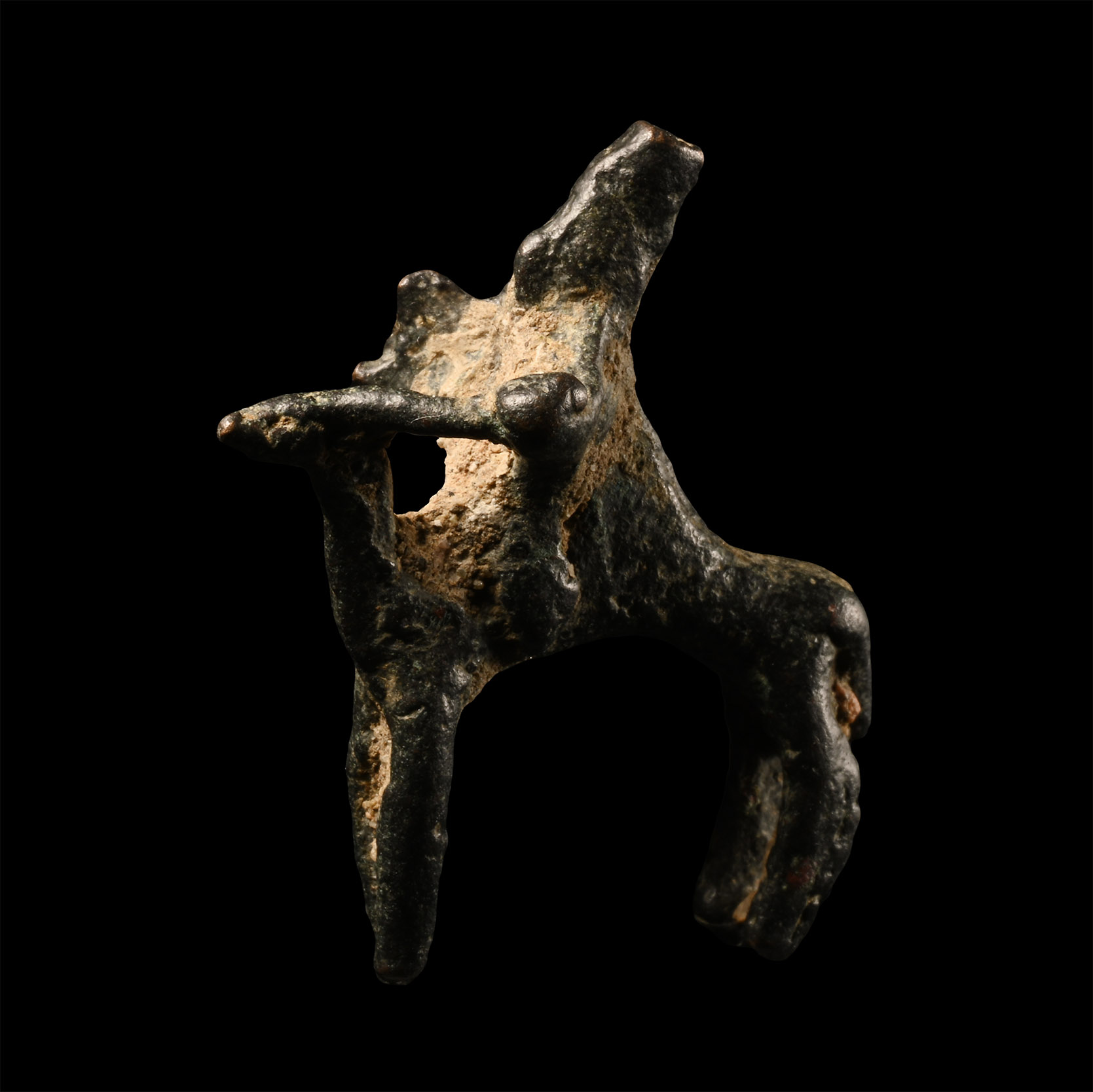
Western Asiatic Bronze Camel with Rider in Hasanlu Style
CIRCA 9TH-7TH CENTURY B.C.
1 5/8 in. (13.5 grams, 40 mm).
Depicting a rider holding the reins of a camel, the rider featuring a large head and hands while the camel is modelled with small head and slender body and legs
ProvenanceCollected from 1969-1999.
From the collection of the late Mr S.M., London, UK.
Accompanied by a copy of a previous catalogue information card.
Cf. Muscarella, O. W., Bronze and Iron: Ancient Near Eastern Artefacts in The Metropolitan Museum of Art, New York, 1988, pp.22-23, no.3, for an ibex in similar style from Hasanlu.
FootnotesSuch a figurine might have been worn as part of a necklace or bracelet for decorative purposes, Due to the tribal and sometimes nomadic nature of many of these populations, many Luristan bronzes were not of great size. Statuettes of local fauna have been largely recovered from North-Western Persian burials.
CONDITIONTimeLine Auctions follows a vetting process to ensure the authenticity and legality of all items, reinforcing our commitment to integrity and responsible trading. Each antiquity, antique, and coin lot undergoes thorough examination by a vetting committee of at least ten external specialists, professional trade association members, scientists, and archaeologists: Our Vetting Process
AUCTIONS:
TimeLine is a leading auction house specialising in antiquities, ancient art, collectables, natural history, coins, medals, and books. Our auctions offer museums, collectors, historians, and enthusiasts the opportunity to acquire unique and historically significant pieces.
LOT 1121
Western Asiatic Bronze Camel with Rider in Hasanlu Style
Estimate £100 - 140€120 - 160 (for guidance only)$140 - 190 (for guidance only)
-
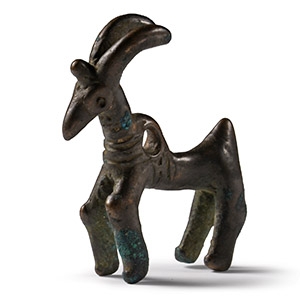
Luristan Bronze Ibex Amulet
1000-700 B.C.Sold for (Inc. bp): £247
Standing modelled in the round with head erect, curved horns, pierced at the shoulder. 16.1 grams, 33 mm
Private collection, Mr. A.A., London, acquired in the 1970s. with Bonhams, London, 8 May 2013, no.229 (Part). -
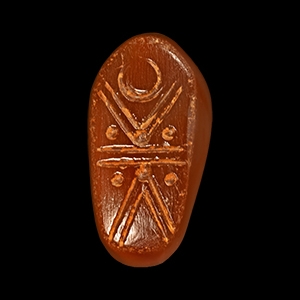
Neo Babylonian Agate Duck Weight with Engraving
Mid 1st millennium B.C.Sold for (Inc. bp): £585
Modelled as a duck with its head resting along its voluminous back, base engraved with a crescent, dots, lines and triangles. 11.8 grams, 28 mm
Collected from 1969-1999. From the collection of the late Mr S.M., London, UK.
There are references to keeping ducks in ancient Egypt and Mesopotamia from the third millennium B.C. onwards. One of the most common shapes for Near Eastern weights was 'the sleeping duck'. Representation demonstrates that the duck served chiefly as a meat source, even though a certain cultic significance must also be presumed: the crescent here engraved could be connected with the cult of Ishtar. -
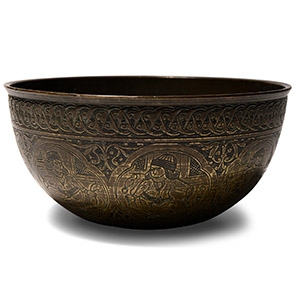
Qajar Period Decorated Bowl
19th century A.D.Estimate: £120 - 170 (+bp*)
Opening Bid: £60
Spun bronze bowl with everted rim, dense low-relief decoration of tendrils and interlace with quatrefoil panels each with a kneeling figure. 195 grams, 11.9 cm wide
Acquired by the vendor's father on the UK art market, before 1990.
