
Loading, please wait...
LOT 1006
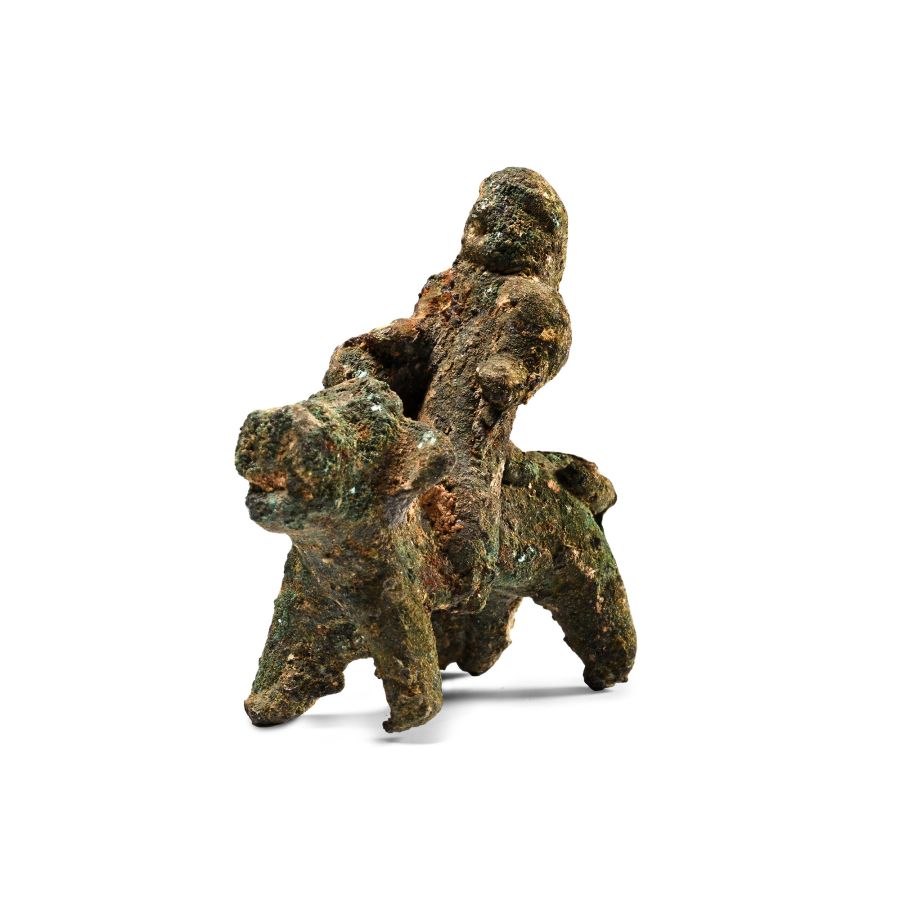
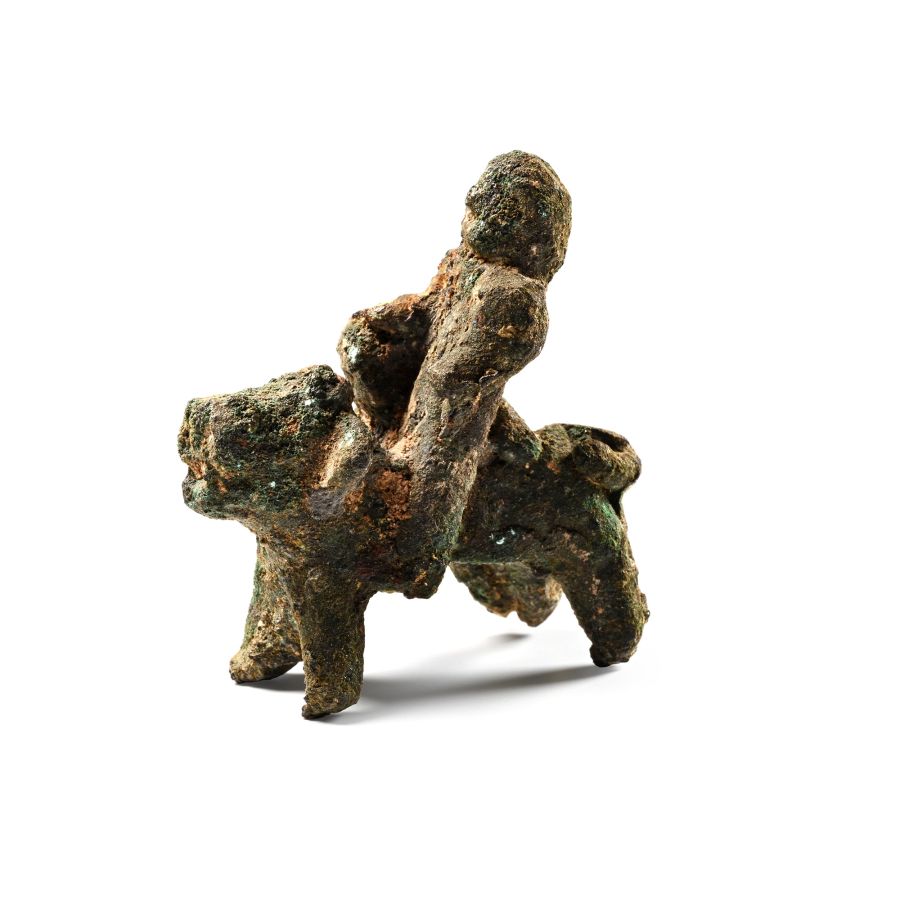
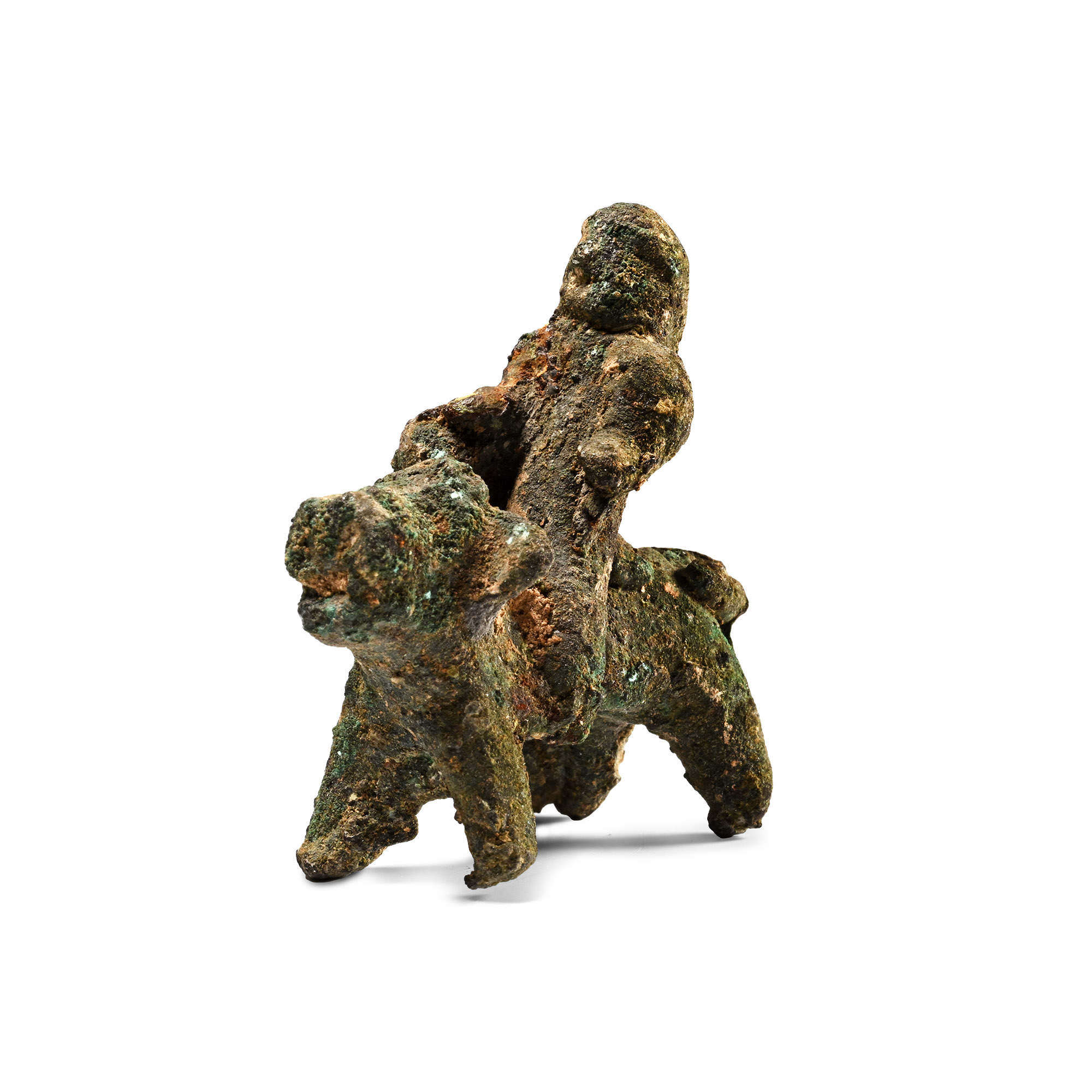
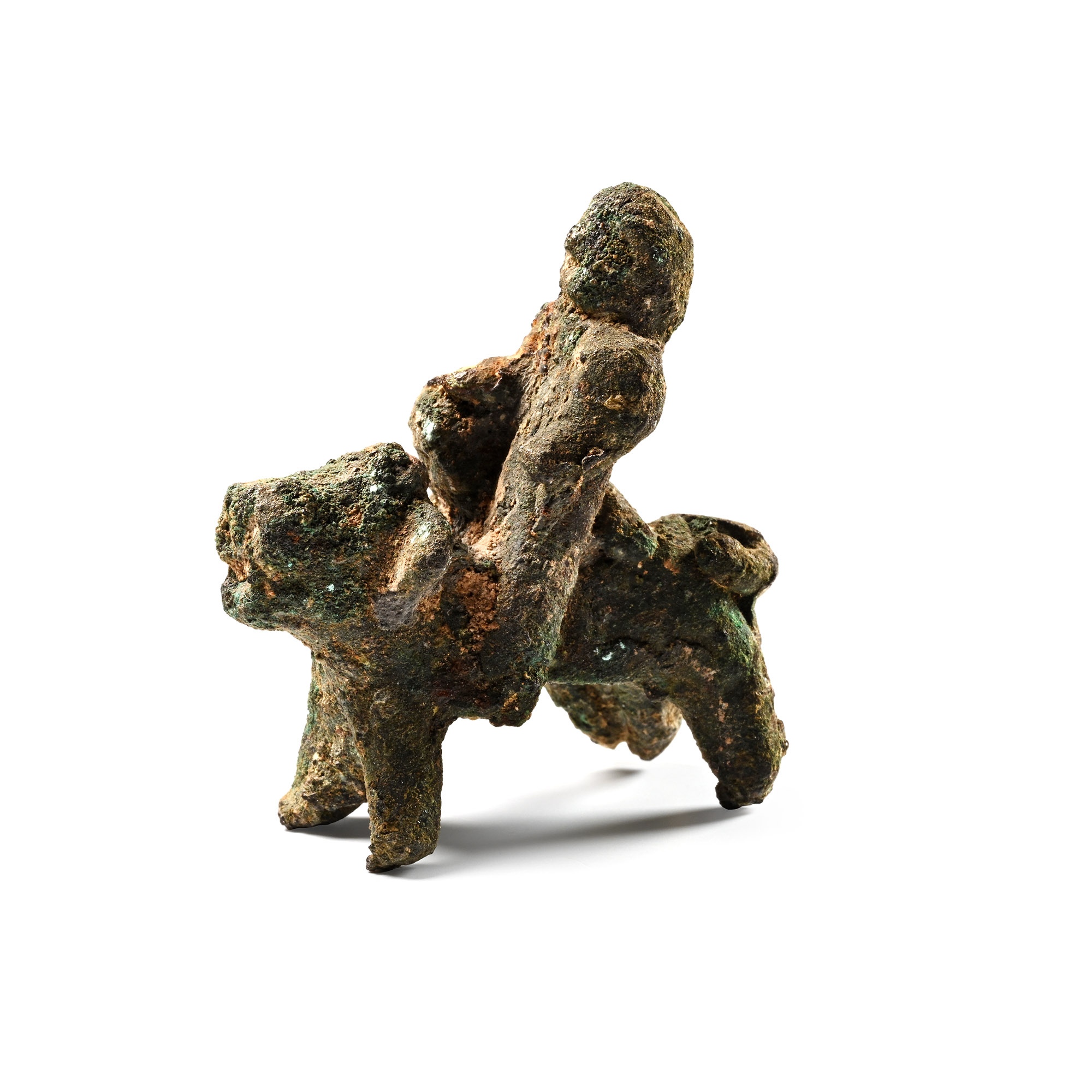
Western Asiatic Bronze Bull Rider
1ST MILLENNIUM B.C.
2 in. (84 grams, 51 mm high).
Showing a man on a standing bull, grabbing the hair of a captive with his right hand.
ProvenanceAcquired in the mid 1980s-1990s.
Private collection, Switzerland, thence by descent.
Private collection, since the late 1990s.
This lot has been cleared against the Art Loss Register database, and is accompanied by an illustrated lot declaration signed by the Head of the Antiquities Department, Dr Raffaele D'Amato.
Cf. Ornan, T., ‘The bull and its two masters: Moon and Storm deities in relation to the bull in ancient Near Eastern Art (the phenomenon of shared identical emblematic imagery in Levantine iconography)’ in Israel Exploration Journal, 51 (1), pp.1-26, figs.12-14, for divinities mounting a bull.
FootnotesThe statuette can represent the god storm Hazor, a storm deity with lunar traits. The association between a bull and storm deities is well known on Anatolian sealings from 20th-19th century B.C. The portrayal of a god standing on a bull in conjunction with lunar symbols derived from Old Babylonian cult, where the bull was connected with the Moon as a goddess, and continued in the Near East in association with the god Hazor, identified with El, head of the Canaanite pantheon.
CONDITIONTimeLine Auctions follows a vetting process to ensure the authenticity and legality of all items, reinforcing our commitment to integrity and responsible trading. Each antiquity, antique, and coin lot undergoes thorough examination by a vetting committee of at least ten external specialists, professional trade association members, scientists, and archaeologists: Our Vetting Process
AUCTIONS:
TimeLine is a leading auction house specialising in antiquities, ancient art, collectables, natural history, coins, medals, and books. Our auctions offer museums, collectors, historians, and enthusiasts the opportunity to acquire unique and historically significant pieces.
LOT 1006
Western Asiatic Bronze Bull Rider
Estimate £800 - 1,000€930 - 1,160 (for guidance only)$1,080 - 1,350 (for guidance only)
-
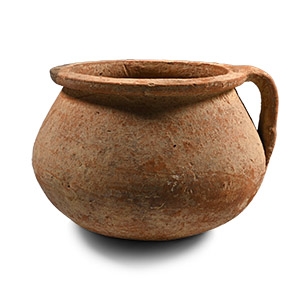
Western Asiatic Terracotta Bowl with Handle
1st millennium B.C.Estimate: £100 - 140 (‡+bp*)
Opening Bid: £50
Bulbous body with rounded base, flattened rim with a small strap handle to the side. 320 grams, 13.3 cm wide
with Galerie Rhéa, Zurich, Switzerland. This lot has been cleared against the Art Loss Register database, and is accompanied by an illustrated lot declaration signed by the Head of the Antiquities Department, Dr Raffaele D'Amato. -
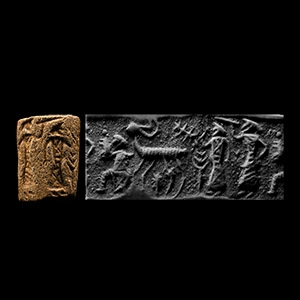
Anatolian Yellow Stone Cylinder Seal with Horned Quadruped
2nd millennium B.C.Sold for (Inc. bp): £98
Cylinder with cord and bead handles; accompanied by a copy of an old scholarly note, typed and signed by W.G. Lambert, late Professor of Assyriology, University of Birmingham, 1970-1993, which states: 'Description of Cylinder Seal of Yellow Stone (?), 31 x 23.5 mm. Standing horned quadruped with plant(?) between splayed legs, before it three figure of human form, the first seated, the other two standing, the first of them holding up a weapon(?), the other a branch(?) ; all three face away from the horned animal , and there is a tree in front of the last of the three. This is a very unusual piece, and the cylinder is irregular as though an existing piece of material had been used without trimming to a regular shape. Most probably second millennium and from Syria or Anatolia. Condition very good.'; supplied with a museum-quality impression. 24.8 grams, 31 mm
UK private collection, acquired 1980-1983. Accompanied by a copy of a scholarly note, typed and signed by Professor Wilfrid George Lambert in November 1987. This lot has been cleared against the Art Loss Register database, and is accompanied by an illustrated lot declaration signed by the Head of the Antiquities Department, Dr Raffaele D'Amato. -
.jpg)
Western Asiatic Stamp Seal with Winged God
Circa 800 B.C.Estimate: £250 - 350 (+bp*)
Opening Bid: £125
Conical body with ribbed collar and loop, raised plaque to the underside with incuse image of winged figure; supplied with a museum-quality impression. 6.8 grams, 16 mm
From the collection of a gentleman, acquired on the London art market in the 1990s. This lot has been cleared against the Art Loss Register database, and is accompanied by an illustrated lot declaration signed by the Head of the Antiquities Department, Dr Raffaele D'Amato.
