
Loading, please wait...
LOT 1286
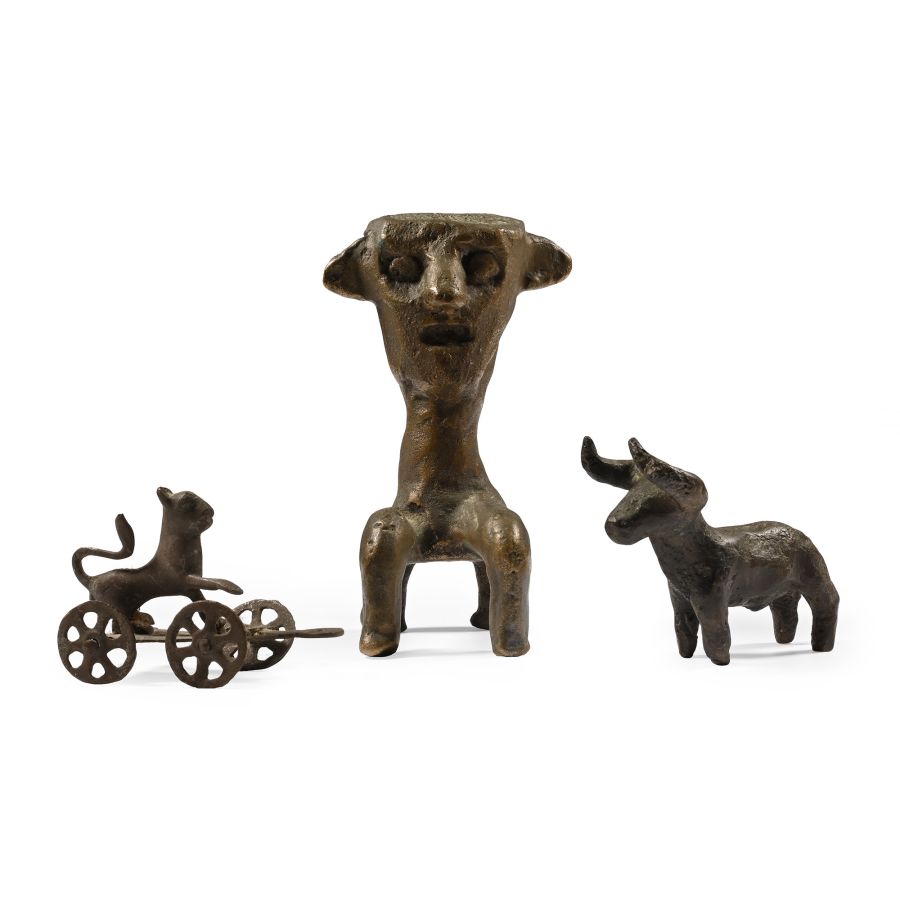
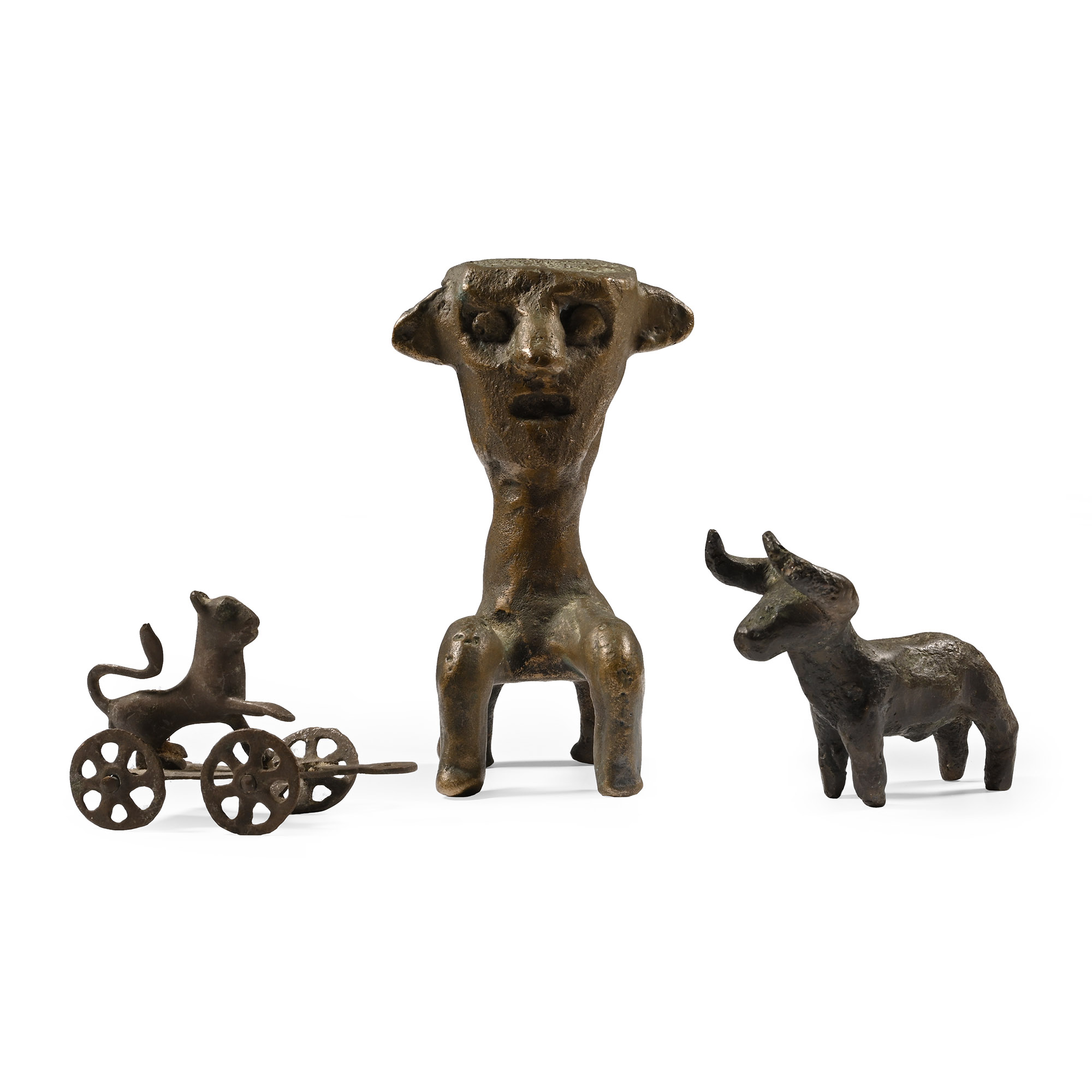
Western Asiatic Bronze Bull-Human and Other Animal Collection
20TH CENTURY A.D.
3 - 5 1/4 in. (1.37 kg total, 7.5-13.3 cm).
Comprising: a bull with long horns; a lioness on a wheeled carriage; mythical bull-man figurine. [3, No Reserve]
ProvenanceFrom a family collection, acquired 1930s-1980s.
Property of K.P., a Cornish lady collector, UK.
This lot has been cleared against the Art Loss Register database, and is accompanied by an illustrated lot declaration signed by the Head of the Antiquities Department, Dr Raffaele D'Amato.
TimeLine Auctions follows a vetting process to ensure the authenticity and legality of all items, reinforcing our commitment to integrity and responsible trading. Each antiquity, antique, and coin lot undergoes thorough examination by a vetting committee of at least ten external specialists, professional trade association members, scientists, and archaeologists: Our Vetting Process
AUCTIONS:
TimeLine is a leading auction house specialising in antiquities, ancient art, collectables, natural history, coins, medals, and books. Our auctions offer museums, collectors, historians, and enthusiasts the opportunity to acquire unique and historically significant pieces.
LOT 1286
Western Asiatic Bronze Bull-Human and Other Animal Collection
Sold for (Inc. bp): £85
-
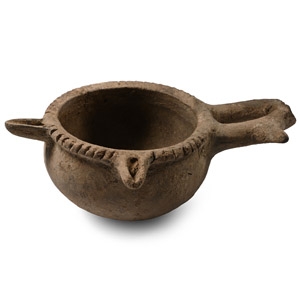
Luristan Bronze Cup with Star Handle
2nd-1st millennium B.C.Sold for (Inc. bp): £78
Barrel-shaped in profile with thick rim and loop handle; ropework detailing to rim, three radiating spouts below the rim, handle with lateral spurs. 370 grams, 20 cm wide
From a West London, UK, collection, 1990s. This lot has been cleared against the Art Loss Register database, and is accompanied by an illustrated lot declaration signed by the Head of the Antiquities Department, Dr Raffaele D'Amato. -
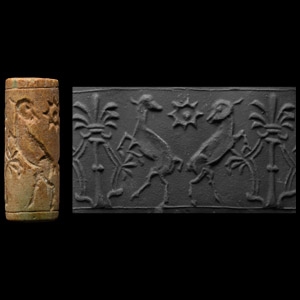
Eastern Syrian Faience Cylinder Seal with Worship Scenes
Circa 800-600 B.C.Sold for (Inc. bp): £650
Accompanied by a copy of an old scholarly note, hand written and signed by W.G. Lambert, late Professor of Assyriology, University of Birmingham, 1970-1993, which states: 'Cylinder seal of Green faience, 36x15mm. The design shows a stylized sacred tree and a reared up kid on either side. A stylized solar disc serves as a terminal. This seal is to be dated c. 800-600 B.C. and comes from Mesopotamia or Eastern Syria. For faience it is a large seal in good condition.'; supplied with a museum-quality impression. 13.5 grams, 36 mm
From the private collection of a North American lady, formed 1970s-early 1990s, with collection reference no.P38. Accompanied by a copy of a scholarly note, hand written and signed by Professor Wilfrid George Lambert dated December 1990. This lot has been cleared against the Art Loss Register database, and is accompanied by an illustrated lot declaration signed by the Head of the Antiquities Department, Dr Raffaele D'Amato. -
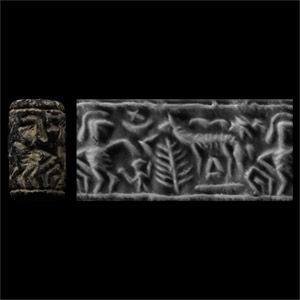
Levantine Black Stone Cylinder Seal with Standing Human Figure
Circa 1200-900 B.C.Sold for (Inc. bp): £234
Cylinder with cord and bead handles; accompanied by a copy of an old scholarly note, typed and signed by W.G. Lambert, late Professor of Assyriology, University of Birmingham, 1970-1993, which states: 'Description of Cylinder Seal of Soft Black Stone, 19 x 11 mm. Standing human with big shock of hair, resting one hand on the head of a child; quadruped standing on base-line with 'delta' between legs; pecking bird, tree, bull's horns (?), combined star and crescent, fly, and one or two unidentified items. The whole design is put between rules. Levantine, c. 1200-900 B.C. An unusual design. Condition: good.'; supplied with a museum-quality impression. 5.06 grams, 18 cm
UK private collection, acquired 1980-1983. Accompanied by a copy of a scholarly note, typed and signed by Professor Wilfrid George Lambert in October 1987. This lot has been cleared against the Art Loss Register database, and is accompanied by an illustrated lot declaration signed by the Head of the Antiquities Department, Dr Raffaele D'Amato.
