
Loading, please wait...
LOT 1255
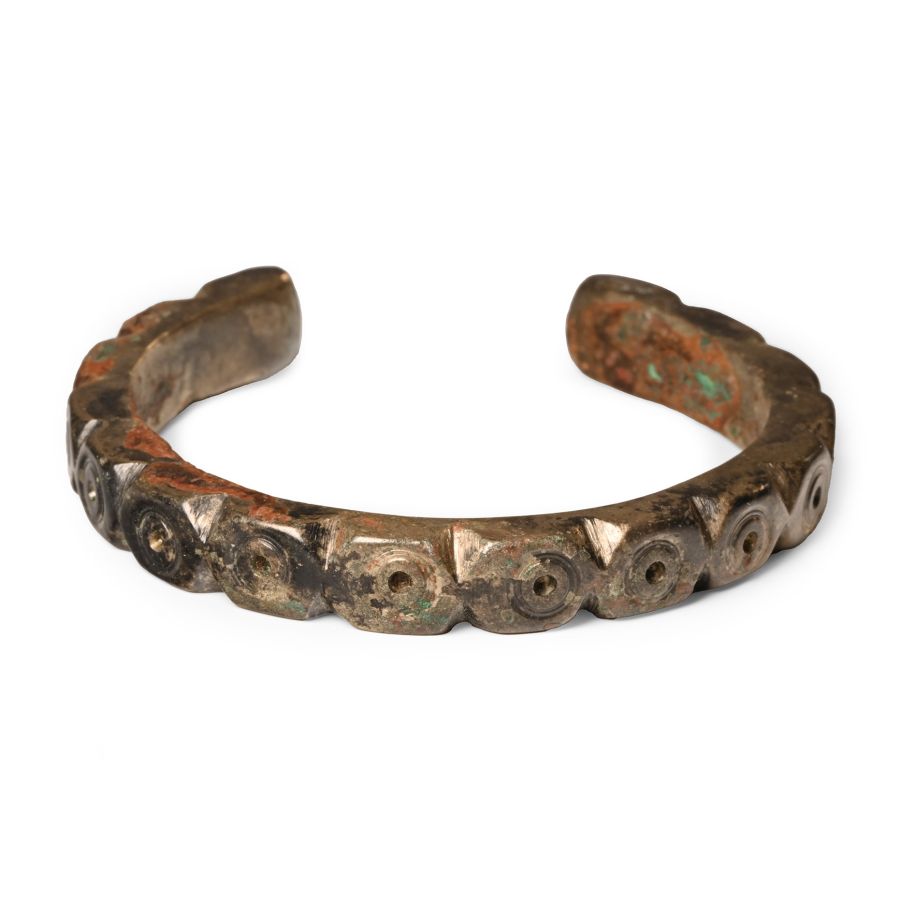
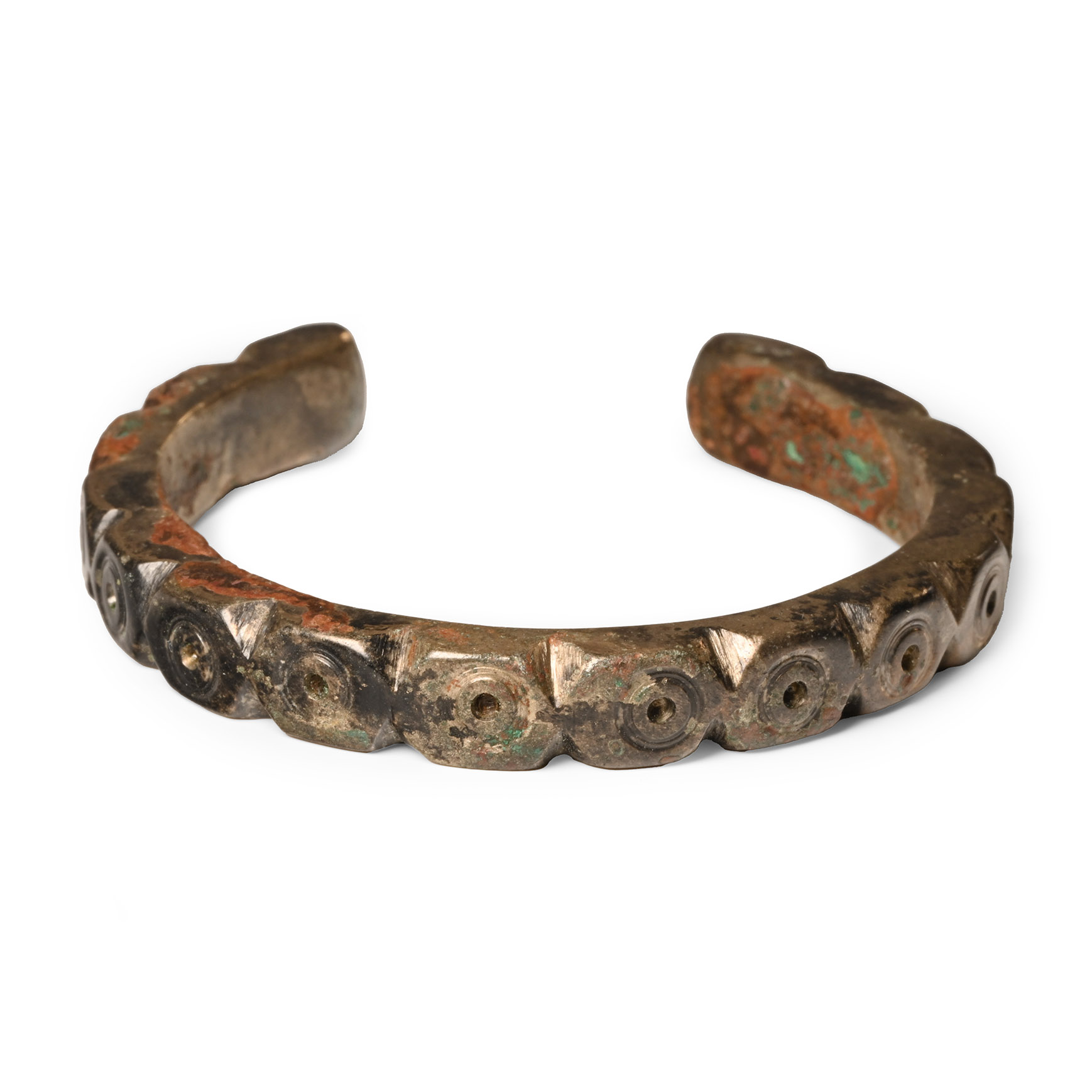
Western Asiatic Bronze Bracelet With Ring and Dots
13TH-14TH CENTURY A.D.
2 1/2 in. (55 grams, 62 mm).
Comprising a penannular body with segmented ring-and-dot design. [No Reserve]
ProvenanceUK private collection before 2000.
On the UK art market.
Property of a London gentleman.
TimeLine Auctions follows a vetting process to ensure the authenticity and legality of all items, reinforcing our commitment to integrity and responsible trading. Each antiquity, antique, and coin lot undergoes thorough examination by a vetting committee of at least ten external specialists, professional trade association members, scientists, and archaeologists: Our Vetting Process
AUCTIONS:
TimeLine is a leading auction house specialising in antiquities, ancient art, collectables, natural history, coins, medals, and books. Our auctions offer museums, collectors, historians, and enthusiasts the opportunity to acquire unique and historically significant pieces.
-
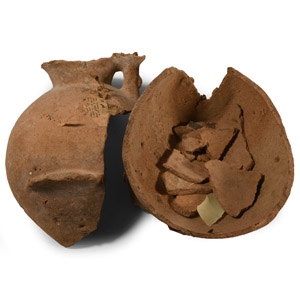
Western Asiatic and other Broken Pottery Vessel Group
2nd-1st millennium B.C.Sold for (Inc. bp): £13
Including a large amphora with integral loop handle, and other items. 3.1 kg total, 4-32 cm
Ex London, UK, gallery. Property of a North London, UK, gentleman. -
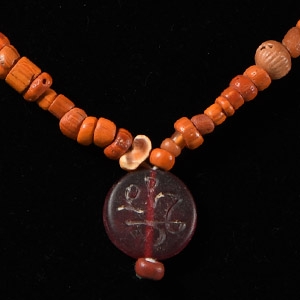
Western Asiatic Mixed Bead Necklace
1st millennium A.D. and laterSold for (Inc. bp): £78
Restrung designer necklace with faience, carnelian and other annular and melon beads, centrepiece a disc with incised loop design to each face. 11 grams, 44 cm
Acquired on the London, UK, art market in the 1990s. Ex London, UK, gallery. -
.jpg)
Early Dynastic Cylinder Seal with Combat Scene
Late 3rd-early 2nd millennium B.C.Sold for (Inc. bp): £2,470
Lapis lazuli with the figure of a standing figure with bull head, human body, bull legs and tail, holding a pair of standing ibex by the heads; a standing naked male with radiate headdress and holding a pair of rearing lions by the necks; a standing figure with bull head and legs holding a rearing goat; a standing figure with bull head and legs and holding a pair of rearing ibex. 7.63 grams, 18 mm
From an important London collection; formed before 1990. From a collection acquired from various auction houses in the UK. From the estate of Mr R.W., a private Wiltshire, UK, collector; thence by descent.
