
Loading, please wait...
LOT 1121
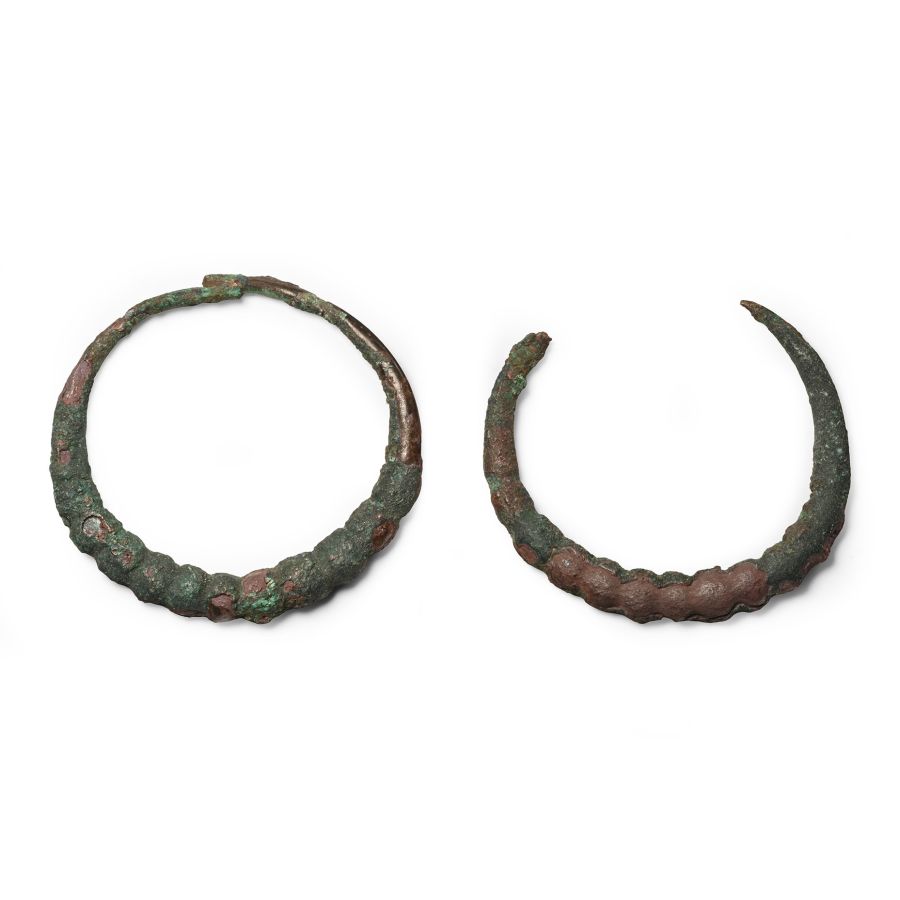
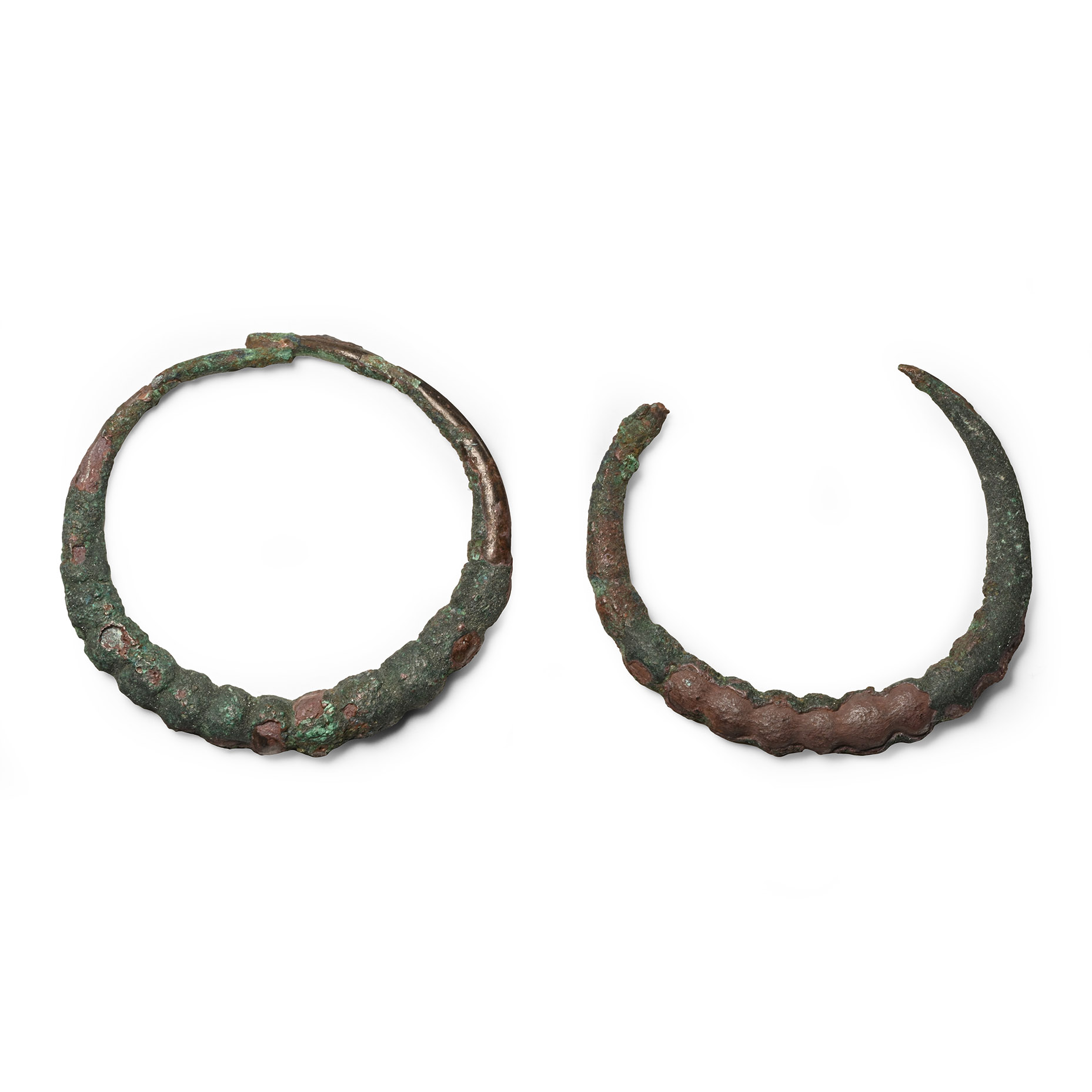
Western Asiatic Bronze Bracelet Pair
CIRCA 1ST MILLENNIUM B.C.
2 1/8 in. (40.2 grams total, 55 mm each).
Comprising two penannular bracelets with ribbed bodies expanding at the centre. [2, No Reserve]
ProvenanceUK private collection before 2000.
On the UK art market.
Property of a London gentleman.
TimeLine Auctions follows a vetting process to ensure the authenticity and legality of all items, reinforcing our commitment to integrity and responsible trading. Each antiquity, antique, and coin lot undergoes thorough examination by a vetting committee of at least ten external specialists, professional trade association members, scientists, and archaeologists: Our Vetting Process
AUCTIONS:
TimeLine is a leading auction house specialising in antiquities, ancient art, collectables, natural history, coins, medals, and books. Our auctions offer museums, collectors, historians, and enthusiasts the opportunity to acquire unique and historically significant pieces.
-
.jpg)
Neo-Babylonian Chalcedony Duck Weight with Engraved Figure
Circa 8th-6th century B.C.Sold for (Inc. bp): £169
The animal carved with its head and neck resting along its back; stylised figure with crescent horns or headdress engraved to base; pierced for suspension. 5.07 grams, 21 mm
From an early 20th century collection, Caernarfon, North Wales, UK.
A corpus of similar pieces was found by Italian archaeologists in the city of Karkemish. They were produced and in use in the Iron Age I-III (i.e. from ca. 1190 B.C., date of the collapse of the Hittite Empire and the rise of the “Great Kings” of Karkemish, to 605 B.C., date of the “battle of Karkemish”, when the Babylonian army conquered the city. -
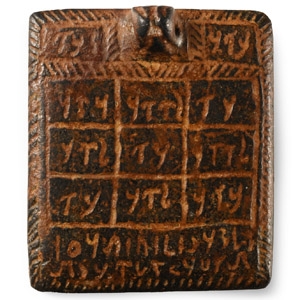
Western Asiatic Magical Aramaic Plaque Pendant
Circa 2nd-8th century A.D.Sold for (Inc. bp): £390
Square pendant with integral loop, ropework border and header, grid with numerical notation. 13.9 grams, 38 mm
From the collection of a gentleman, acquired on the London art market in the 1990s. -
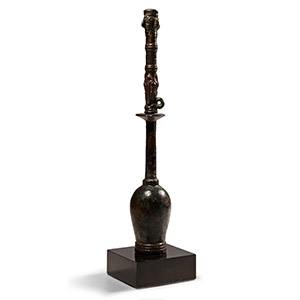
Luristan Bronze Sceptre Finial
8th-7th century B.C.Sold for (Inc. bp): £221
Bulbous socket with ribbing to the mouth, slender shank with flange; second element with ribbed collars, lateral loop, wolf-masks and addorsed human heads; mounted on a custom-made stand. 368 grams total, 26.3 cm high including stand
Acquired in 1967. property of a London, UK, gentleman.
