
Loading, please wait...
LOT 1332
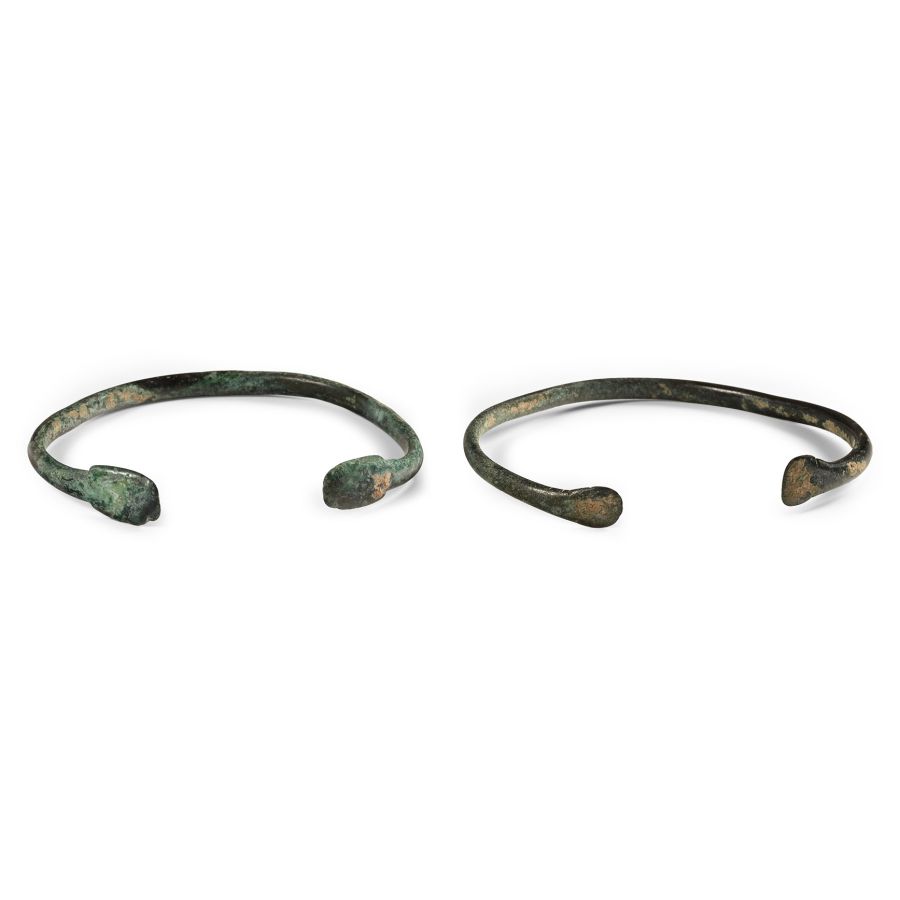
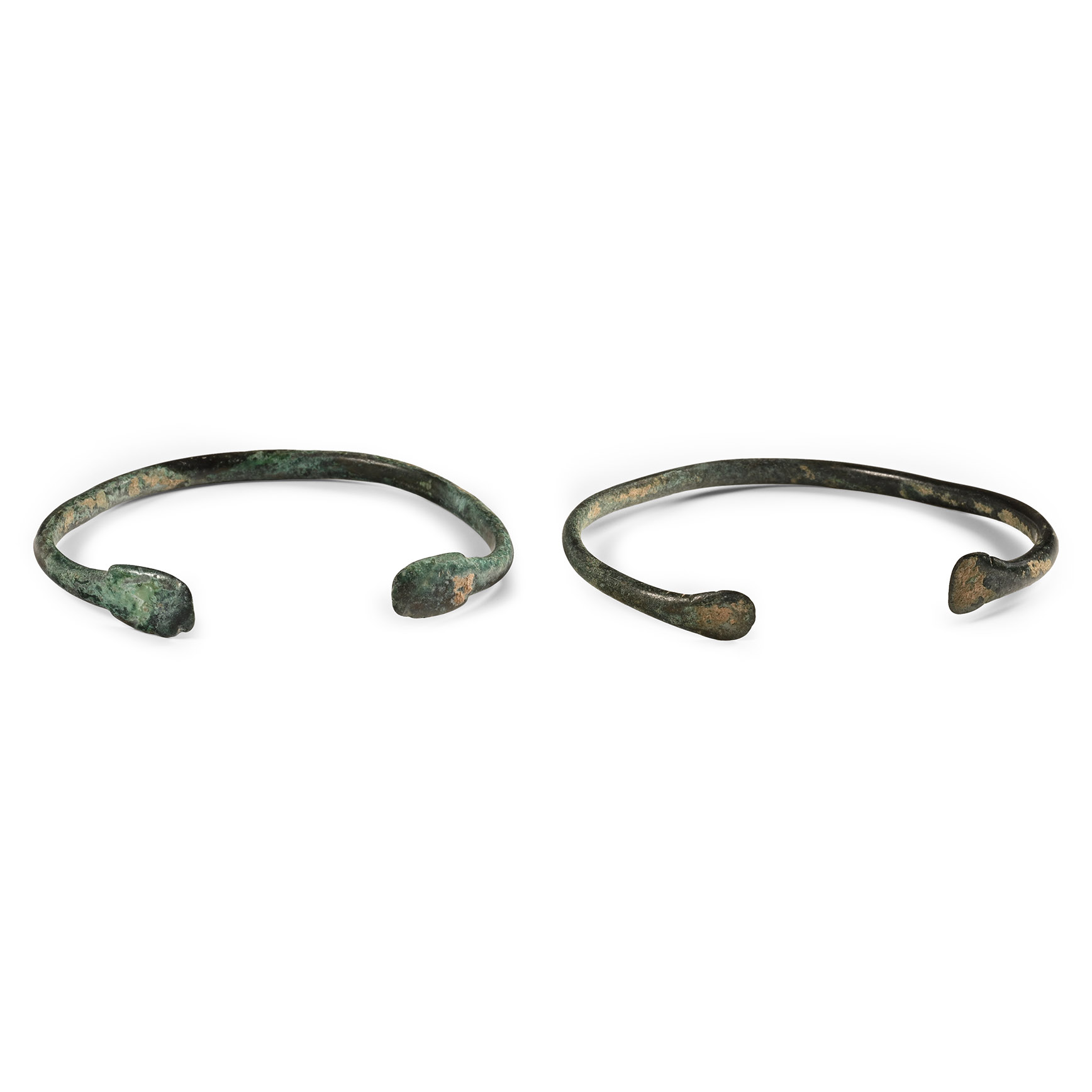
Western Asiatic Bronze Bracelet Group
1ST MILLENNIUM B.C.
2 3/8 - 2 1/2 in. (22.8 grams total, 61-63 mm).
Comprising two penannular D-section bracelets with hammered finials. [2, No Reserve]
ProvenanceUK private collection before 2000.
On the UK art market.
Property of a London gentleman.
TimeLine Auctions follows a vetting process to ensure the authenticity and legality of all items, reinforcing our commitment to integrity and responsible trading. Each antiquity, antique, and coin lot undergoes thorough examination by a vetting committee of at least ten external specialists, professional trade association members, scientists, and archaeologists: Our Vetting Process
AUCTIONS:
TimeLine is a leading auction house specialising in antiquities, ancient art, collectables, natural history, coins, medals, and books. Our auctions offer museums, collectors, historians, and enthusiasts the opportunity to acquire unique and historically significant pieces.
-
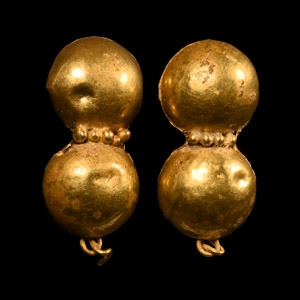
Western Asiatic Gold Double Bulb Earrings
Circa 1st millennium B.C.Estimate: £300 - 400 (+bp*)
Opening Bid: £167
Matched pair of gold earrings, each formed as two bulbs with a string of granules to the waist, loop to one end to accept a wire fastener. 5.32 grams total, 31-32 mm
From a late Japanese specialist collector, 1970-2000s. Accompanied by an earlier catalogue identification card. -
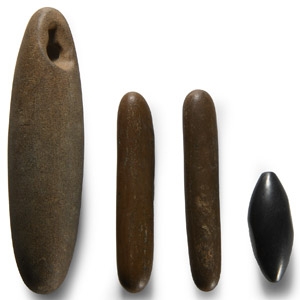
Western Asiatic Stone Weight Collection
Circa 1st millennium B.C.Sold for (Inc. bp): £33
Comprising: two baguette-shaped stone bars, a D-section scaphoid haematite bar, a columnar stone bar with rounded ends, one pierced for suspension. 184 grams total, 4-10.3 cm
From a collection acquired on the UK art market from various auction houses and collections mostly before 2000. From an important Cambridgeshire estate; thence by descent. -
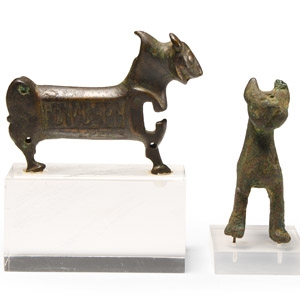
Western Asiatic Bronze Attachment Group
Circa 12th-14th century A.D.Sold for (Inc. bp): £65
Comprising: one side of a feline padlock with Kufic inscription to the flank; foreparts of a feline figurine with ledge to rear; each mounted on a display frame. 152 grams total, 63-79 mm including stand
Ex European collection since 1970. with Hermann Historica, Munich, Germany, Auction 95, no.6031 (Part). Property of a French collector.
