
Loading, please wait...

LOT 1359
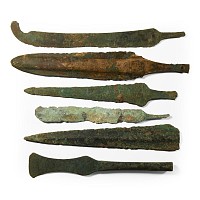
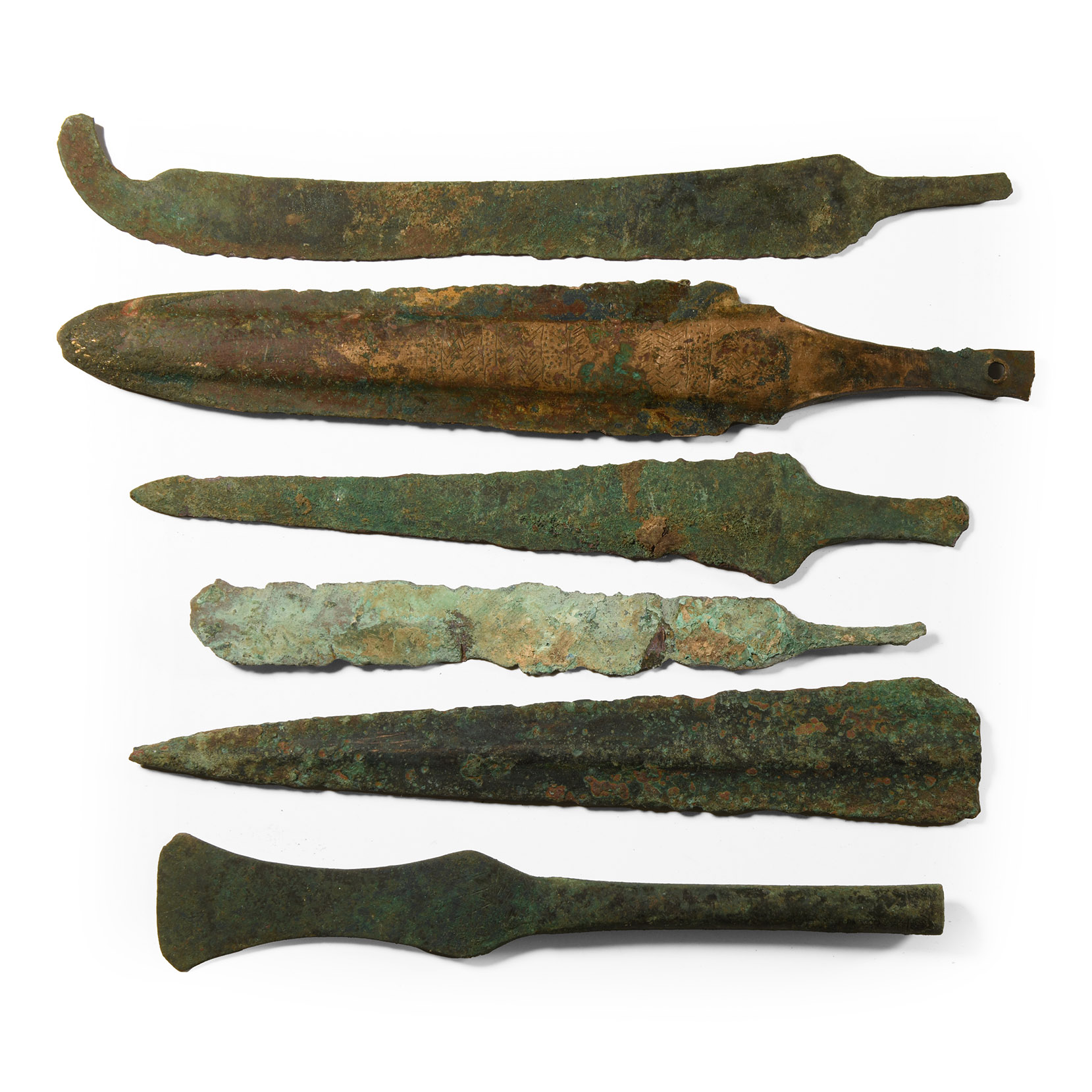
Western Asiatic Bronze Blade Collection
2ND-1ST MILLENNIUM B.C.
6 1/8 - 8 1/4 in. (410 grams total, 15.5-21 cm).
Including double-edged leaf-shaped type, chisel-type and others. [6]
ProvenanceEx London collection, formed 1990-2000.
CONDITIONTimeLine Auctions follows a vetting process to ensure the authenticity and legality of all items, reinforcing our commitment to integrity and responsible trading. Each antiquity, antique, and coin lot undergoes thorough examination by a vetting committee of at least ten external specialists, professional trade association members, scientists, and archaeologists: Our Vetting Process
AUCTIONS:
TimeLine is a leading auction house specialising in antiquities, ancient art, collectables, natural history, coins, medals, and books. Our auctions offer museums, collectors, historians, and enthusiasts the opportunity to acquire unique and historically significant pieces.
-
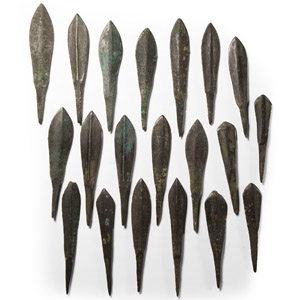
Old Babylonian Bronze Arrowhead Collection
1800-1500 B.CSold for (Inc. bp): £364
Comprising paddle-shaped arrowheads with a flat, comparatively wide mid-rib. 177 grams total, 57-80 mm
UK private collection before 2000. Acquired on the UK art market. Property of a London gentleman.
These kind of arrowheads were typical of the Old Babylonian Empire. The shoulders were pronounced and the arrowhead had a rectangular-section tapering tang. This simple form was popular throughout and show comparative common finds in the Holy Land. -
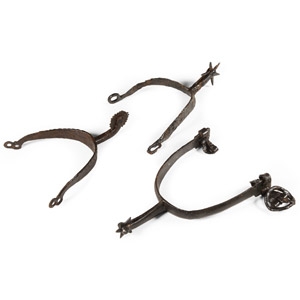
Medieval 'Published' Iron Spur Collection
Circa 13th-17th century A.D.Sold for (Inc. bp): £143
Comprising: a rowel spur of early 13th century date with short neck; a 14th century U-shaped rowel spur with straight neck, five star rowel and squared terminals with fittings and a buckle; a 17th century drop neck spur with multi-pointed rowel, the arched body decorated with transversal lines and bilobate terminals. 280 grams total, 13.2-16.5 cm
From the collection of the famous author, writer and speaker, Gordon Bailey, Essex, UK; formed since 1968.
By the late 13th century A.D., rowel spurs in the West had virtually replaced the old single prick point type spur. The rowel spurs were more effective as a goad and at the same time less damaging to the flank of the horse. -
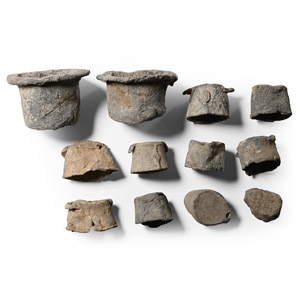
Jacobean 'Published' Musket and Pistol Powder Measure Collection
17th century A.D.Sold for (Inc. bp): £13
Including larger types with everted rim and smaller drum-shaped types. 331 grams total, 23-48 mm
Found Hertford End, Essex, UK. From the collection of the famous author, writer and speaker, Gordon Bailey, Essex, UK; formed since 1968.
