
Loading, please wait...
LOT 1357
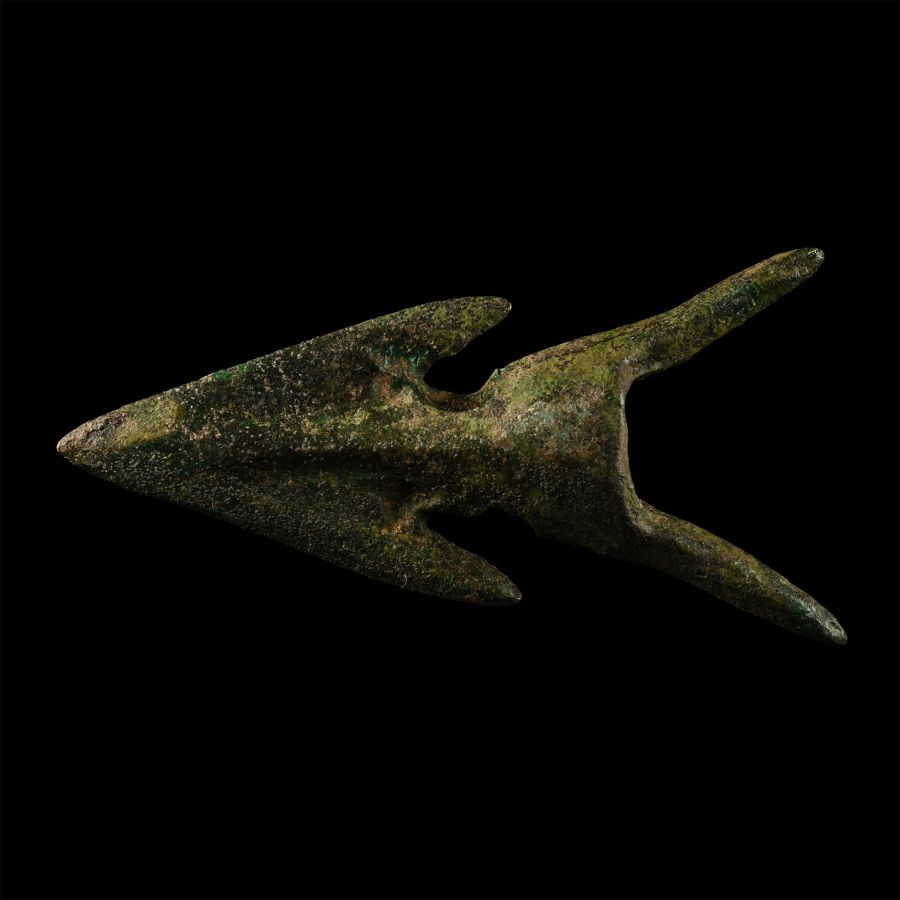
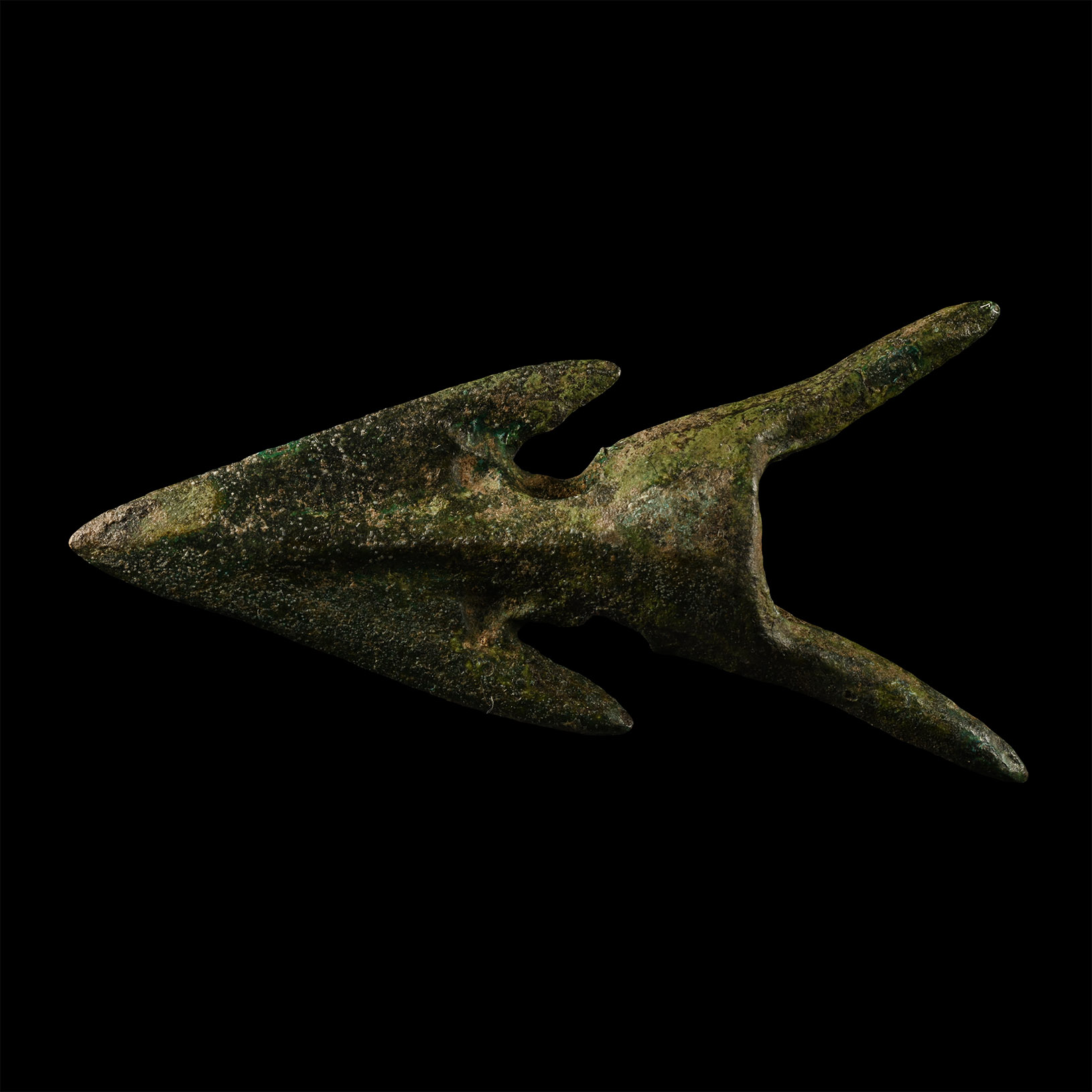
Western Asiatic Bronze Barbed Arrowhead
2ND MILLENNIUM B.C.
2 1/2 in. (24.7 grams, 63 mm).
Triangular in plan with raised central midrib and tapering lugs below, square socket and circular horizontal piercing through the body above. [No Reserve]
ProvenanceOn the European art market before 2000.
Ex collection of a Surrey, UK, gentleman; acquired on the UK art market.
TimeLine Auctions follows a vetting process to ensure the authenticity and legality of all items, reinforcing our commitment to integrity and responsible trading. Each antiquity, antique, and coin lot undergoes thorough examination by a vetting committee of at least ten external specialists, professional trade association members, scientists, and archaeologists: Our Vetting Process
AUCTIONS:
TimeLine is a leading auction house specialising in antiquities, ancient art, collectables, natural history, coins, medals, and books. Our auctions offer museums, collectors, historians, and enthusiasts the opportunity to acquire unique and historically significant pieces.
-
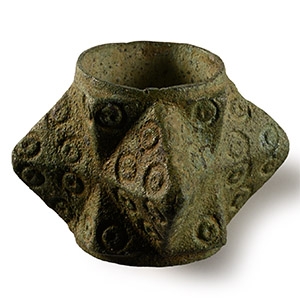
Decorated Star-Shaped Macehead
Eastern European, circa 14th century A.D.Sold for (Inc. bp): £260
With short thick triangular spikes, decorated with engraved concentric circles. 85 grams, 53 mm
From a collection acquired on the UK art market from various auction houses and collections mostly before 2000. From an important Cambridgeshire estate; thence by descent.
The polygonal mace evolved into the hexagonal winged mace. Originating in the east, this weapon spread across Eastern Europe during the 13th century A.D., and from there to the west. The winged mace, used by the western Europeans, was almost certainly based upon Eastern Roman or Islamic prototypes. It is relevant to note that the polygonal mace was widely used by the eastern cavalrymen (like Turkish and Mongols), during the 14th century A.D. -
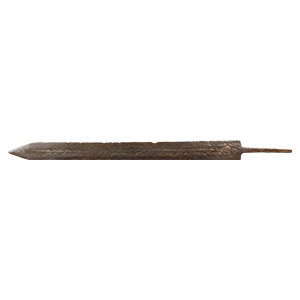
Roman Pattern-Welded Iron Spatha with Inlaid Military Figure
Late 2nd-early 3rd century A.D.Sold for (Inc. bp): £5,850
With double-edged blade of Lauriacum Hromówka typology with blood channels running for the most of its length; inlaid figure of standing Mars Ultor wearing armour (statos) and plumed galea helmet, holding a shield (aspis) and a spear; the blade cleaned and conserved on one side. 467 grams, 82 cm
From the private collection of a London gentleman, from his grandfather's collection formed before the early 1970s. Accompanied by an academic report by Dr Raffaele D’Amato. This lot has been checked against the Interpol Database of stolen works of art and is accompanied by search certificate number no.11922-209659. -
.jpg)
100 Civil War Period Lead Musket Balls
Circa 17th-18th century A.D.Sold for (Inc. bp): £65
Mixed group of lead-alloy musket and carbine balls, some with casting seam and sprue nipple. 1.71 kg total, 9-19 mm
Found Hertfordshire, UK.
