
Loading, please wait...
LOT 1021
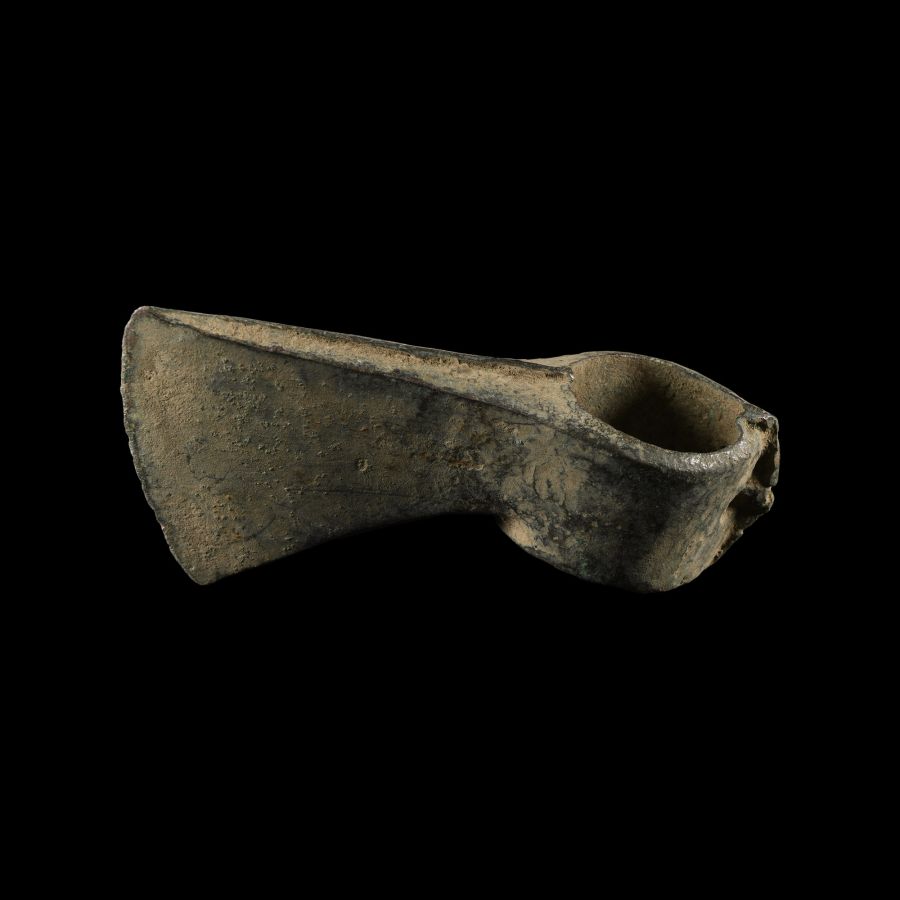
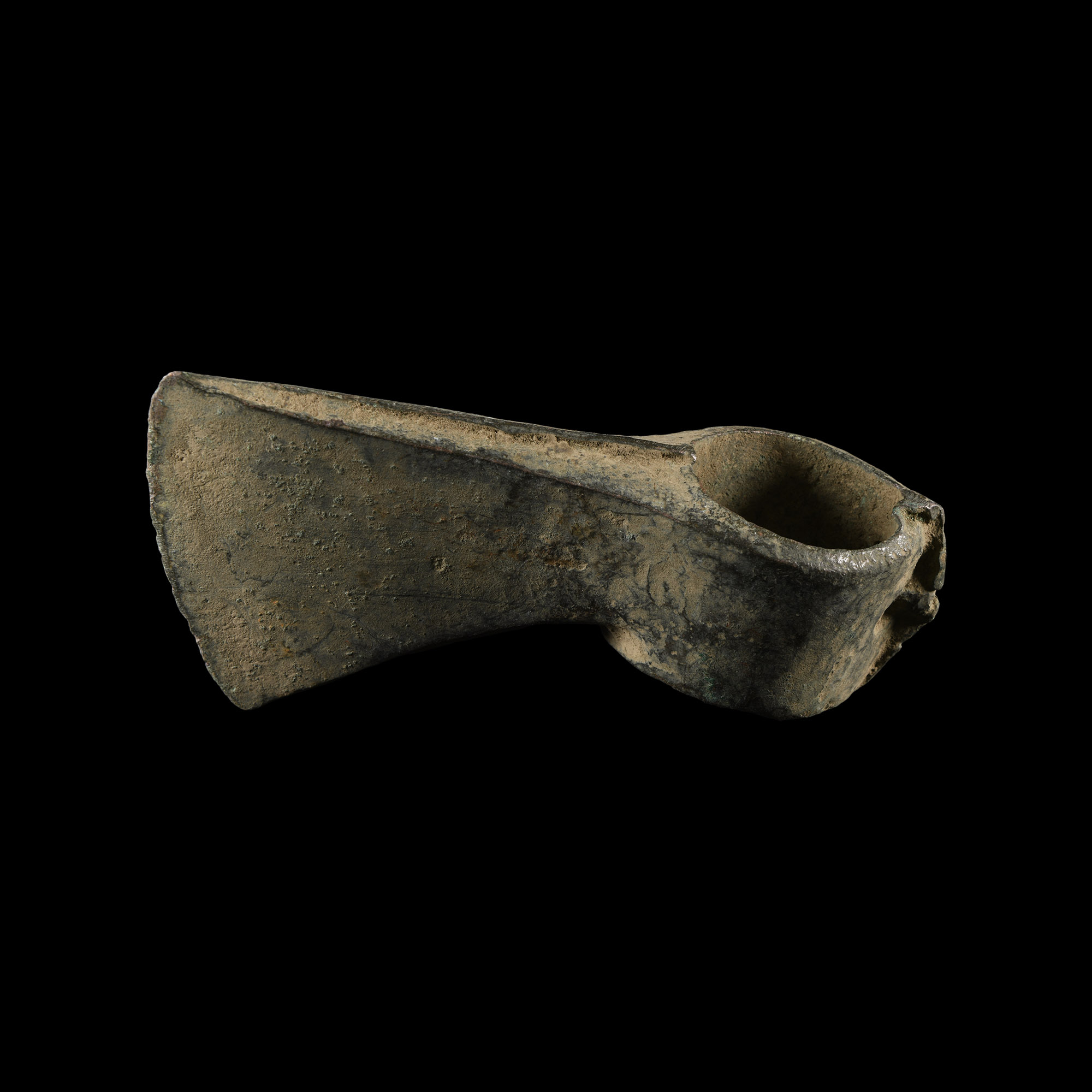
Western Asiatic Bronze Axehead
2ND-1ST MILLENNIUM B.C.
5 in. (420 grams, 12.9 cm).
Featuring an oval-shaped socket, the cheeks with straight upper and sloping lower profiles, chamfered blade with convex cutting edge.
ProvenanceAcquired 1980-2015.
Ex Abelita family collection.
TimeLine Auctions follows a vetting process to ensure the authenticity and legality of all items, reinforcing our commitment to integrity and responsible trading. Each antiquity, antique, and coin lot undergoes thorough examination by a vetting committee of at least ten external specialists, professional trade association members, scientists, and archaeologists: Our Vetting Process
AUCTIONS:
TimeLine is a leading auction house specialising in antiquities, ancient art, collectables, natural history, coins, medals, and books. Our auctions offer museums, collectors, historians, and enthusiasts the opportunity to acquire unique and historically significant pieces.
LOT 1021
Western Asiatic Bronze Axehead
Estimate £100 - 140€120 - 160 (for guidance only)$140 - 190 (for guidance only)
-
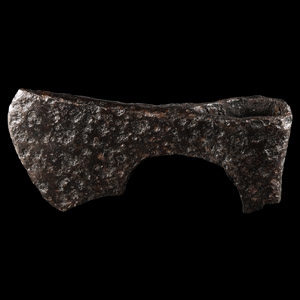
Viking Age Iron Bearded Axehead
9th-13th century A.D.Sold for (Inc. bp): £208
Finno-Ugrian with triangular-section blade widening to a broad bevelled edge with spur to the underside, socket with extended lower sleeve. 779 grams, 17.5 cm
Acquired 1971-1972. From the collection of the vendor's father. Property of a London, UK, collector.
During their struggles against Germans and Teutonic Knights, deceased pagans were often cremated along with damaged or ceremonially sacrificed weaponry. If swords were generally reserved for the military elite, the side axe was one of the most commonly used weapons. -
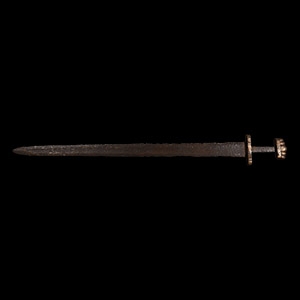
Viking Iron Sword with Inlaid Hilt
8th-10th century A.D.Sold for (Inc. bp): £6,240
Comprising a double-edged tapering blade showing shallow fullers and wide cutting edges; boat-shaped lower guard with inlaid vertical copper bands; the upper guard decorated in similar fashion; five-lobed pommel with deep grooves between the lobes, each lobe inlaid with copper bands. 1.05 kg, 90 cm
Acquired 1990s-early 2000s. East Anglian private collection. Accompanied by an academic report by Dr Raffaele D'Amato. This lot has been checked against the Interpol Database of stolen works of art and is accompanied by search certificate number no.11592-199910.
It is the decoration and the structure of the sword that suggest classifying it as a type H of Petersen, rather than type R which usually presents a five-lobed pommel. The copper markings are artistically consistent with archaeological examples of decorative work of Viking swords, notably with the one in Suomen Kansallismuseo, Helsinki, published by Peirce (2002, pp.6off.). The decoration, which here takes the form of vertical copper lines, is striped as on the Helsinki specimen. -
.jpg)
Luristan Bronze Blade Collection
Early 1st millennium B.C.Sold for (Inc. bp): £260
Comprising six bronze short tapering blades, all with rounded shoulders and flattened mid-ribs, four with tapering tangs, one with tang pierced at tip; one of the narrowest blades is without a tang. 485 grams total, 20-24 cm
Fine condition.
Acquired 1980-2015. Ex Abelita family collection.
Moorey, Gordon and Khorasani created a classification of bladed weapons, according to which daggers are edged weapons not greater than 36cm in length, dirks (short swords) are between 36cm and 50cm in length, and swords are edged weapons greater than 50cm in length. These weapons belong to the dagger category.
