
Loading, please wait...
LOT 1043
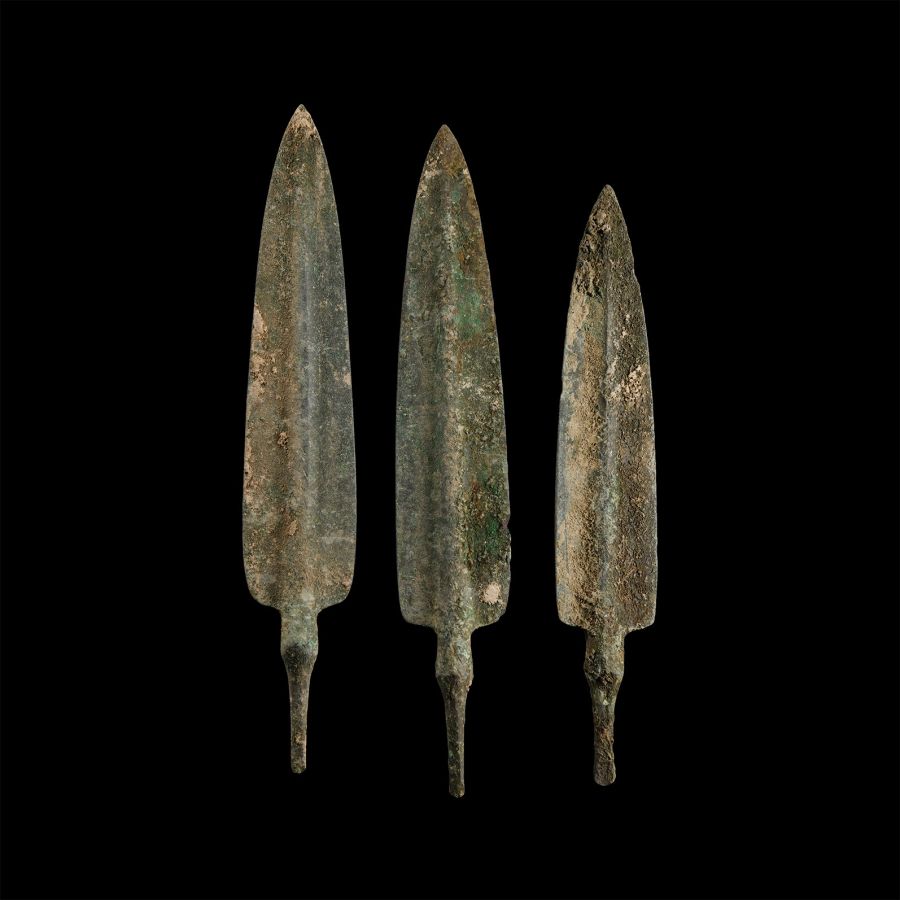
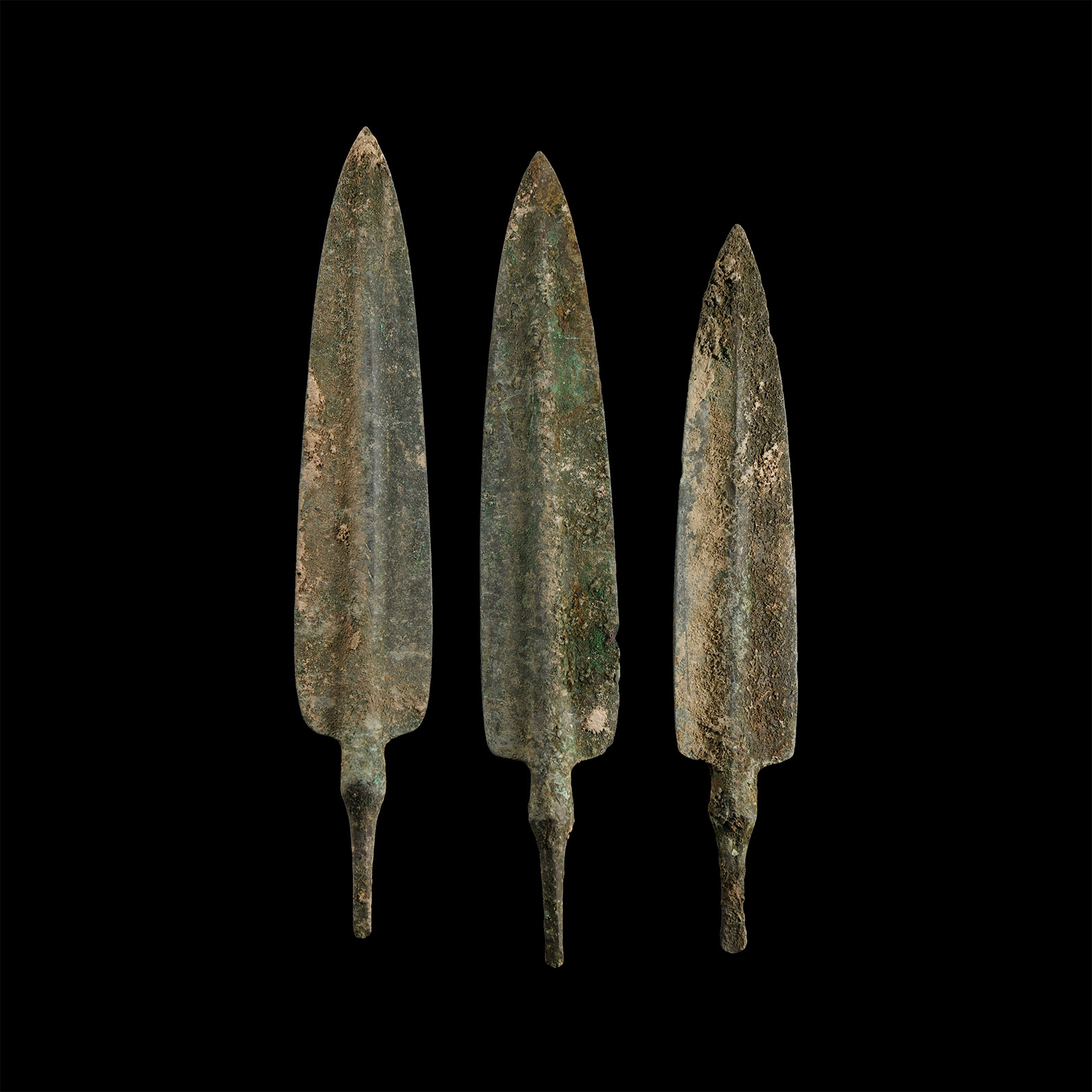
Western Asiatic Bronze Arrowhead Group
1ST MILLENNIUM B.C.
5 3/8 - 6 in. (112 grams total, 13.7-15.3 cm).
The tanged trio with leaf-shaped heads and raised midrib to both faces. [3, No Reserve]
ProvenanceEx private collection, 1980s.
Acquired on the UK art market in the 1990s.
TimeLine Auctions follows a vetting process to ensure the authenticity and legality of all items, reinforcing our commitment to integrity and responsible trading. Each antiquity, antique, and coin lot undergoes thorough examination by a vetting committee of at least ten external specialists, professional trade association members, scientists, and archaeologists: Our Vetting Process
AUCTIONS:
TimeLine is a leading auction house specialising in antiquities, ancient art, collectables, natural history, coins, medals, and books. Our auctions offer museums, collectors, historians, and enthusiasts the opportunity to acquire unique and historically significant pieces.
-
.jpg)
Western Asiatic Bronze Dagger with Stone Pommel
3rd millenium B.C.Sold for (Inc. bp): £910
Comprising a leaf-shaped blade with broad midrib to both faces, square-section tang and pommel with discoid bronze top displaying a stylised floral or geometric motif with parallel pairs of lines radiating from the centre and a pellet in each segment. 693 grams, 42 cm
Ex old English collection. Acquired from Timeline Originals, UK, 2015. The Kusmirek Collection, UK.
This type of daggers include lanceolate blades with a pronounced piercing and cutting function, often reinforced with a convex stiffening rib or fullers that follow the contour of the blade (Gorelik, 2003, pls. IV, 15-21, 23-25). It is commonly believed that the fullers were designed to drain blood, but this is a misconception; their purpose is to increase the strength of the blade and reduce its weight. -
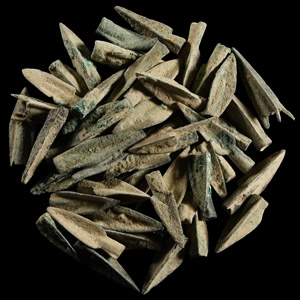
Greek Bronze Arrowhead Group
5th-3rd century B.C.Sold for (Inc. bp): £111
Primarily composed of socketted types with triangular cross-sections. 198 grams total, 26-43 mm
Ex private collection, 1980s. Acquired on the UK art market in the 1990s. -
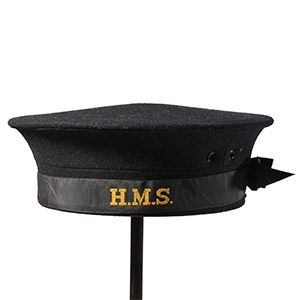
Royal Navy Rating's Cap
Dated 1942 A.D.Sold for (Inc. bp): £20
Standard British naval issue dark blue rating's cap with Toronto maker's ink stamp and date inside, fitted with black fabric 'H.M.S.' ribbon and chin-strap. 196 grams, 25 cm
Acquired from The Historic Flying Clothing Company, 2014. The Kusmirek Collection, UK. Accompanied by a copy of a previous invoice.
