
Loading, please wait...
LOT 1191
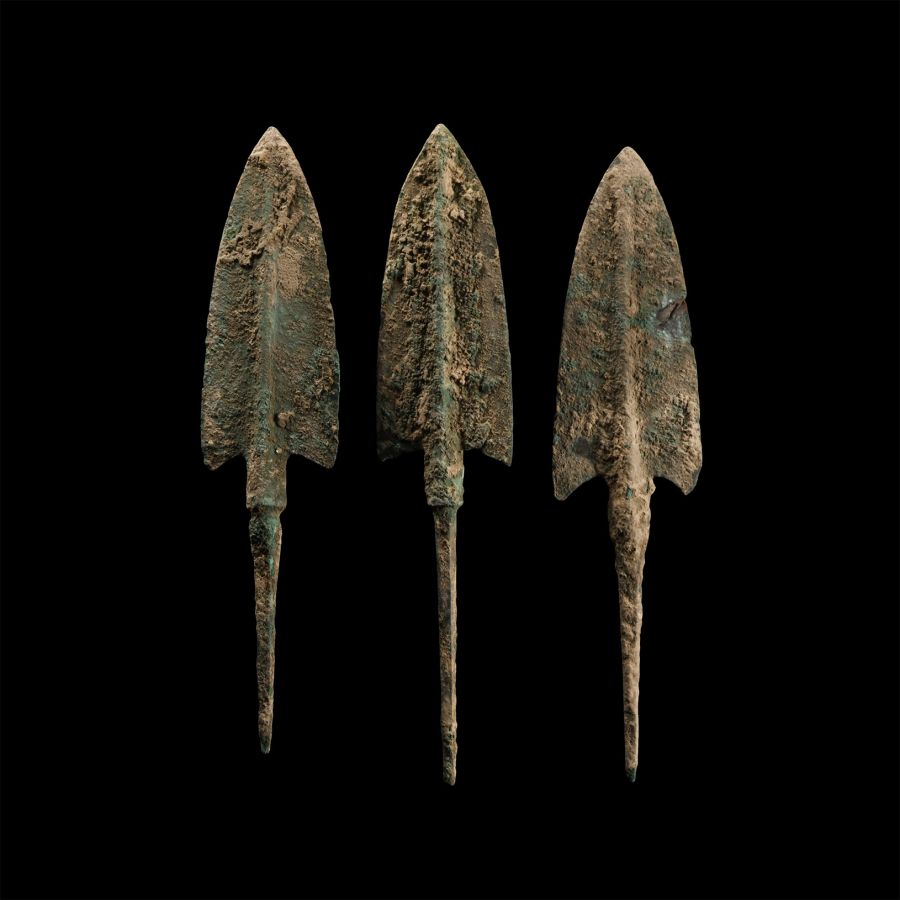
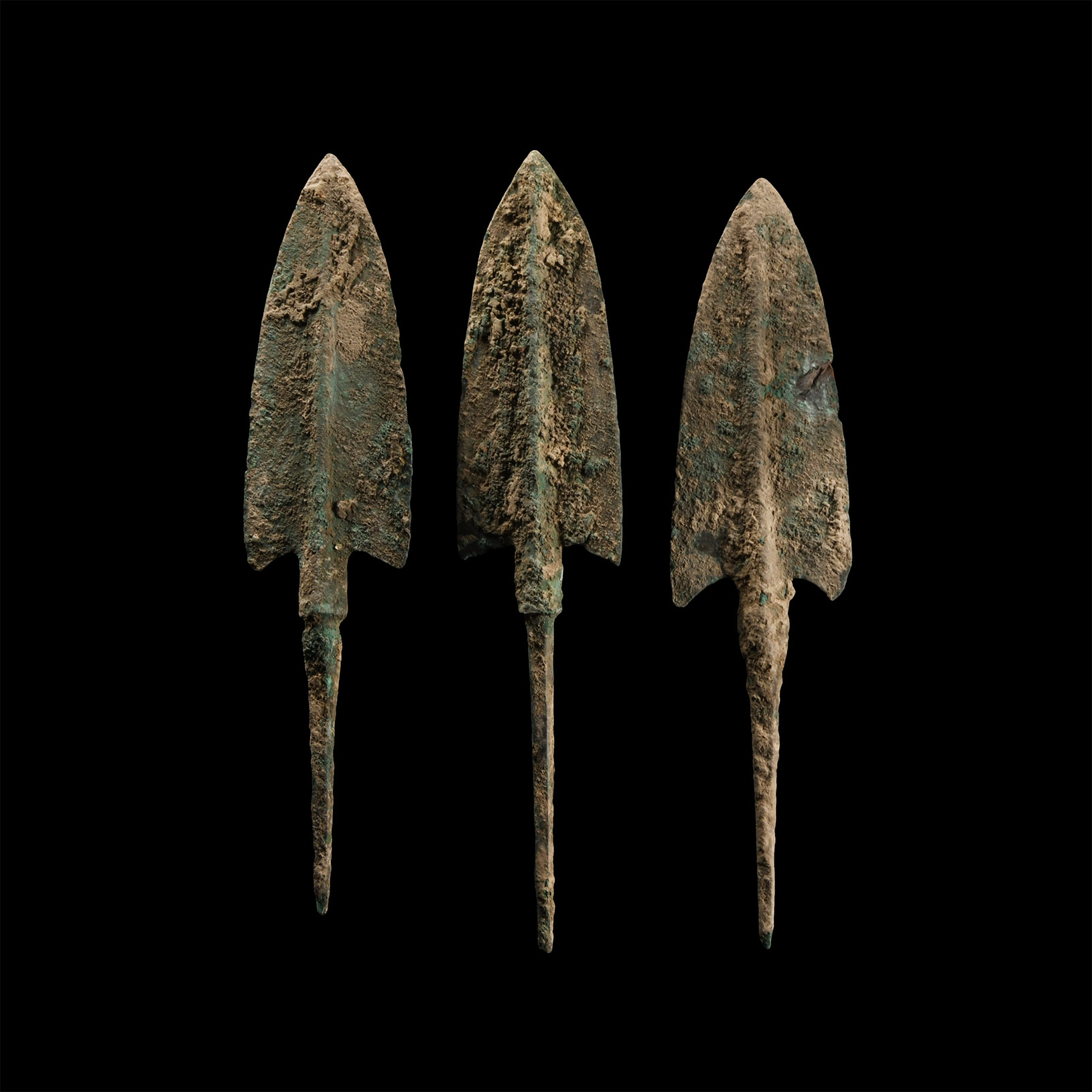
Western Asiatic Bronze Arrowhead Group
1ST MILLENNIUM B.C.
5 3/8 - 5 3/4 in. (83 grams total, 13.5-14.5 cm).
Three tanged arrowheads with broadly leaf-shaped heads with shallow barbs, each with a raised midrib to both faces. [3, No Reserve]
ProvenanceEx private collection, 1980s.
Acquired on the UK art market in the 1990s.
TimeLine Auctions follows a vetting process to ensure the authenticity and legality of all items, reinforcing our commitment to integrity and responsible trading. Each antiquity, antique, and coin lot undergoes thorough examination by a vetting committee of at least ten external specialists, professional trade association members, scientists, and archaeologists: Our Vetting Process
AUCTIONS:
TimeLine is a leading auction house specialising in antiquities, ancient art, collectables, natural history, coins, medals, and books. Our auctions offer museums, collectors, historians, and enthusiasts the opportunity to acquire unique and historically significant pieces.
-
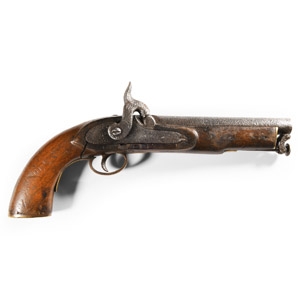
Newland Pattern Percussion Tower Pistol
19th century A.D.Sold for (Inc. bp): £234
About 5/8" bore pistol with 19cm (7½") barrel, the percussion lockplate marked 'TOWER' fitted with captive ramrod, full wood stock and butt (cracked) with brass butt cap, fore-end, ferrule and trigger guard and steel belt hook; action working. 1.17 kg, 35.5 cm
Acquired from Mostly Boxes, Northern Ireland. The Kusmirek Collection, UK. Accompanied by a Mostly Boxes invoice.
Sold as an exempt item under Section 58 (2) of the Firearms Act, 1968, to be held as a curiosity or ornament. No license required but buyer must be over 18 years of age. Overseas bidders should note that, due to UK regulations governing export of all firearms, overseas buyers will need to make arrangements for shipping this lot out of the UK directly, by air freight, with a specialist company or agent. -
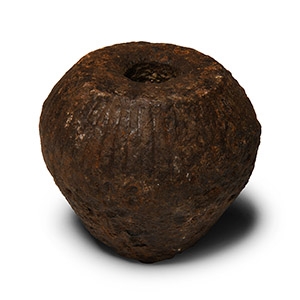
Medieval Eastern European Iron Macehead
14th-15th century A.D.Sold for (Inc. bp): £117
Displaying shallow striations running vertically around the body; cylindrical socket. 828 grams, 64 mm wide
Acquired 1990s-early 2000s. East Anglian private collection.
This kind of later maces, typical of 15th century, had irregularly shaped heads, with spheres having holes for the insertion of the shaft. Incised, parallel strips formed a cross ornament running horizontally and vertically. Grooved lines were carved in the fields between. -
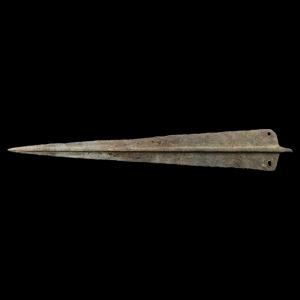
Luristan Bronze Blade
Late 2nd- early 1st millennium B.C.Sold for (Inc. bp): £140
Sharply pointed with raised midrib to each face, square shoulders pierced to accept the fixings for the hilt, stub tang. 217 grams, 35.5 cm
Ex German collection, Cologne, 1980-1990s.
The two holes on the shoulders of the blade provided attachment for a separate hilt. This could have been a penannular grip, which can be seen on some swords from Sangtarashan; or in north-west Iranian blades with rectangular guard and flanged hilt, where the guard was rivetted to the blade, like in some swords in the Axel Guttmann collection.
