
Loading, please wait...
LOT 1451
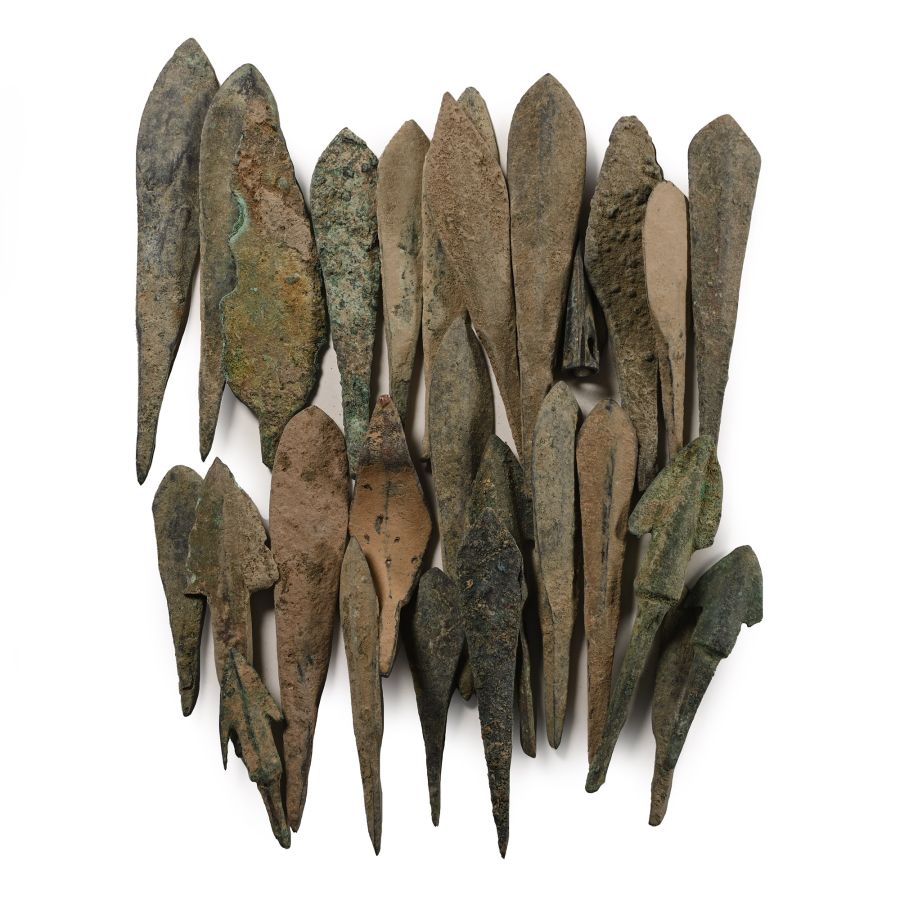
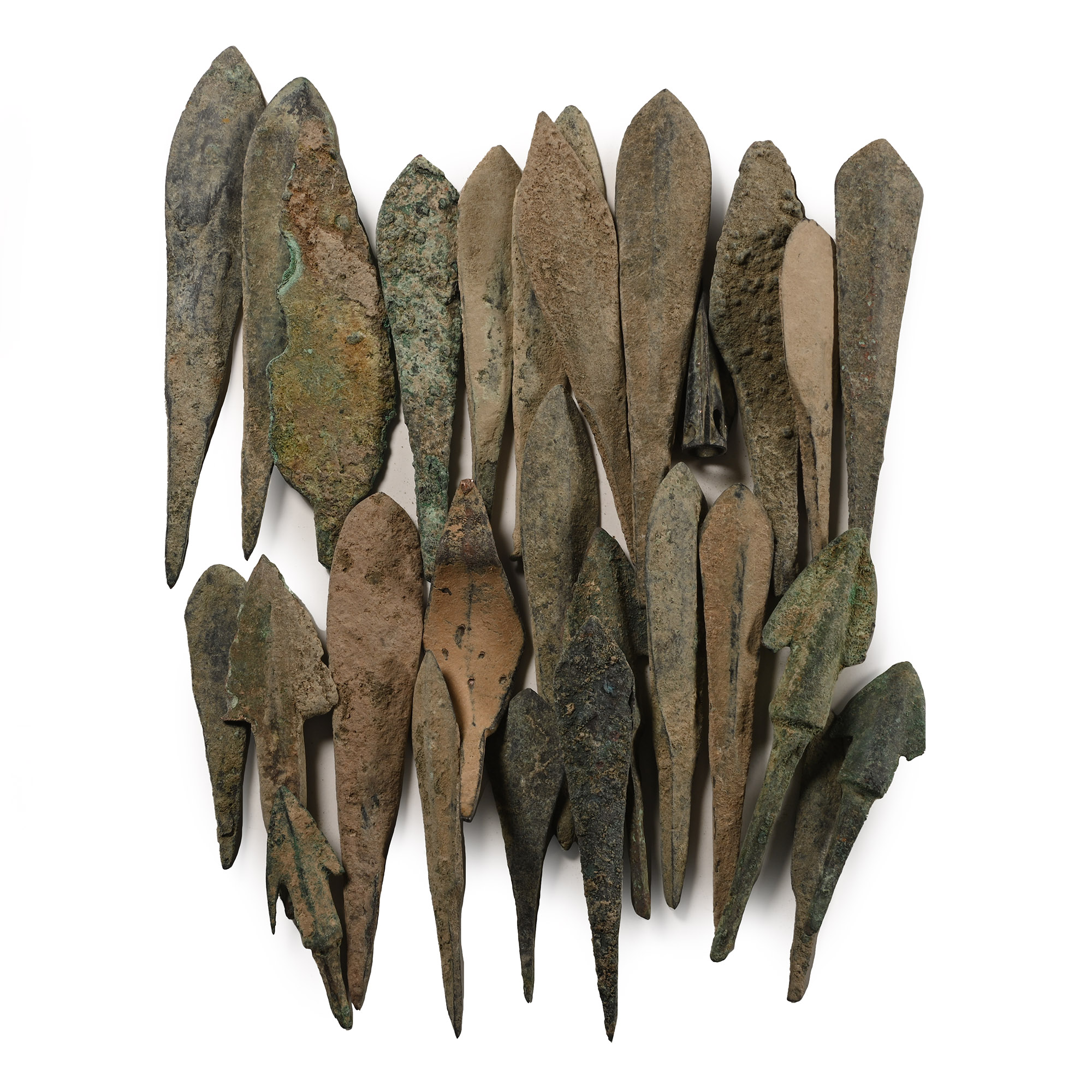
Western Asiatic Bronze Arrowhead Collection
19TH-6TH CENTURY B.C.
1 - 3 in. (176 grams total, 25-77 mm).
Including triangular, leaf-shaped, barbed, paddle-shaped with a flat, comparatively wide mid-rib, and others. [27]
ProvenanceEx London art market, 1980-1990s.
This lot is accompanied by an illustrated lot declaration signed by the Head of the Antiquities Department, Dr Raffaele D'Amato.
Cf. for similar arrow-points Gorelik, M., Weapons of Ancient East, IV millennium BC-IV century BC, Saint Petersburg, 2003, in Russian, (plate XLIII, nos.26-27, 92-93).
FootnotesSome of the represented arrowheads (paddle-shaped) were typical of the Old Babylonian Empire. The shoulders were pronounced and the arrowhead had a rectangular-section tapering tang. This simple form was popular throughout and such items are comparatively common finds in the Holy Land.
CONDITIONTimeLine Auctions follows a vetting process to ensure the authenticity and legality of all items, reinforcing our commitment to integrity and responsible trading. Each antiquity, antique, and coin lot undergoes thorough examination by a vetting committee of at least ten external specialists, professional trade association members, scientists, and archaeologists: Our Vetting Process
AUCTIONS:
TimeLine is a leading auction house specialising in antiquities, ancient art, collectables, natural history, coins, medals, and books. Our auctions offer museums, collectors, historians, and enthusiasts the opportunity to acquire unique and historically significant pieces.
-
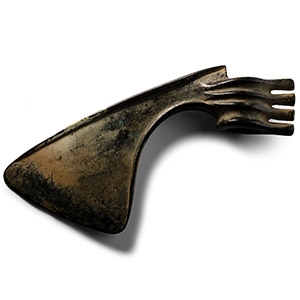
Luristan Comb-Backed Axehead
2nd-1st millennium B.C.Estimate: £250 - 350 (+bp*)
Opening Bid: £125
With ribbed openwork socket terminating in a butt formed of four cones, the blade expanding from the socket. 400 grams, 21 cm
From a London collection, early 2000s. -
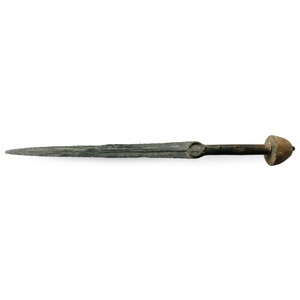
Luristan Bronze Short Sword
2nd-1st millennium B.C. and laterSold for (Inc. bp): £442
With leaf-shaped two-edged blade, crescent guard; restored hilt with columnar grip and stone pommel. 521 grams, 58 cm
From a North West London collection; previously acquired in the 1980s. -
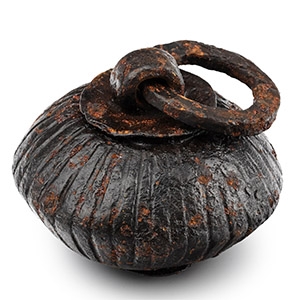
Medieval Iron Flail Head
14th-15th century A.D.Sold for (Inc. bp): £195
Biconvex in profile with loop and ring, segmented surface. 277 grams, 50 mm
From the family collection of a London gentleman; formed in the late 1940s-1950s; thence by descent. From the property of a late Lincolnshire, UK, gentleman.
