
Loading, please wait...
LOT 1229
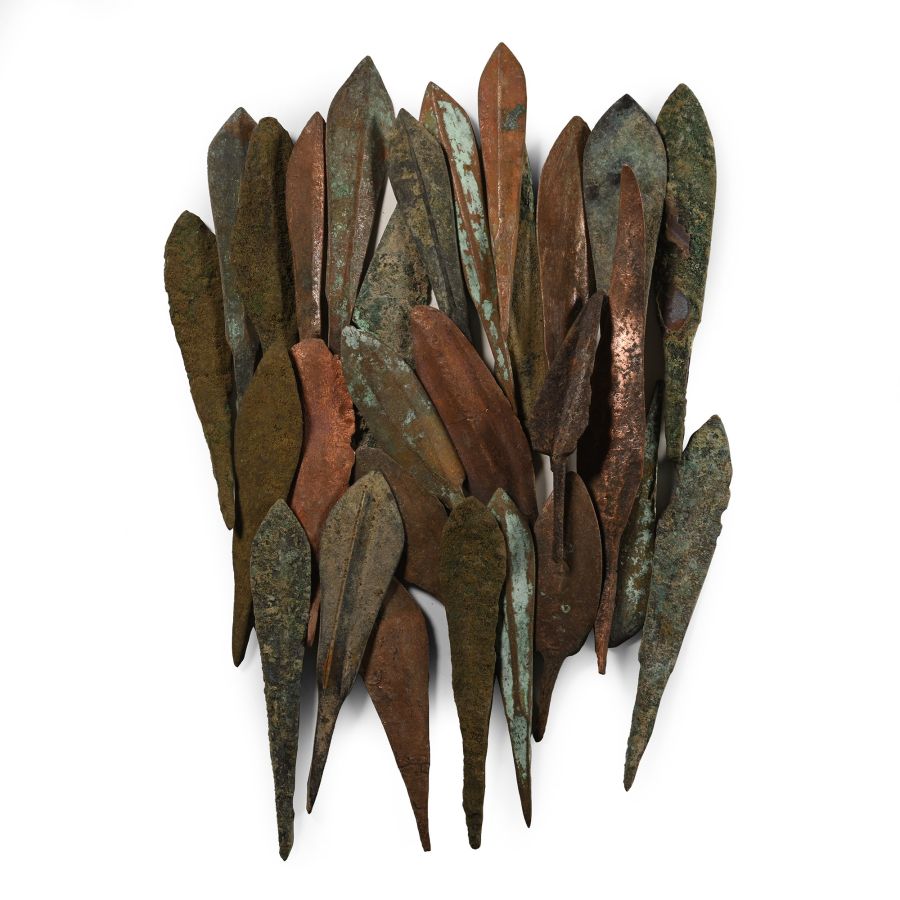
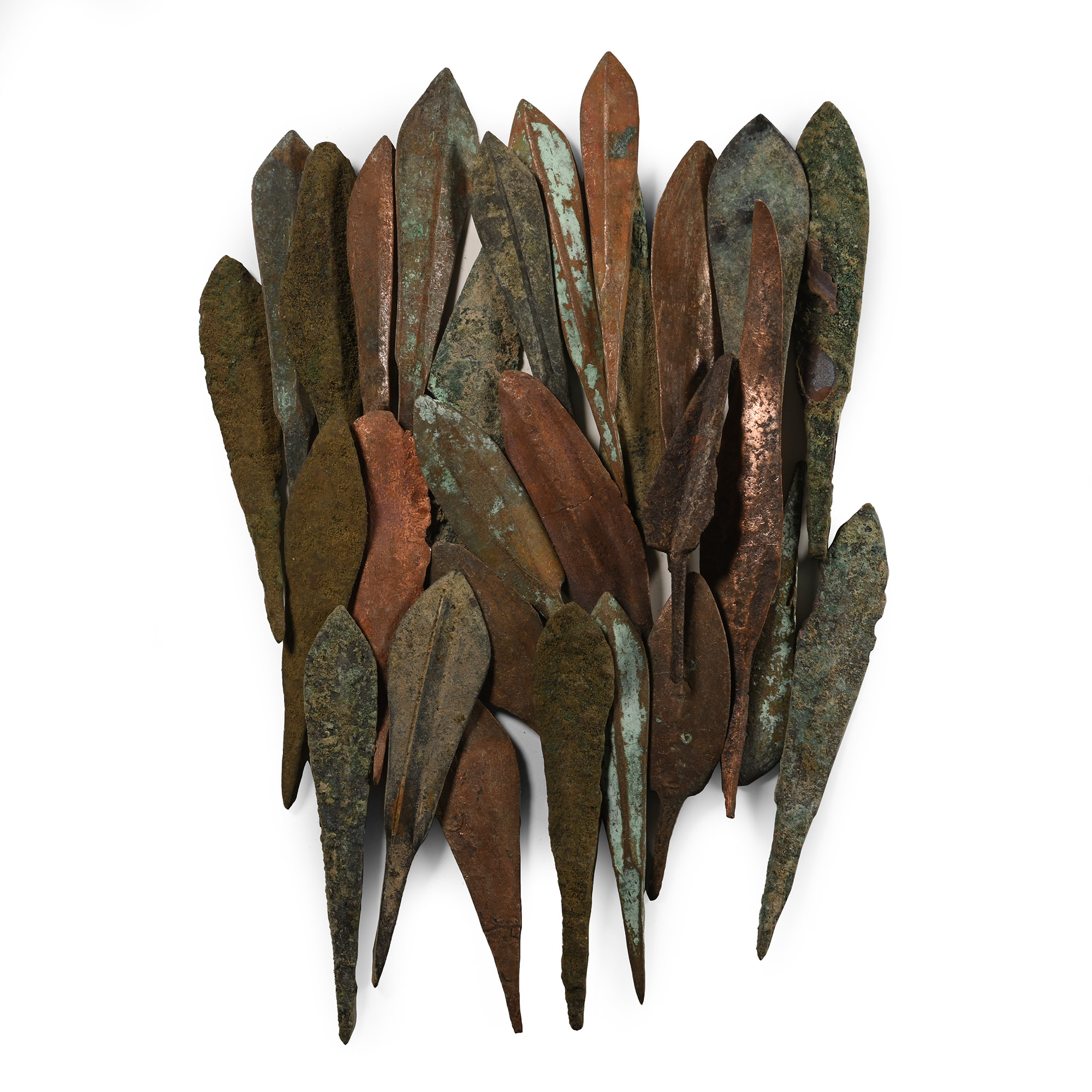
Western Asiatic Bronze Arrowhead Collection
19TH - 2ND CENTURY B.C.
2 1/4 - 4 1/4 in. (271 grams total, 5.8-10.7 cm).
Including triangular, leaf-shaped, barbed, paddle-shaped arrowheads with a flat, comparatively wide mid-rib, and others. [28]
ProvenanceEx London art market, 1980-1990s.
This lot has been cleared against the Art Loss Register database, and is accompanied by an illustrated lot declaration signed by the Head of the Antiquities Department, Dr Raffaele D'Amato.
Cf. for similar arrow-points Gorelik, M., Weapons of Ancient East, IV millennium BC-IV century BC, Saint Petersburg, 2003, in Russian, (plate XLIII, nos.26-27, 92-93).
FootnotesSome of the represented arrowheads (paddle-shaped) were typical of the Old Babylonian Empire. The shoulders were pronounced and the arrowhead had a rectangular-section tapering tang. This simple form was popular throughout and are comparatively common finds in the Holy Land.
CONDITIONTimeLine Auctions follows a vetting process to ensure the authenticity and legality of all items, reinforcing our commitment to integrity and responsible trading. Each antiquity, antique, and coin lot undergoes thorough examination by a vetting committee of at least ten external specialists, professional trade association members, scientists, and archaeologists: Our Vetting Process
AUCTIONS:
TimeLine is a leading auction house specialising in antiquities, ancient art, collectables, natural history, coins, medals, and books. Our auctions offer museums, collectors, historians, and enthusiasts the opportunity to acquire unique and historically significant pieces.
-
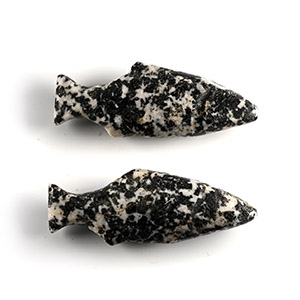
Proto-Sumerian Granite Fish Pair
3rd millennium B.C.Estimate: £300 - 400 (‡+bp*)
Opening Bid: £135
Two carved diorite fish amulets each pierced at the mouth for suspension. 17.1 grams total, 41-42 mm
Swiss private collection, 1990s. Acquired in 2002. This lot has been cleared against the Art Loss Register database, and is accompanied by an illustrated lot declaration signed by the Head of the Antiquities Department, Dr Raffaele D'Amato. -
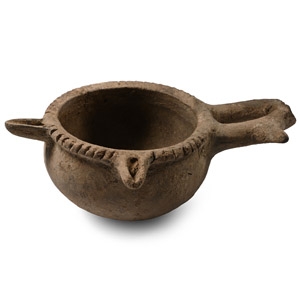
Luristan Bronze Cup with Star Handle
2nd-1st millennium B.C.Sold for (Inc. bp): £78
Barrel-shaped in profile with thick rim and loop handle; ropework detailing to rim, three radiating spouts below the rim, handle with lateral spurs. 370 grams, 20 cm wide
From a West London, UK, collection, 1990s. This lot has been cleared against the Art Loss Register database, and is accompanied by an illustrated lot declaration signed by the Head of the Antiquities Department, Dr Raffaele D'Amato. -
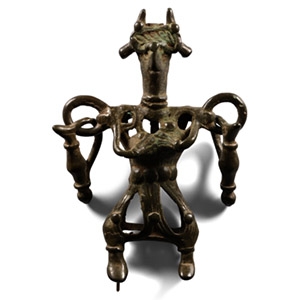
Marlik Bronze Maternity Figure
9th-8th century B.C.Estimate: £1,800 - 2,400 (‡+bp*)
Opening Bid: £900
Openwork body with integral horned head, loops to the shoulders and breasts; separate arms mounted in the shoulder-rings, applied pellets and braid detailing. 40 grams, 77 mm
Acquired in the 1980s. Private collection, Switzerland, thence by descent. Private collection, since the late 1990s. This lot has been checked against the Interpol Database of stolen works of art and is accompanied by a search certificate number no.12698-234680. This lot has been cleared against the Art Loss Register database, and is accompanied by an illustrated lot declaration signed by the Head of the Antiquities Department, Dr Raffaele D'Amato.
