
Loading, please wait...
LOT 1261
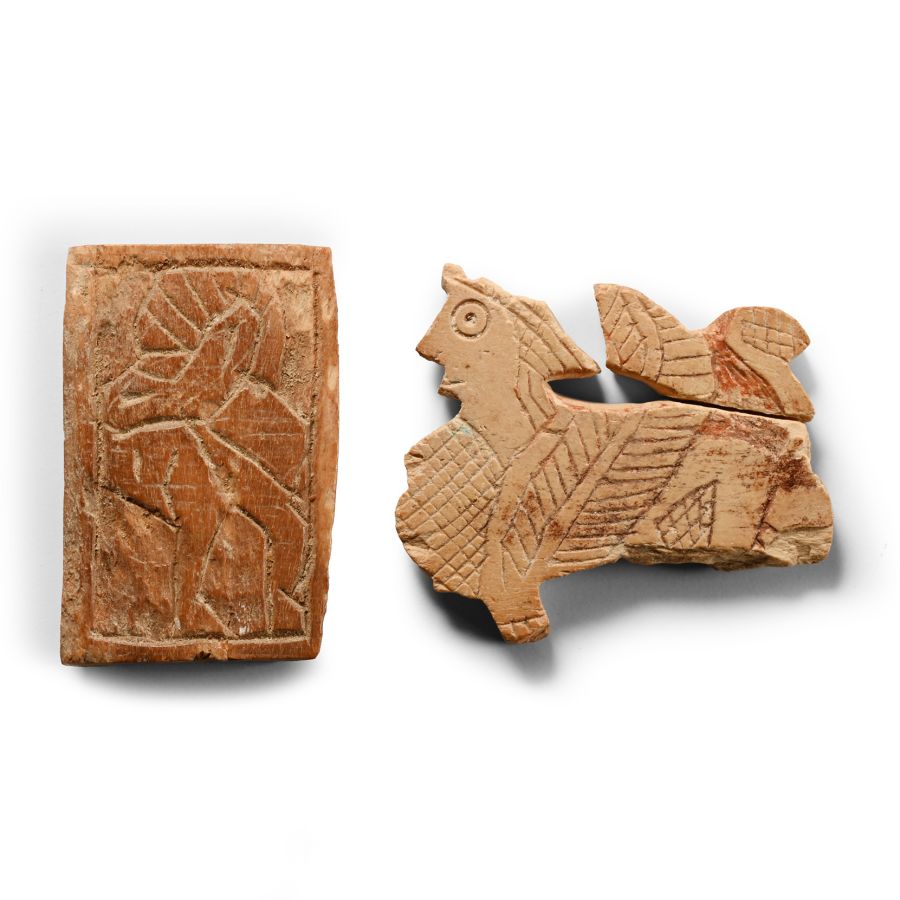
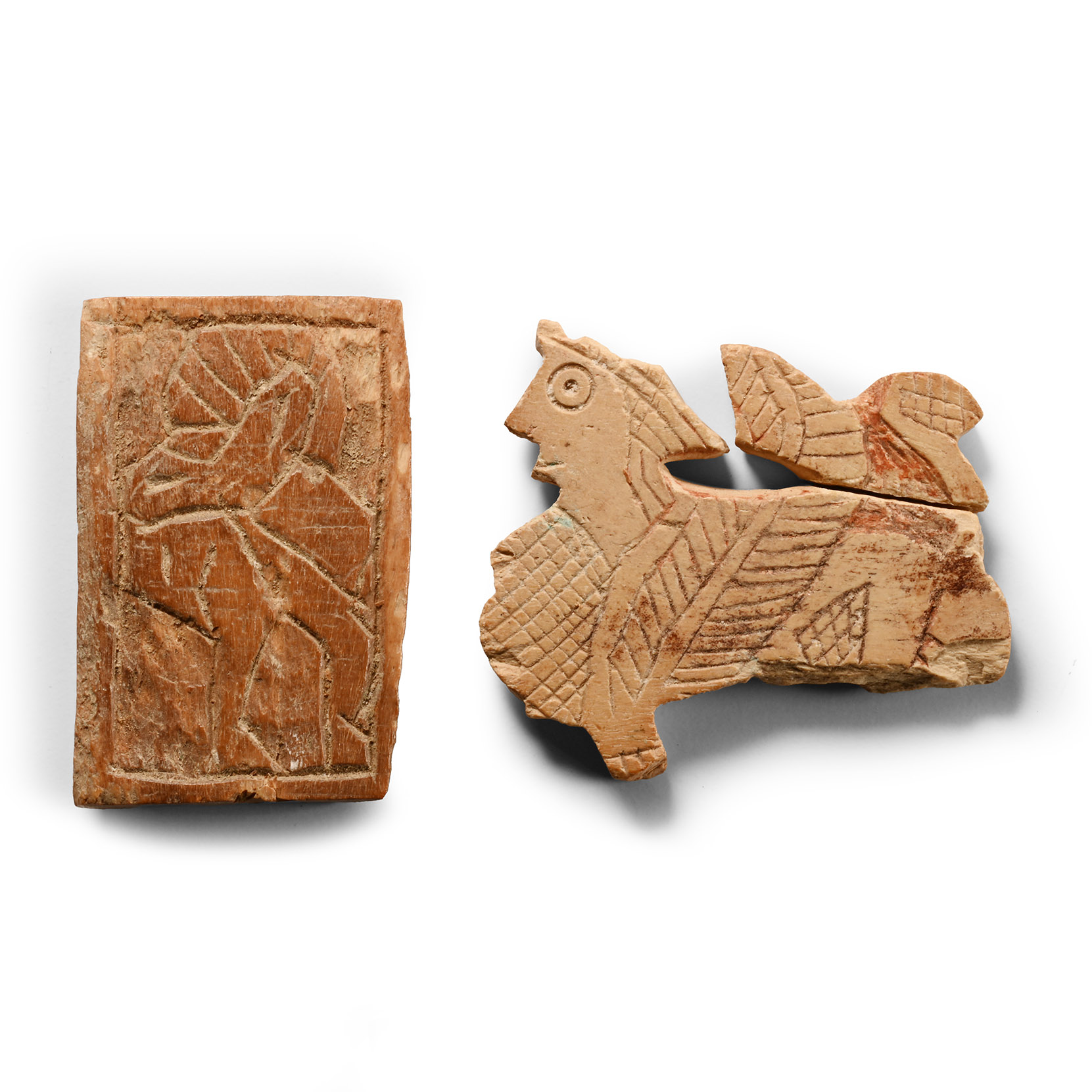
Western Asiatic Bone Inlay Group
1ST MILLENNIUM B.C.
1 1/2 in. (17.5 grams total, 39-40 mm).
Comprising: sphinx with wing and hatched field, red pigment; reserved bird on a rectangular field with border. [2]
ProvenanceCollected from 1969-1999.
From the collection of the late Mr S.M., London, UK.
TimeLine Auctions follows a vetting process to ensure the authenticity and legality of all items, reinforcing our commitment to integrity and responsible trading. Each antiquity, antique, and coin lot undergoes thorough examination by a vetting committee of at least ten external specialists, professional trade association members, scientists, and archaeologists: Our Vetting Process
AUCTIONS:
TimeLine is a leading auction house specialising in antiquities, ancient art, collectables, natural history, coins, medals, and books. Our auctions offer museums, collectors, historians, and enthusiasts the opportunity to acquire unique and historically significant pieces.
-
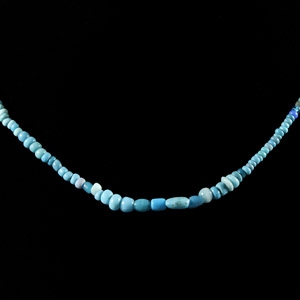
Western Asiatic Turquoise Blue Glass Bead Necklace String
1st millennium B.C. and laterSold for (Inc. bp): £59
Restrung using graduated oblate and other beads, central feature with larger oblate and barrel-shaped beads. 5.6 grams, 46 cm long
UK gallery, early 2000s.
Turquoise has been known since prehistoric times, and it is widely used in jewellery in the Middle East (Egypt and Persia), the Far East (Tibet, Mongolia and China) and even by native North Americans. Turquoise was very fashionable also in Europe, especially during the 18th and 19th centuries. -
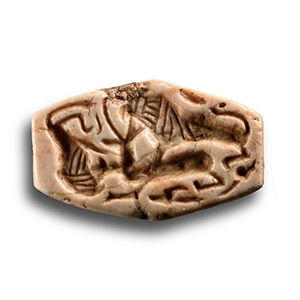
Jemdet Nasr Type Marble Stamp Seal
Sumerian, 3rd millennium B.C.Sold for (Inc. bp): £260
Fusiform in plan with intaglio beast motif to the underside. 22.1 grams, 44 mm
Collected from 1969-1999. From the collection of the late Mr S.M., London, UK. -
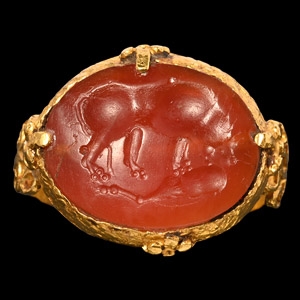
Western Asiatic Gold Ring with Boar Gemstone
14th century A.D. and earlierSold for (Inc. bp): £1,690
With a keeled hoop and openwork shield-shaped shoulder with scroll ornament, a diamond-shaped shield with a cross to the base of the hoop; large bezel with an applied stylised bird underneath, the sides with pellet ornament in three rows, four claws holding the 4th-5th century Sassanian intaglio depicting a boar devouring the leg of its prey. 8.63 grams, 25.72 mm overall, 18.95 mm internal diameter (approximate size British P 1/2, USA 7 3/4, Europe 16.86, Japan 16)
Private collection, USA, acquired in the 1990s. Accompanied by a copy of a previous cataloguing information page.
It was a fairly common practice to re-use Sassanian intaglios in Islamic rings from Iran. In Eastern cultures the boar was a sacred animal with magical powers.
