
Loading, please wait...
_900x900.jpg "Western Asiatic Bone Bearded Figure")
_200x200.jpg "Western Asiatic Bone Bearded Figure")
.jpg "Western Asiatic Bone Bearded Figure")
LOT 1292
Western Asiatic Bone Bearded Figure
1ST MILLENNIUM B.C.
2 3/8 in. (7.37 grams, 59 mm).
Carved in the round with sockets to the eyes, drilled ears, wavy beard descending to the chest; genitals and stub legs; peg to top of head and another beneath feet, square panels at the arms; possibly a votive, or one element from a larger frieze. [No Reserve]
ProvenanceFrom the collection of a London antiquarian, 1980s.
CONDITIONTimeLine Auctions follows a vetting process to ensure the authenticity and legality of all items, reinforcing our commitment to integrity and responsible trading. Each antiquity, antique, and coin lot undergoes thorough examination by a vetting committee of at least ten external specialists, professional trade association members, scientists, and archaeologists: Our Vetting Process
AUCTIONS:
TimeLine is a leading auction house specialising in antiquities, ancient art, collectables, natural history, coins, medals, and books. Our auctions offer museums, collectors, historians, and enthusiasts the opportunity to acquire unique and historically significant pieces.
-
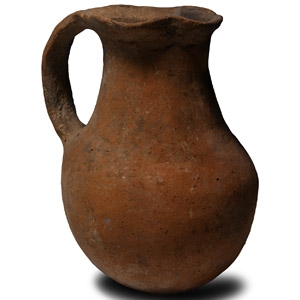
Holy Land Trefoil-Mouthed Terracotta Jug
Middle-Late Bronze Age, 2000-1200 B.C.Sold for (Inc. bp): £117
Globular in profile with pinched trefoil mouth and strap handle to the rear; inked accession number 'LS 1022' to underside. 452 grams, 16 cm
From a collection acquired on the UK art market from various auction houses and collections mostly before 2000. From an important Cambridgeshire estate; thence by descent. -
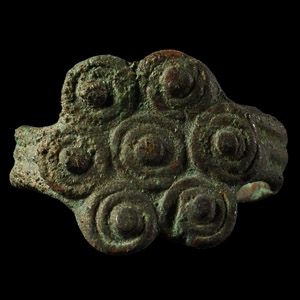
Western Asiatic Bronze Ring with Geometric Circles
1st millennium B.C.Sold for (Inc. bp): £26
With a ribbed hoop, the bezel formed of seven circlets with central pellets, arranged as a six-petalled flower. 5.59 grams, 22.79 mm overall, 18.72 mm internal diameter (approximate size British O, USA 7, Europe 14.98, Japan 14)
Acquired 1980-2015. Ex Abelita family collection. -
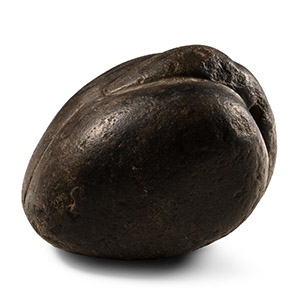
Neo Babylonian Black Stone Duck Weight
8th-7th century B.C.Sold for (Inc. bp): £2,210
Carved with two lateral broad ovoid wings and the head resting along the spine; pierced at the neck for suspension. 2.66 kg, 15.5 cm
Collection of a gentleman, previously Home Counties, UK, collection.
