
Loading, please wait...
LOT 1132
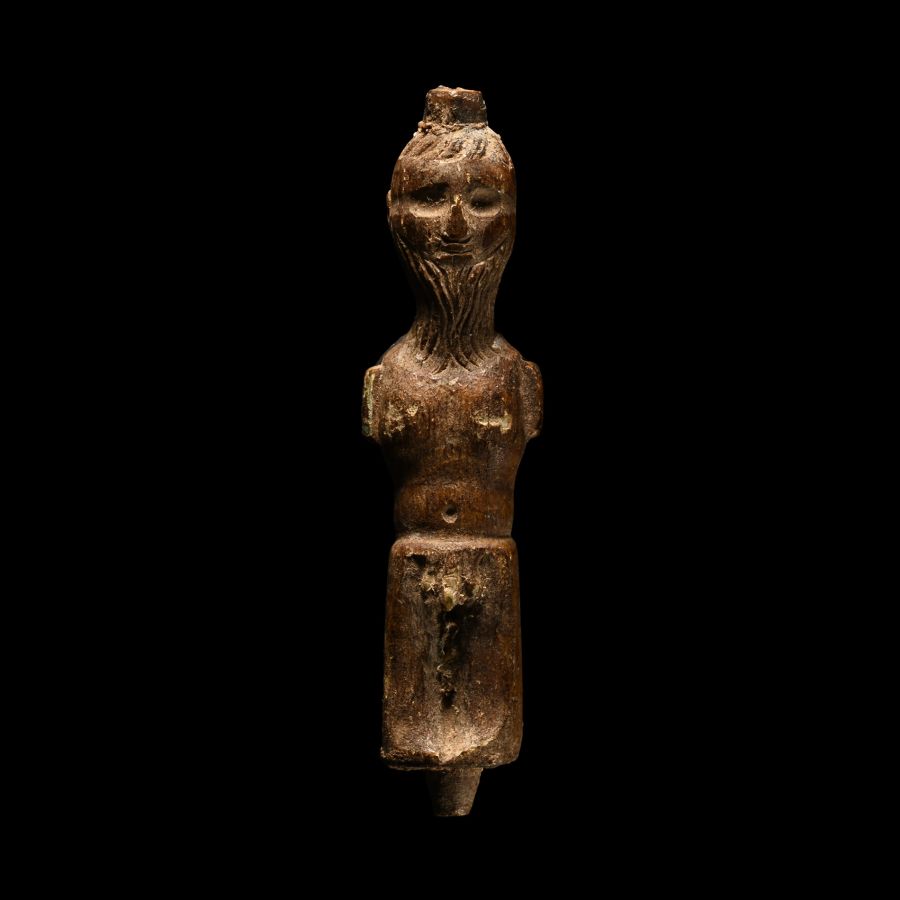
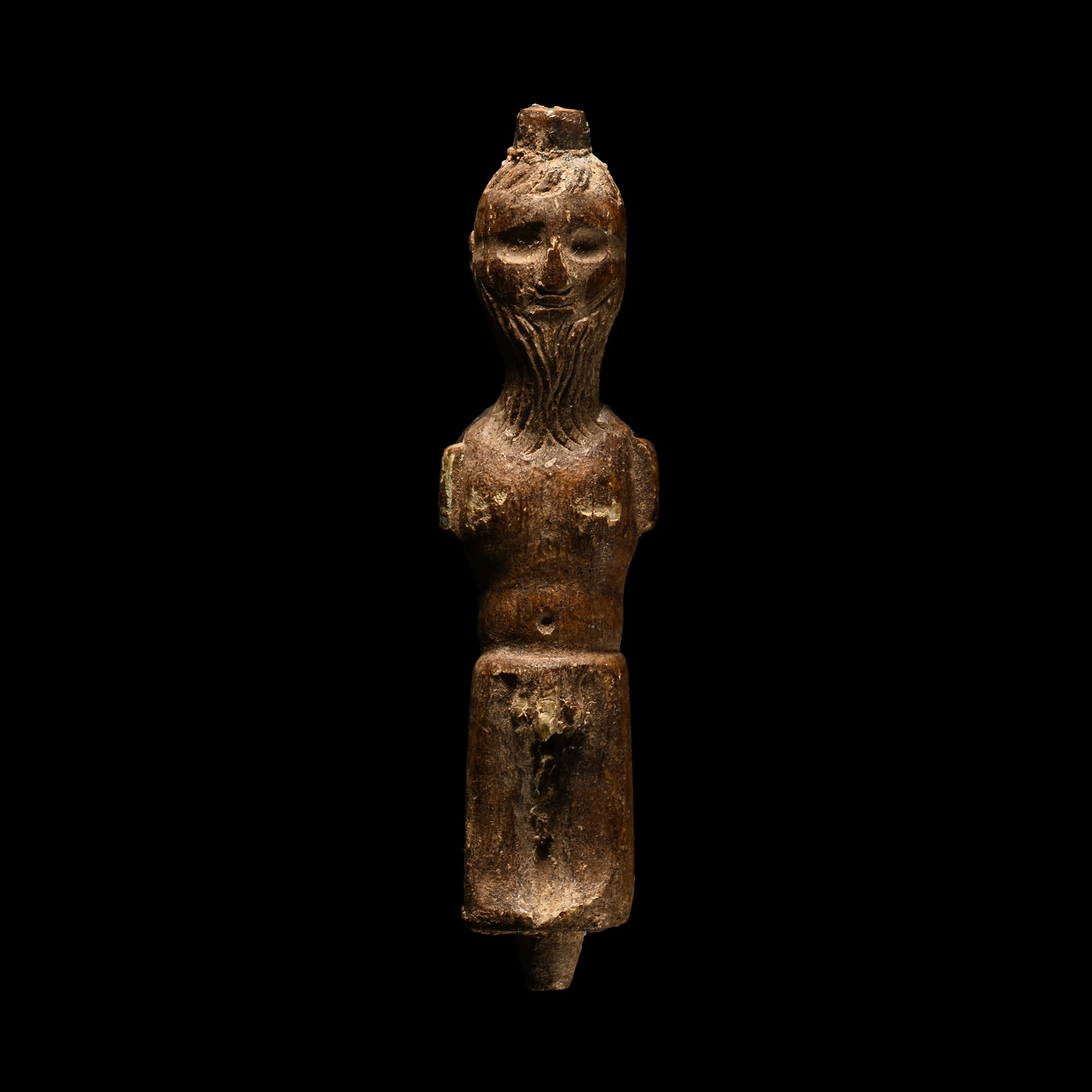
Western Asiatic Bone Bearded Figure
1ST MILLENNIUM B.C.
2 3/8 in. (7.37 grams, 59 mm).
Carved in the round with sockets to the eyes, drilled ears, wavy beard descending to the chest; genitals and stub legs; peg to top of head and another beneath feet, square panels at the arms; possibly a votive, or one element from a larger frieze. [No Reserve]
ProvenanceFrom the collection of a London antiquarian, 1980s.
CONDITIONTimeLine Auctions follows a vetting process to ensure the authenticity and legality of all items, reinforcing our commitment to integrity and responsible trading. Each antiquity, antique, and coin lot undergoes thorough examination by a vetting committee of at least ten external specialists, professional trade association members, scientists, and archaeologists: Our Vetting Process
AUCTIONS:
TimeLine is a leading auction house specialising in antiquities, ancient art, collectables, natural history, coins, medals, and books. Our auctions offer museums, collectors, historians, and enthusiasts the opportunity to acquire unique and historically significant pieces.
-
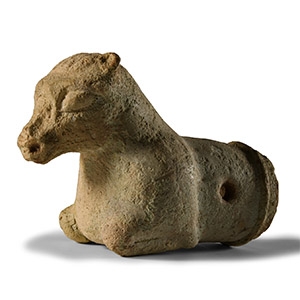
Ziwiye Faience Horse Protome
1st millennium B.C.Sold for (Inc. bp): £117
Modelled in the round as a leaping horse with its forelegs tucked under the body; hollow to the reverse with raised collar and fixing holes. 188 grams, 11 cm
with Atigh Gallery, UK. Acquired by the current owner from the above, 23 February 1984. -
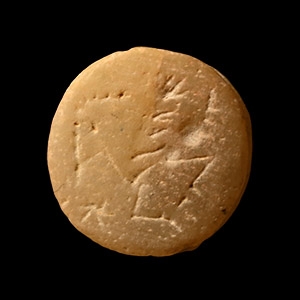
Urartu Alabaster Stamp Seal
8th-7th century B.C.Estimate: £100 - 140 (+bp*)
Opening Bid: £50
Bifacial round seal with mythical creatures, likely winged ibexes; pierced hole for suspension. 3.36 grams, 16 mm
Ex London, UK, collection, before 1988.
Animal-headed creatures are often winged bird-headed figures with human body in the Urartu and Northern-Syrian seals of ‘dnplţ ‘bd ‘mndb type, but often winged, apparently ibex-headed figures appear on the seals of the type bqšt bt ‘bdyrh. The ibex-headed figures might belong to same group of semi-divine beings visible on the Assyrian art. -
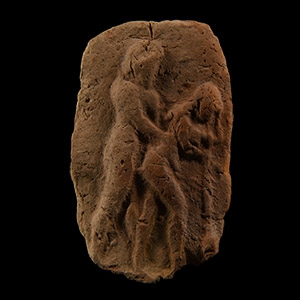
Old Babylonian Terracotta Plaque with Erotic Scene
Circa 1800 B.C.Sold for (Inc. bp): £1,170
Depicting an erotic beer drinking scene, the woman portrayed nude and bent at the waist, shown drinking from a pottery vessel with a low straw; a nude male figure standing behind her with his hands resting on her waist; accompanied by a custom-made display stand. 285 grams total, 80 mm (11 cm high including stand)
From the property of the late Mr SM, London, UK, 1969-1999. Accompanied by a previous catalogue information slip.
