
Loading, please wait...
LOT 0202
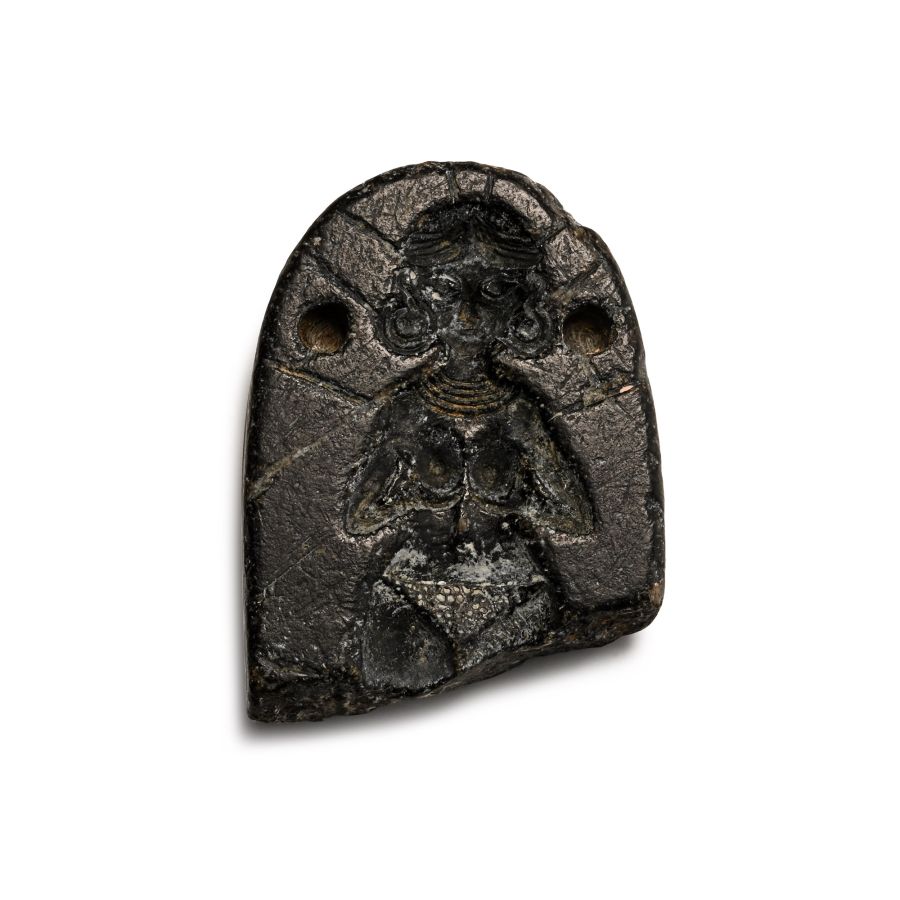
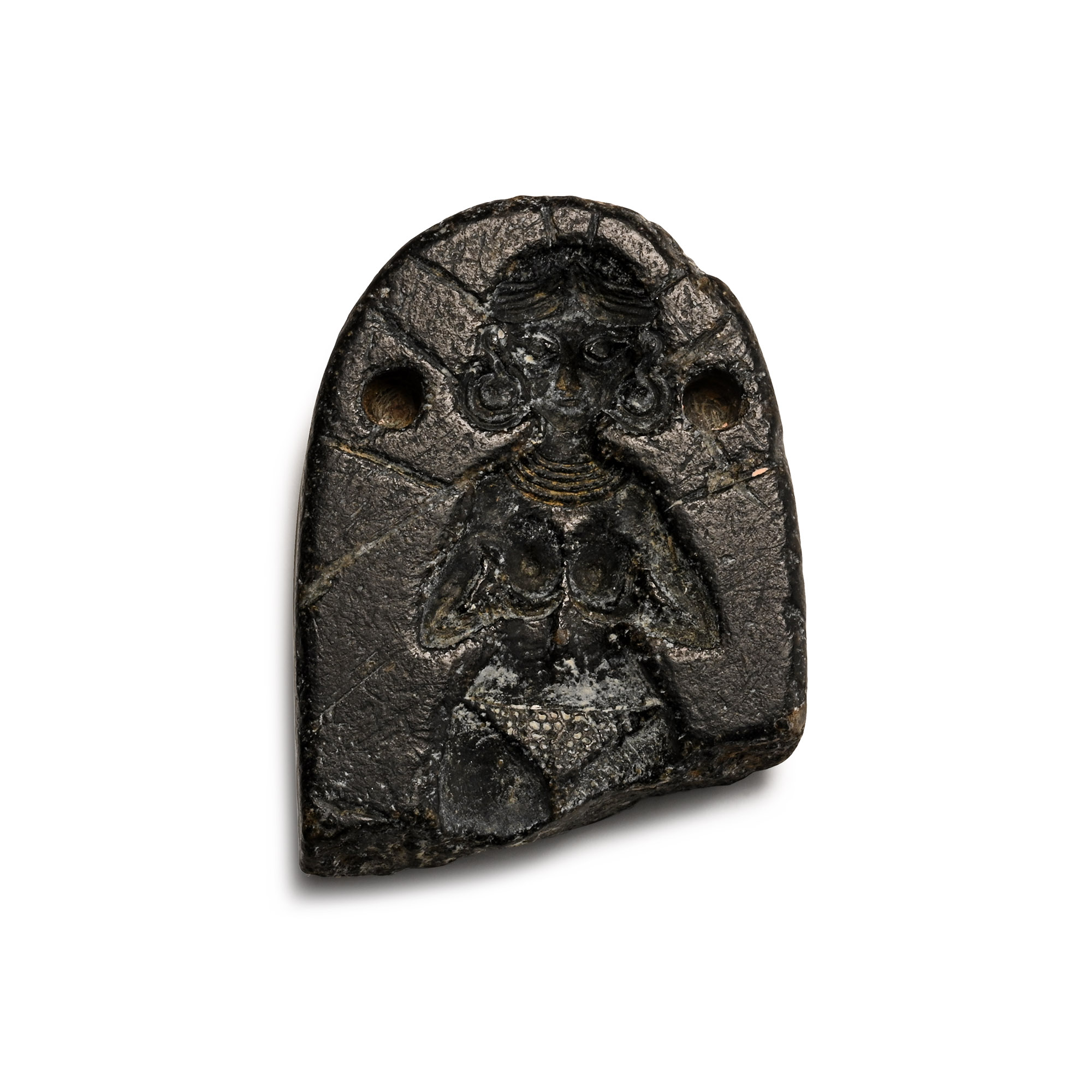
Western Asiatic Black Stone Mould for Female Figure
2000-1700 B.C.
1 1/2 in. (23.43 grams, 38 mm).
Tongue-shaped mould fragment with a recessed female figure on the upper face, accompanied by a copy of an old scholarly note, typed and signed by W.G. Lambert, late Professor of Assyriology, University of Birmingham, 1970-1993, which states: 'Upper Portion of Mould in Black Stone, 39 x 29 x 10 mm. This mould served to make metal figurines of a nude female figure. It is preserved from the thighs up, and is in very good state of preservation. The figure is worked in much detail: the hair is carefully arranged on the head, she has large earrings, five strings of beads around the neck; she holds her hands under her breasts, and the pubic hair is carefully marked. The fine quality, detailed work of this piece is most unusual. It dates to c. 1200 - 1700 B.C and comes from Iraq or an adjacent area.' [No Reserve]
ProvenanceUK private collection, acquired 1990-1993.
Accompanied by a copy of a scholarly note, typed and signed by Professor Wilfrid George Lambert in 1991.
TimeLine Auctions follows a vetting process to ensure the authenticity and legality of all items, reinforcing our commitment to integrity and responsible trading. Each antiquity, antique, and coin lot undergoes thorough examination by a vetting committee of at least ten external specialists, professional trade association members, scientists, and archaeologists: Our Vetting Process
AUCTIONS:
TimeLine is a leading auction house specialising in antiquities, ancient art, collectables, natural history, coins, medals, and books. Our auctions offer museums, collectors, historians, and enthusiasts the opportunity to acquire unique and historically significant pieces.
-
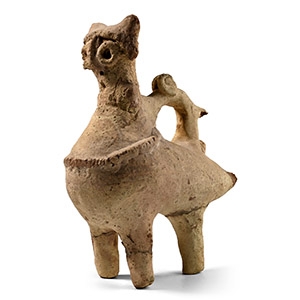
Western Asiatic Painted Bird Vessel
8th-9th century A.D.Estimate: £200 - 300 (+bp*)
Opening Bid: £100
Hollow-formed piriform body with three columnar legs, strap handle with applied detailing and applied collar, tapering neck and strigine head with applied loops to the eyes. 442 grams, 17 cm high
UK collection, 1990s. Acquired on the UK art market, before 2000. Private collection, Mr M.V., a London-based businessman. -
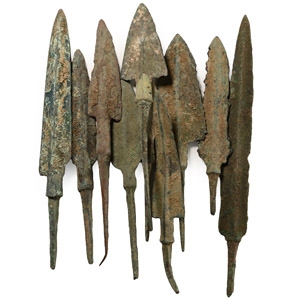
Luristan Bronze Arrowhead Collection
13th-9th century B.C.Sold for (Inc. bp): £152
Comprising large triangular and leaf-shaped types with one barbed example. 225 grams total, 94 - 158 mm
Ex London art market, 1980-1990s. This lot has been cleared against the Art Loss Register database, and is accompanied by an illustrated lot declaration signed by the Head of the Antiquities Department, Dr Raffaele D'Amato.
One series of arrowheads seem to belong to the category of lanceolate head and rounded shoulders from the category Type V, i.e. triangular arrowheads with rounded or angular midrib. Some other arrowheads seem to be a subcategory of subtype A of Khorasani but longer. -
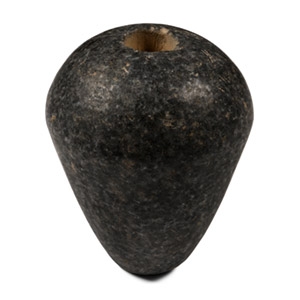
Western Asiatic Stone Macehead
3rd-2nd millennium B.C.Sold for (Inc. bp): £117
Piriform with vertical socket expanding towards the narrower end. 383 grams, 8 cm
From the collection of a London, UK, gentleman, 1990s. This lot has been cleared against the Art Loss Register database, and is accompanied by an illustrated lot declaration signed by the Head of the Antiquities Department, Dr Raffaele D'Amato.
