
Loading, please wait...

LOT 1149
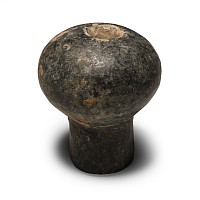
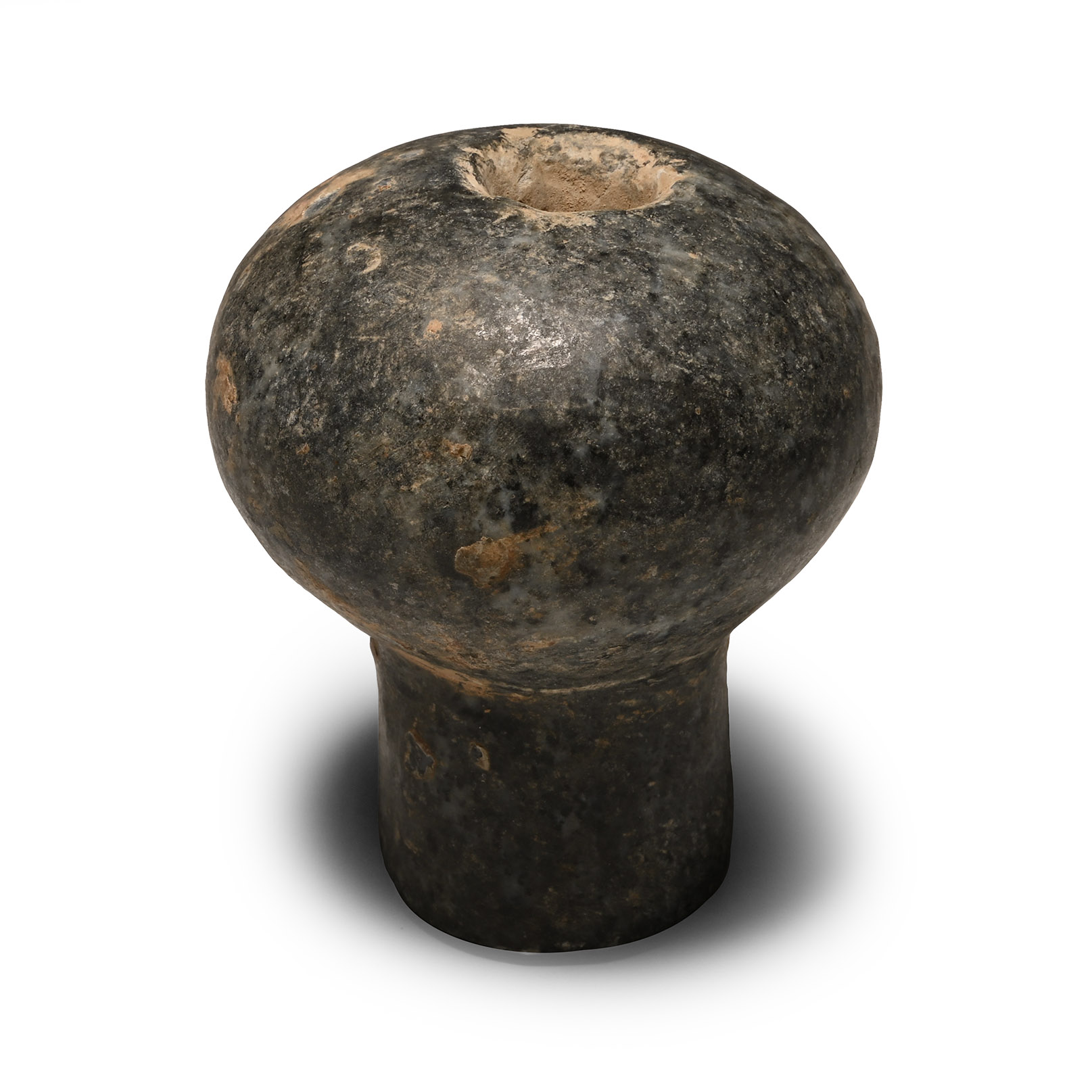
Western Asiatic Black Stone Macehead
3RD MILLENNIUM B.C.
3 14 in. (435 grams, 81 mm).
With plain globular body, circular short shaft expanding to a circular flat base.
ProvenanceAcquired 1980-2015.
Ex Abelita family collection.
See Gorelik, M., Weapons of Ancient East, IV millennium BC-IV century BC, Saint Petersburg, 2003, pl.XXX, no.47, mace of the deity, detail of the image on the “Stela of Kites” Eanatuma, Ngirsu, mid-3rd millennium B.C.
FootnotesThe mace in the Middle East was of great importance, and widely used in fighting activities at the end of the 4th millennium B.C. Many maces of simple spherical or pear-shaped profile have been found there, and they were quickly utilised by the military commanders as symbol of power and rank; limestone maces are still attested in the Marlik culture of 14th-10th century B.C.
CONDITIONTimeLine Auctions follows a vetting process to ensure the authenticity and legality of all items, reinforcing our commitment to integrity and responsible trading. Each antiquity, antique, and coin lot undergoes thorough examination by a vetting committee of at least ten external specialists, professional trade association members, scientists, and archaeologists: Our Vetting Process
AUCTIONS:
TimeLine is a leading auction house specialising in antiquities, ancient art, collectables, natural history, coins, medals, and books. Our auctions offer museums, collectors, historians, and enthusiasts the opportunity to acquire unique and historically significant pieces.
-
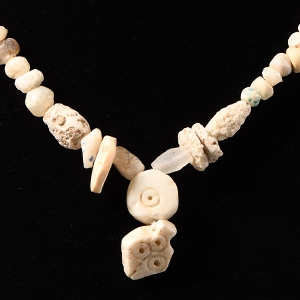
Western Asiatic Bead Necklace String
1st millennium B.C. and laterSold for (Inc. bp): £52
Restrung designer necklace with two central feature beads; composed of graduated beads of various types of stone, glass and shell. 16.6 grams, 35 cm
Acquired 1980-2015. Ex Abelita family collection.
Similar beads were found during the excavations of the royal tombs of Nimrud. Thousands of beads were discovered in the sarcophagi, including those of Nimrud’s Queens; they probably originally formed part of wide collars with multiple strands. -
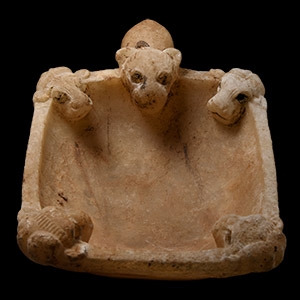
Mesopotamian Alabaster Offering Dish with Lion Handle
2nd-early 1st millennium B.C.Estimate: £18,000 - 24,000 (+bp*)
Opening Bid: £10,000
An Aramean rectangular dish with sloping sides, an inward-facing goat-head at each corner; handle formed as a recumbent lion biting the rim; each beast with recessed eyes to accept inserts; ropework band to the underside. 698 grams, 22 cm
Windermere Collection, Germany, 1960s. American collection, Phillips, 1960s-1980s. with Fortuna Fine Arts, 2012. From the S.M. collection, 2012-2016. From an important London collection, 2016. Private collection. Accompanied by a copy of an Art Loss Register certificate no.S00118561. Accompanied by an academic report by Dr Raffaele D’Amato. This lot has been checked against the Interpol Database of stolen works of art and is accompanied by search certificate number no.12164-218579.
The Aramean civilisation produced superb specimens of vessels, in which the lion, symbol of royal power, was one of the most relevant decorative motifs. Vessels of this typology are already known from the Anatolian culture of Kültepe, the first Hittite capital, since the Middle Bronze Age. Also the culture of Ugarit (Ras Shamarra) produced cups with similar lion heads, in a period of 1500 and 1300 B.C. -
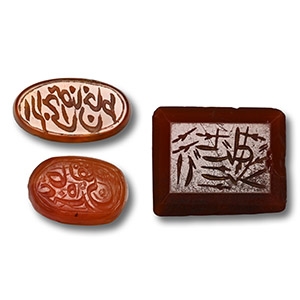
Western Asiatic Calligraphic Gemstone Group
19th-20th century A.D.Estimate: £200 - 300 (+bp*)
Opening Bid: £100
Each with chamfered edges and dense panel of calligraphic text. 9.3 grams total, 19-25 mm
Ex German art market, 2000s. Acquired from an EU collector living in London. From the collection of Surrey, UK, gentleman.
