
Loading, please wait...
LOT 1287
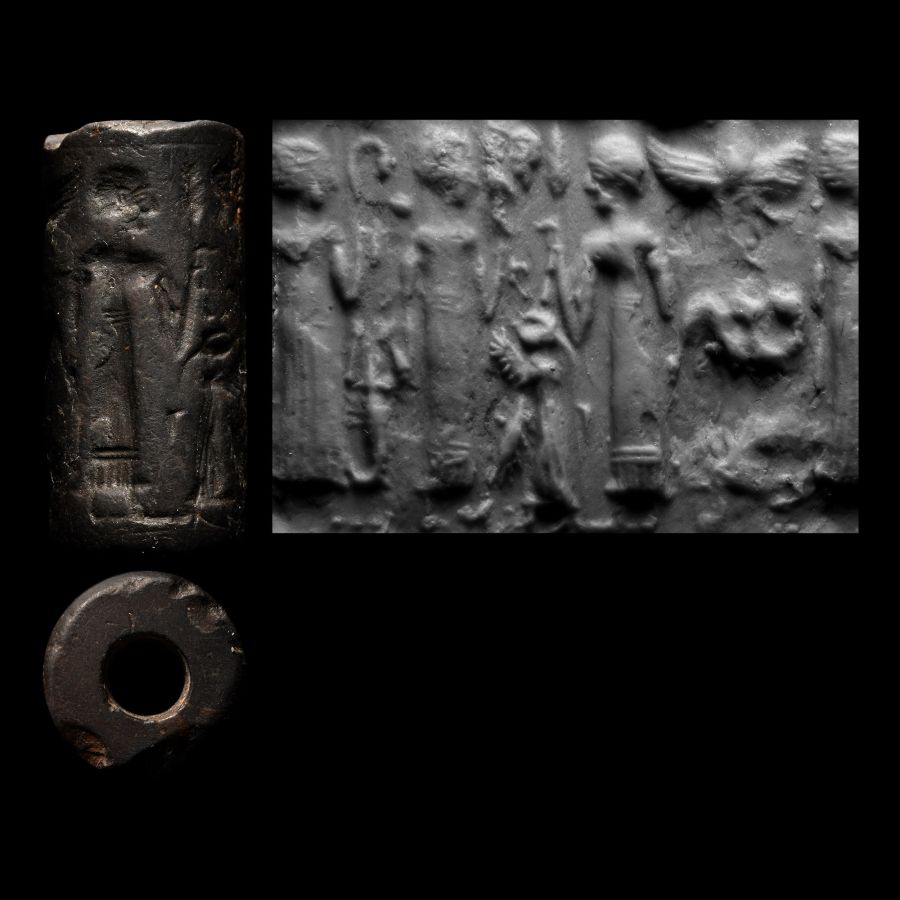
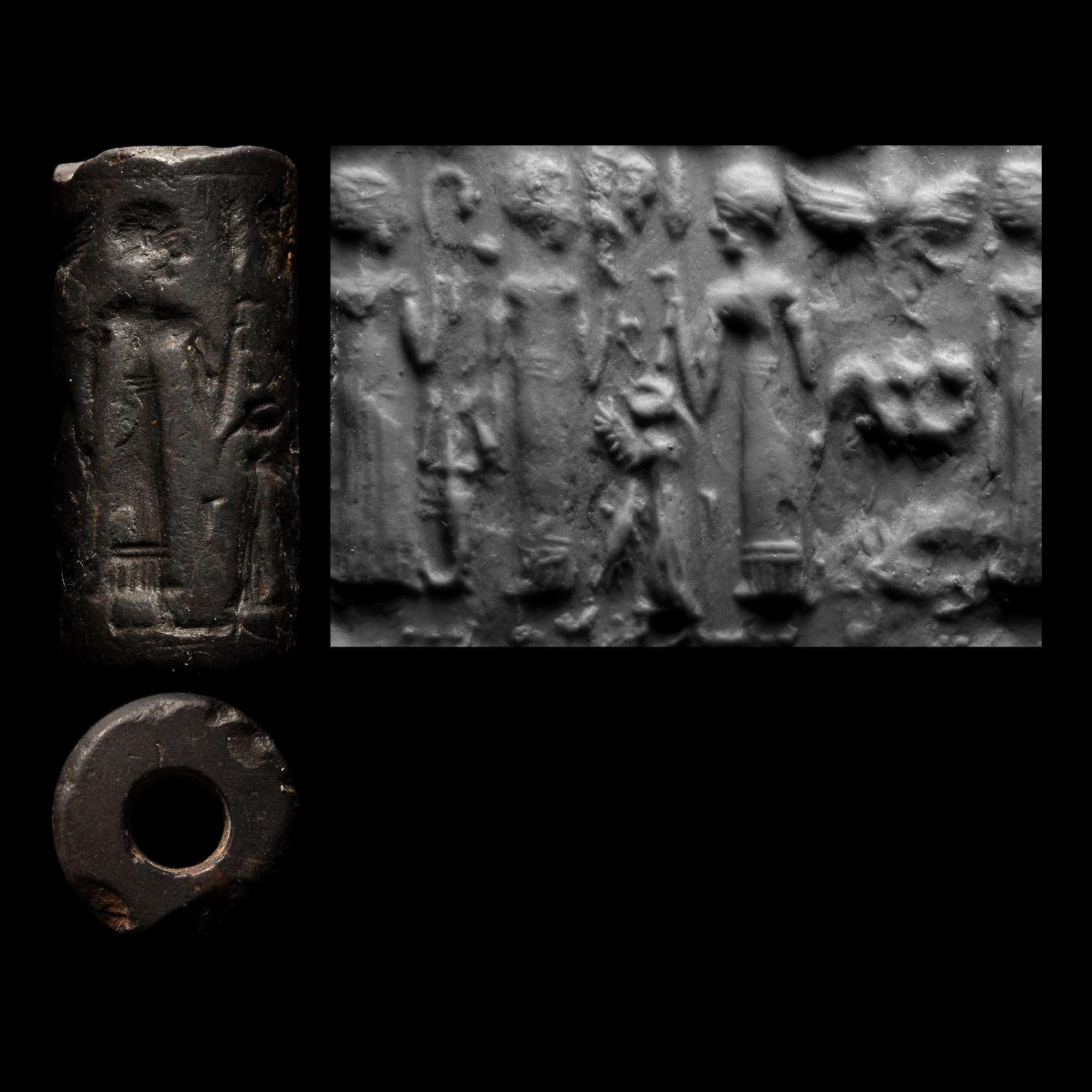
Western Asiatic Black Stone Cylinder Seal
2ND-1ST MILLENNIUM B.C.
1 in. (8.85 grams, 24 mm).
With frieze of robed figures in profile with faravahar above and objects in the field; supplied with a museum-quality impression.
ProvenanceFrom the 'S' collection, acquired 1970-1990s.
The collection was seen and studied by W.G. Lambert, late Professor of Assyriology at the University of Birmingham, 1970-1993.
This lot has been cleared against the Art Loss Register database, and is accompanied by an illustrated lot declaration signed by the Head of the Antiquities Department, Dr Raffaele D'Amato.
TimeLine Auctions follows a vetting process to ensure the authenticity and legality of all items, reinforcing our commitment to integrity and responsible trading. Each antiquity, antique, and coin lot undergoes thorough examination by a vetting committee of at least ten external specialists, professional trade association members, scientists, and archaeologists: Our Vetting Process
AUCTIONS:
TimeLine is a leading auction house specialising in antiquities, ancient art, collectables, natural history, coins, medals, and books. Our auctions offer museums, collectors, historians, and enthusiasts the opportunity to acquire unique and historically significant pieces.
LOT 1287
Western Asiatic Black Stone Cylinder Seal
Estimate £400 - 600€460 - 700 (for guidance only)$540 - 810 (for guidance only)
-
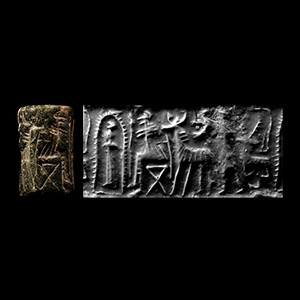
Anatolian Dark Green Cylinder Seal with God
Circa 2000 B.C.Sold for (Inc. bp): £1,105
Cylinder with cord and bead handles; accompanied by a copy of an old scholarly note, typed and signed by W.G. Lambert, late Professor of Assyriology, University of Birmingham, 1970-1993, which states: 'Cylinder of dark-green stone, 39 x 25 mm., some incrustation which could be removed; condition good. Figure ( god? ) under notched arch, seated figure to right, leaning forward and holding spear; two distinct horned animals with standing figure between them, bird. From North Syria or Anatolia, c. 2000 B.C.'; supplied with a museum-quality impression. 48.5 grams, 39 mm
UK private collection, acquired 1980-1983. Accompanied by a copy of a scholarly note, typed and signed by Professor Wilfrid George Lambert in November 1988. This lot has been cleared against the Art Loss Register database, and is accompanied by an illustrated lot declaration signed by the Head of the Antiquities Department, Dr Raffaele D'Amato. -
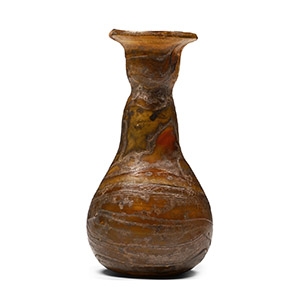
Western Asiatic Marbled Glass Bottle
8th-12th century A.D.Estimate: £400 - 600 (+bp*)
Opening Bid: £180
A heavy pear-shaped amber-green coloured glass vase with u-shaped neck and everted rim, decorative marbling over the body. 101 grams, 98 mm high
Acquired early 1990s. Ex private American collection; thence by descent. Private collection since 1998. This lot has been cleared against the Art Loss Register database, and is accompanied by an illustrated lot declaration signed by the Head of the Antiquities Department, Dr Raffaele D'Amato. -
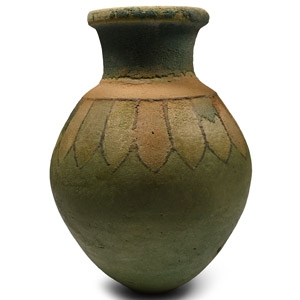
Ziwiye Ceramic Vessel
8th-7th century B.C.Sold for (Inc. bp): £494
Glazed composition pear-shaped vessel with narrow base. cariated shoulder, gently flared neck and rolled im; segmented petal detailing to shoulder. 694 grams, 19.2 cm high
Private collection of a London gentleman, acquired between 1965-2020. This lot has been cleared against the Art Loss Register database, and is accompanied by an illustrated lot declaration signed by the Head of the Antiquities Department, Dr Raffaele D'Amato.
