
Loading, please wait...
LOT 1303
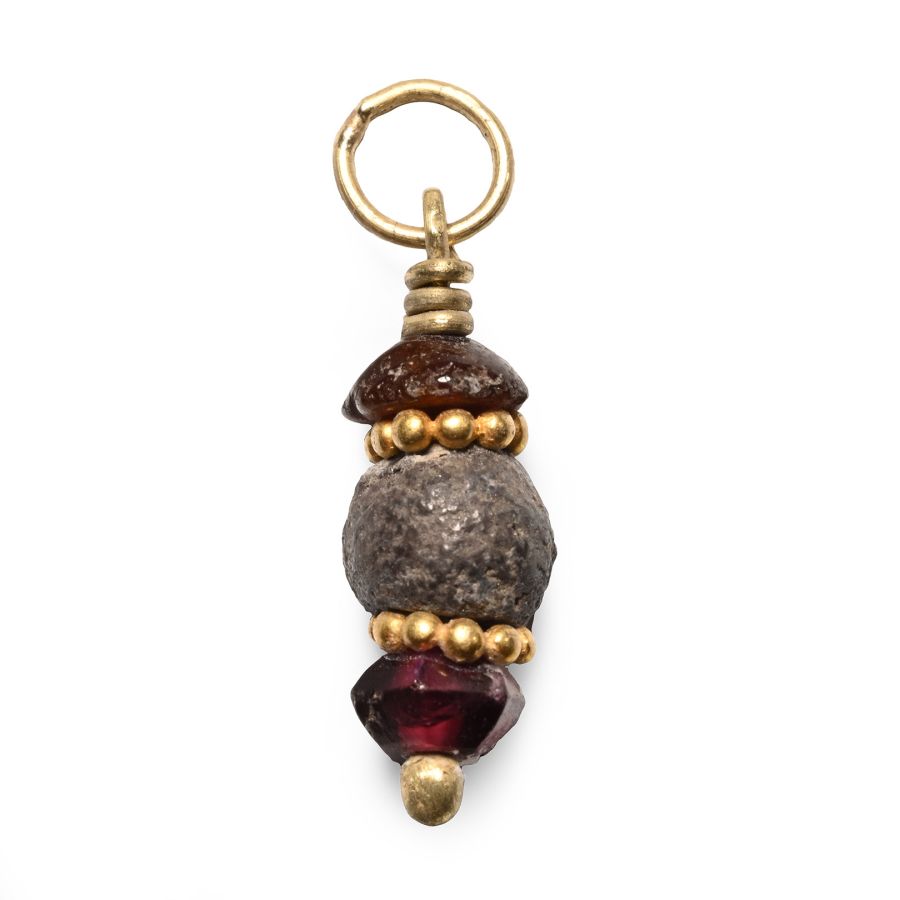
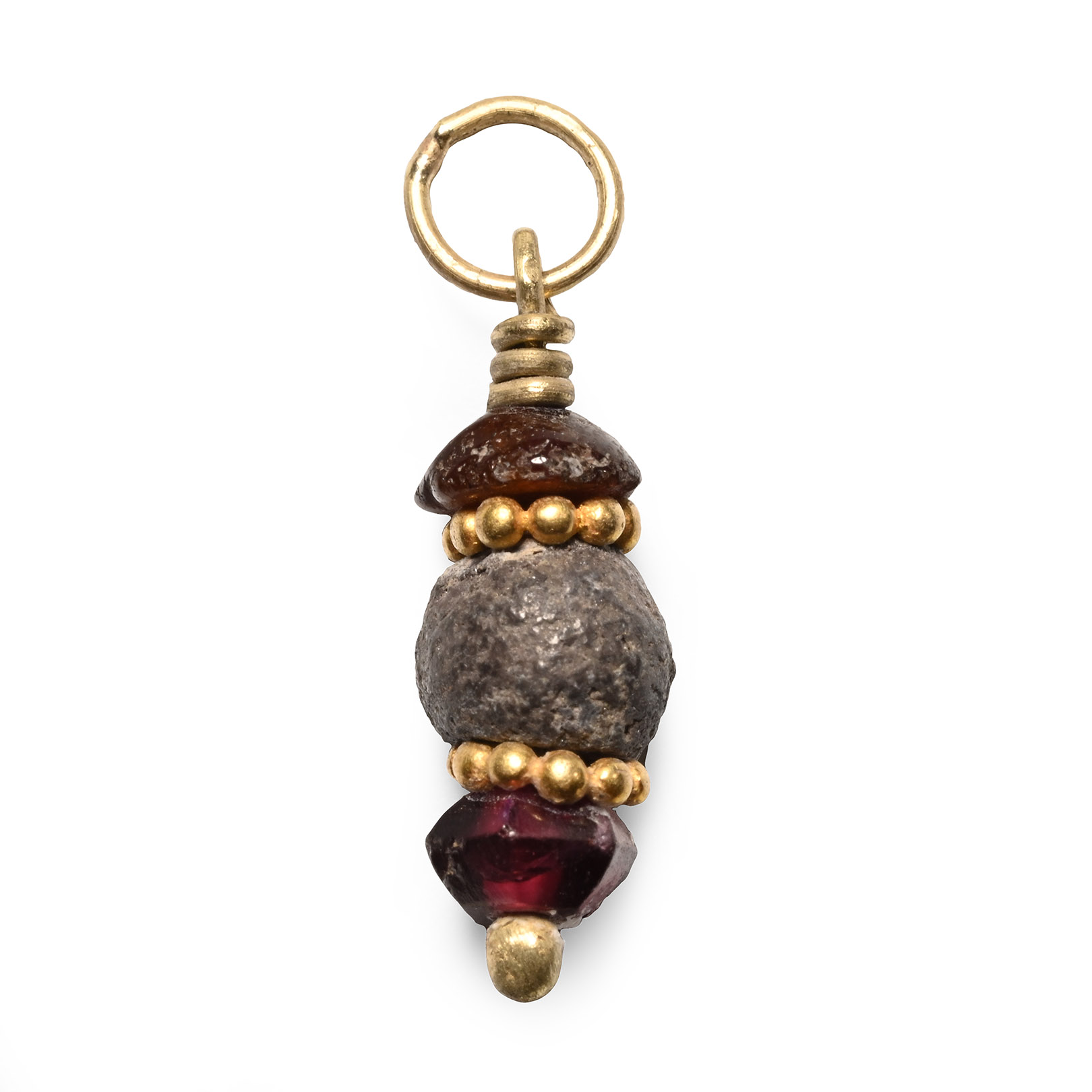
Western Asiatic Beaded and Gold Pendant
1ST MILLENNIUM B.C. AND LATER
3/4 in. (0.96 grams, 21 mm).
Wire dangle with beaded collars and biconvex and other glass beads. [No Reserve]
ProvenanceEx property of a late Japanese collector, 1970-2000s.
CONDITIONTimeLine Auctions follows a vetting process to ensure the authenticity and legality of all items, reinforcing our commitment to integrity and responsible trading. Each antiquity, antique, and coin lot undergoes thorough examination by a vetting committee of at least ten external specialists, professional trade association members, scientists, and archaeologists: Our Vetting Process
AUCTIONS:
TimeLine is a leading auction house specialising in antiquities, ancient art, collectables, natural history, coins, medals, and books. Our auctions offer museums, collectors, historians, and enthusiasts the opportunity to acquire unique and historically significant pieces.
-
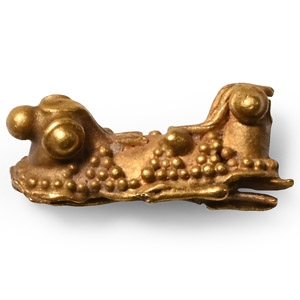
Western Asiatic Gold Recumbent Beast Bead
1st millennium B.C.Sold for (Inc. bp): £117
Rectangular plaque with recumbent lion(?) with clusters of granulation to the flanks. 0.42 grams, 9 mm.
Ex property of a late Japanese collector, 1970-2000s. -
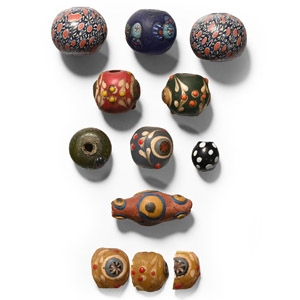
Western Asiatic Mosaic Bead Group
18th-20th century A.D.Sold for (Inc. bp): £46
Comprising polychrome beads with attractive mosaic and trail designs, some with applied pellets, one with applied eye-motifs; one fragmentary. 78 grams total, 12-32 mm
Collected from 1970-1999. From the collection of the late Mr S.M., London, UK. -
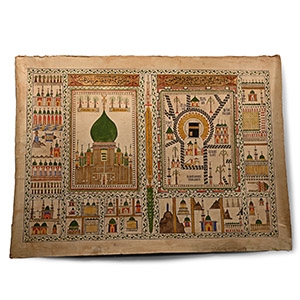
Islamic Illuminated Pilgrimage Certificate with Drawing of Kaaba for Hafsa Bin Omar al Kahtan
1250 A.H. (1834 A.D.)Sold for (Inc. bp): £1,105
Rectangular layout with two large panels, liquid gold blocks with nastaliq text, left: mosque in elevation with the body formed from Kufic text, right: city in plan with architectural features and black Kaaba; geometric frames and text, scenes from Mecca; verso with cursive presentation text. 50 grams, 56 cm wide
From an important family collection started in the late 1950s. Property of a West London, UK, gentleman.
