
Loading, please wait...
LOT 1224
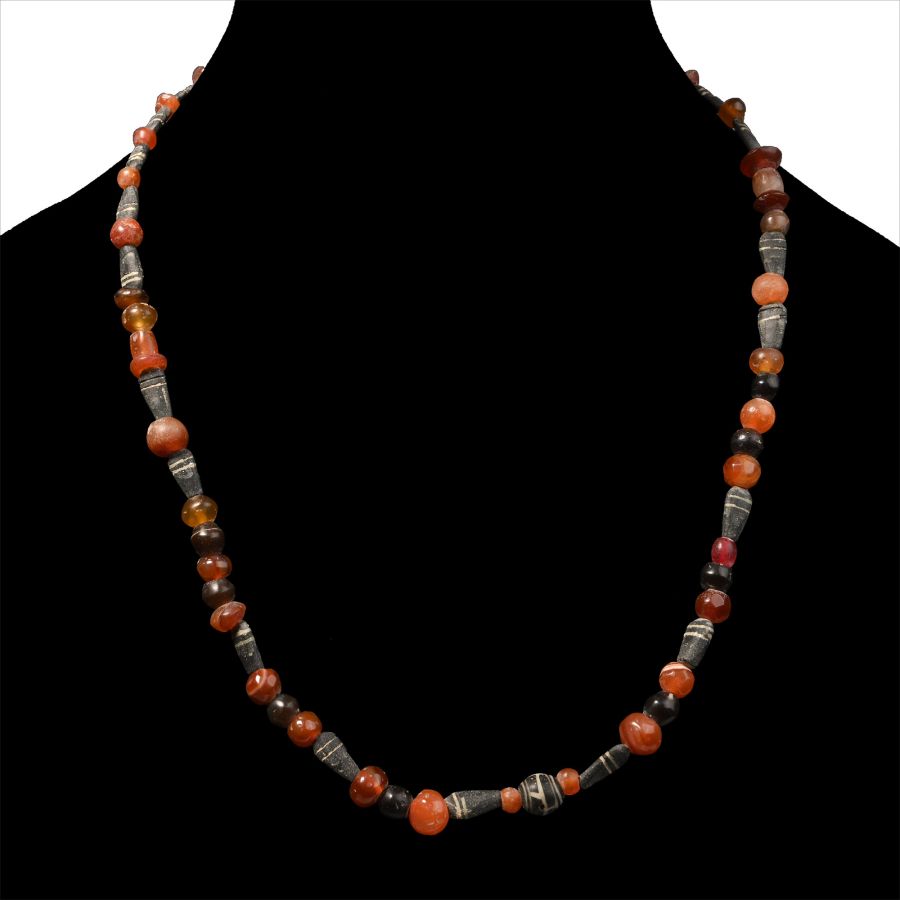
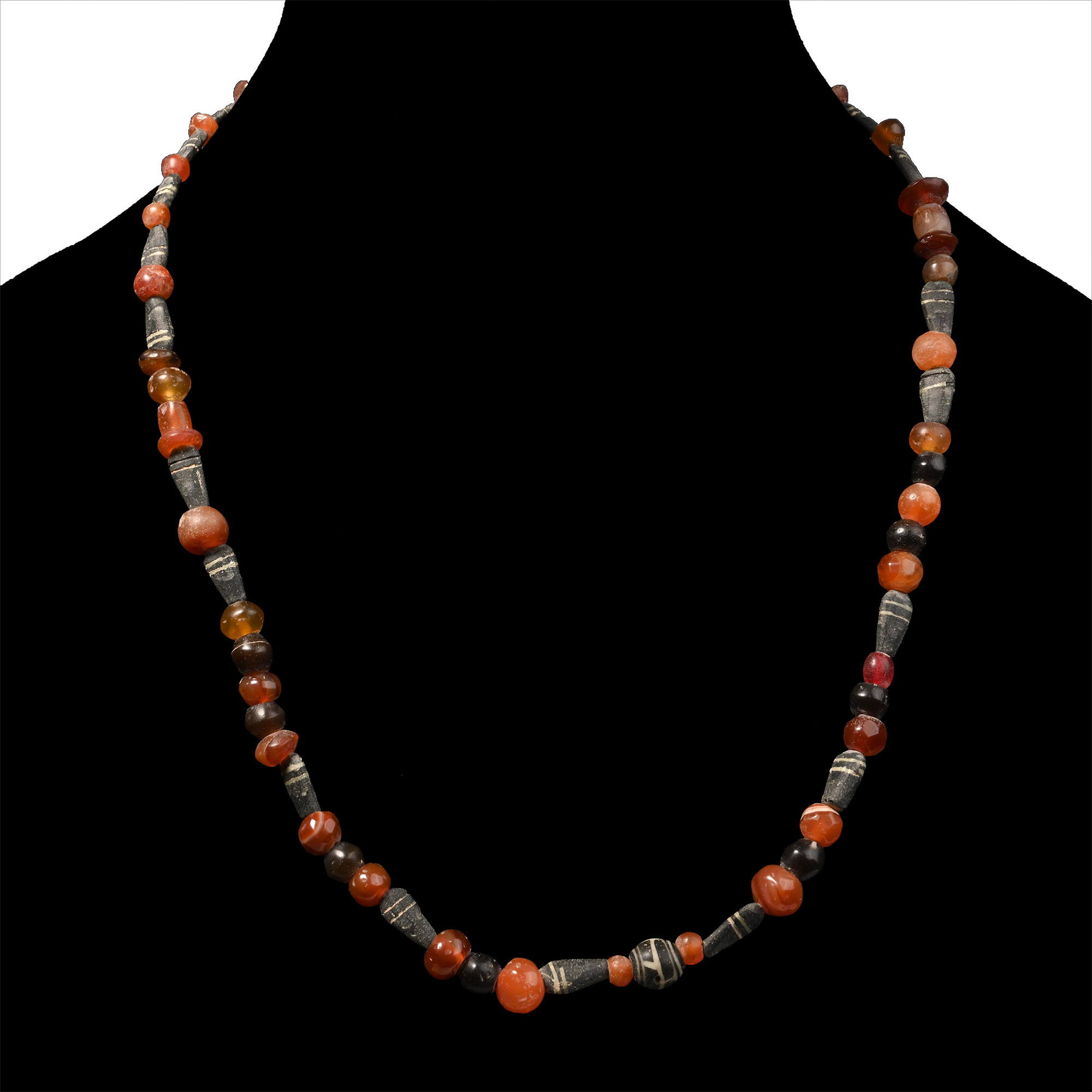
Western Asiatic Bead Necklace
1ST MILLENNIUM B.C. AND LATER
22 1/2 in. (32 grams, 57 cm long).
Restrung designer necklace composed of mainly spherical carnelian beads interspersed with glass drop-shapes imitating banded agate; modern clasp. [No Reserve]
ProvenanceFrom the collection of a gentleman, acquired on the London art market in the 1990s.
CONDITIONTimeLine Auctions follows a vetting process to ensure the authenticity and legality of all items, reinforcing our commitment to integrity and responsible trading. Each antiquity, antique, and coin lot undergoes thorough examination by a vetting committee of at least ten external specialists, professional trade association members, scientists, and archaeologists: Our Vetting Process
AUCTIONS:
TimeLine is a leading auction house specialising in antiquities, ancient art, collectables, natural history, coins, medals, and books. Our auctions offer museums, collectors, historians, and enthusiasts the opportunity to acquire unique and historically significant pieces.
-
Syrian Haematite Cylinder Seal with Rosettes
Circa 1900-1600 B.C.Sold for (Inc. bp): £2,600
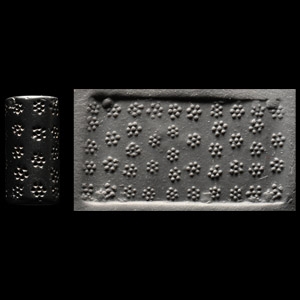
With rosettes arranged in rows; the design consists of rosettes, each composed of one central hole surrounded by six other holes, rosettes are arranged in alternate rows of four and five: four rows of four and four rows of five in total; accompanied by a museum quality impression and a copy of an old scholarly note, typed and signed by W.G. Lambert, late Professor of Assyriology, University of Birmingham, 1970-1993, which states: 'Cylinder Seal of Hematite, 22.5 x 11.5 mm. The condition is very good.' 9.03 grams, 22 mm
From the private collection of a North American lady, formed 1970s-early 1990s, with collection reference no.P44. Accompanied by a copy of a scholarly note, typed and signed by Professor Wilfrid George Lambert dated August 1990 and an old photograph. This lot has been checked against the Interpol Database of stolen works of art and is accompanied by search certificate number no.12933-246707. -
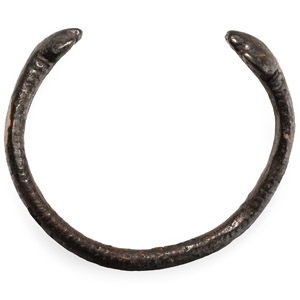
Western Asiatic Silver Bracelet
1st millennium B.C.Sold for (Inc. bp): £117
Penannular body with ram-head terminals. 27 grams, 58 mm
Ex German art market, 2000s. Acquired from an EU collector living in London. From the collection of a Surrey, UK, gentleman. -
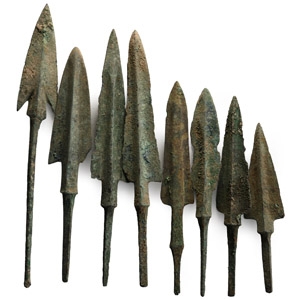
Luristan Bronze Arrowhead Collection
2nd-1st millennium B.C.Sold for (Inc. bp): £117
Mainly barbed and tanged types. 198 grams total, 9.3-15.4 cm
Ex London, UK, collection, 1990s.
