
Loading, please wait...
LOT 1412
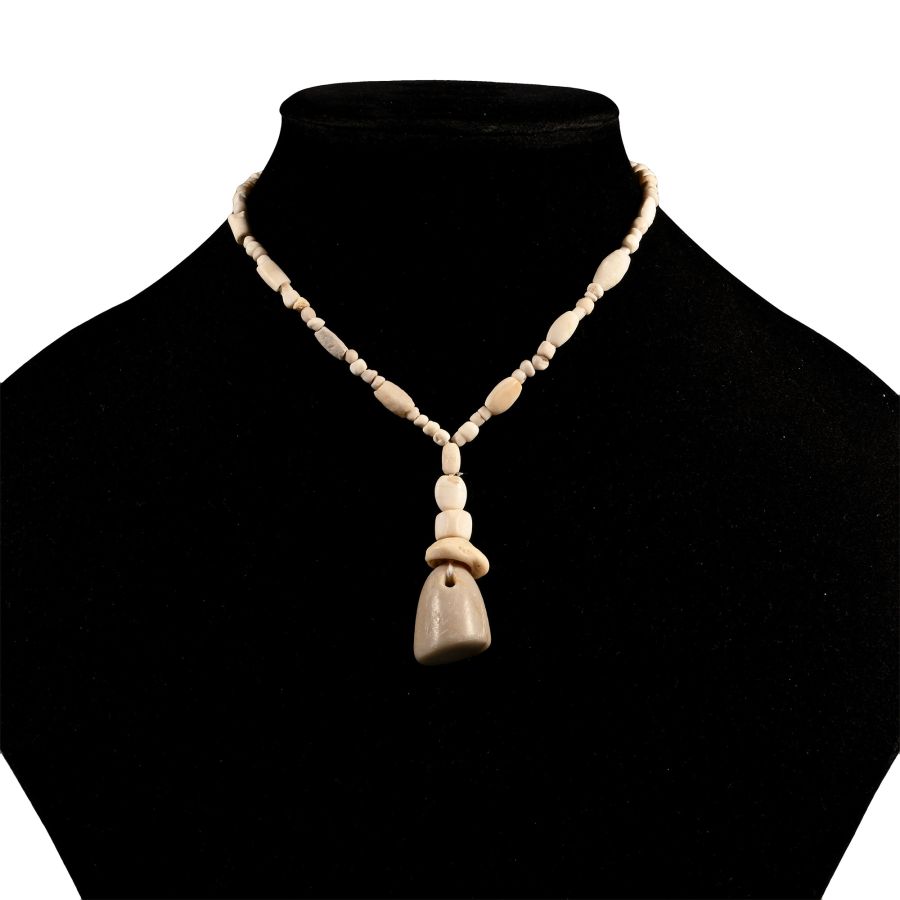
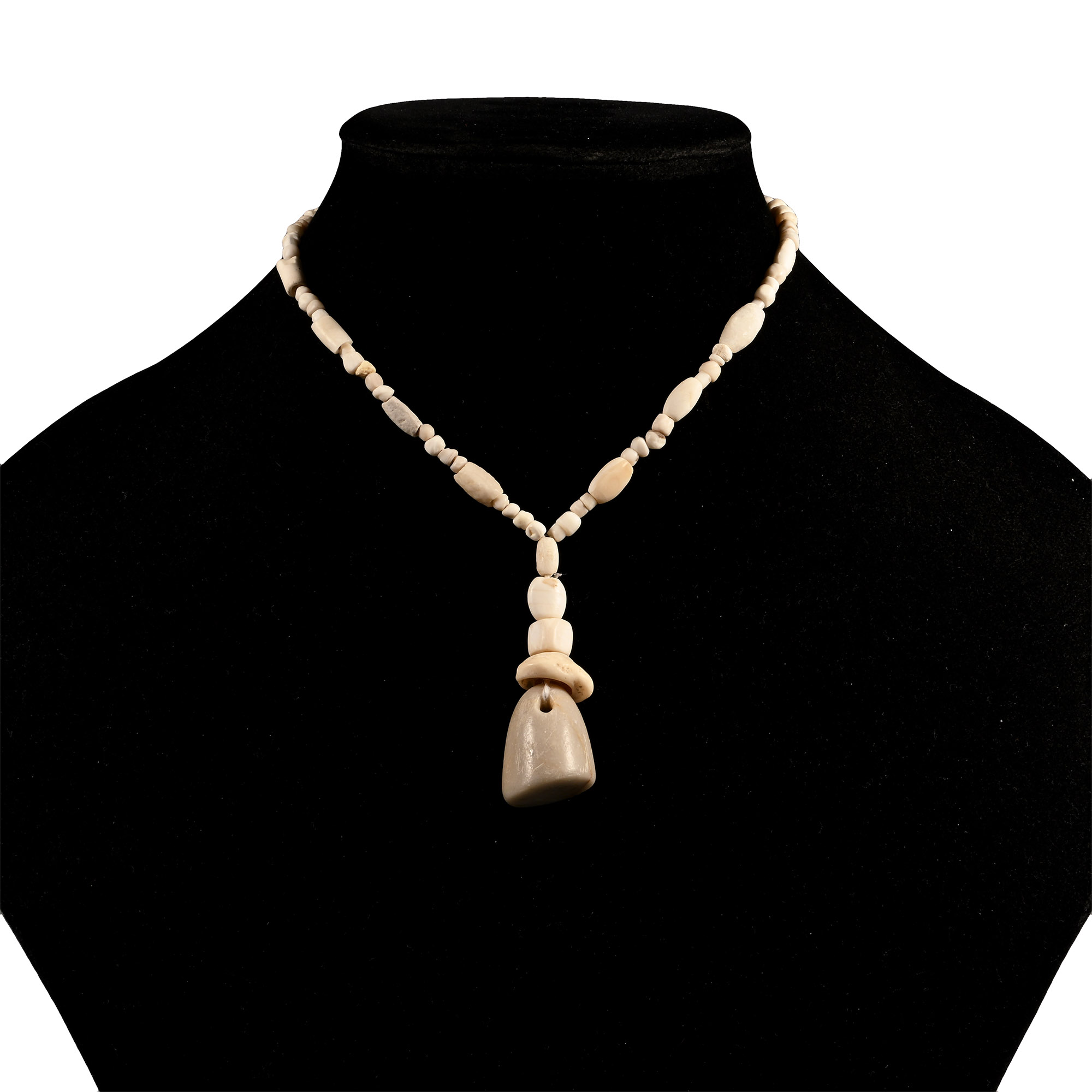
Western Asiatic Bead Necklace String
1ST MILLENNIUM B.C. AND LATER
11 1/4 in. (28.2 grams, 28.5 cm).
Restrung group of oblate, fusiform, drum-shaped and other beads in stone and shell. [No Reserve]
ProvenanceEx London, UK, collection, 1990s.
This lot has been cleared against the Art Loss Register database, and is accompanied by an illustrated lot declaration signed by the Head of the Antiquities Department, Dr Raffaele D'Amato.
TimeLine Auctions follows a vetting process to ensure the authenticity and legality of all items, reinforcing our commitment to integrity and responsible trading. Each antiquity, antique, and coin lot undergoes thorough examination by a vetting committee of at least ten external specialists, professional trade association members, scientists, and archaeologists: Our Vetting Process
AUCTIONS:
TimeLine is a leading auction house specialising in antiquities, ancient art, collectables, natural history, coins, medals, and books. Our auctions offer museums, collectors, historians, and enthusiasts the opportunity to acquire unique and historically significant pieces.
-
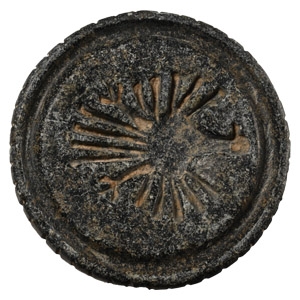
Anatolian Black Stone Stamp Seal
2nd-1st millennium B.C.Sold for (Inc. bp): £130
Discoid in plan with hatching to the rim and the pierce lug to the reverse; deep border and intaglio motif of a spread eagle with segmented wings and tail. 42 grams, 49 mm
From the collection of Mr S.M., London, UK, formed from 1979-1999. This lot has been cleared against the Art Loss Register database, and is accompanied by an illustrated lot declaration signed by the Head of the Antiquities Department, Dr Raffaele D'Amato. -
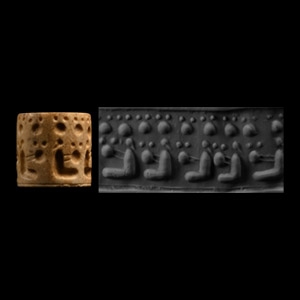
Jemdet Nasr Type White Stone Cylinder Seal with Seated Figures
3rd millennium B.C.Sold for (Inc. bp): £468
Drum-shaped with row of seated figures, mainly executed with a drill, framed with a row of pellets; supplied with a museum-quality impression. 30 grams, 25 mm
Ex S. collection, London, UK, 1980s-2000s. This lot has been cleared against the Art Loss Register database, and is accompanied by an illustrated lot declaration signed by the Head of the Antiquities Department, Dr Raffaele D'Amato. -
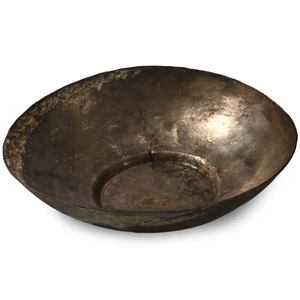
Western Asiatic Silver Bowl
1st millennium B.C.Sold for (Inc. bp): £247
Shallow sheet-silver with integral disc foot. 71.7 grams, 14.3 cm
Acquired before 1983. Ex London gallery, 1990s. This lot has been cleared against the Art Loss Register database, and is accompanied by an illustrated lot declaration signed by the Head of the Antiquities Department, Dr Raffaele D'Amato.
