
Loading, please wait...
LOT 1204
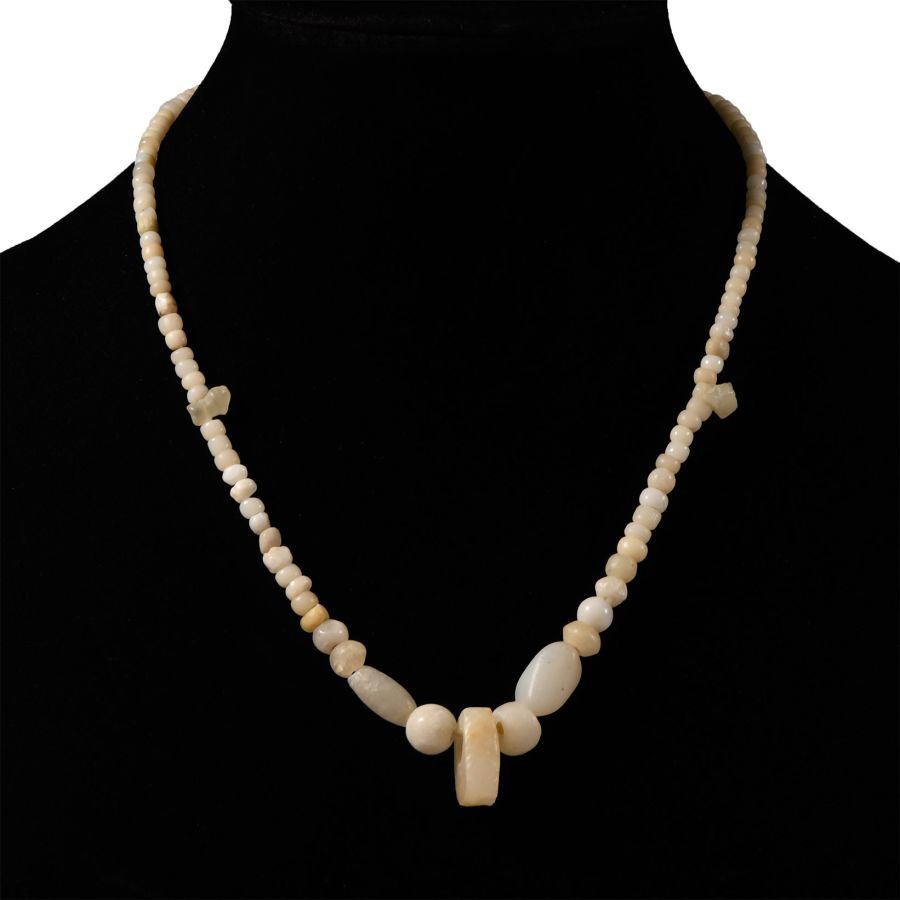
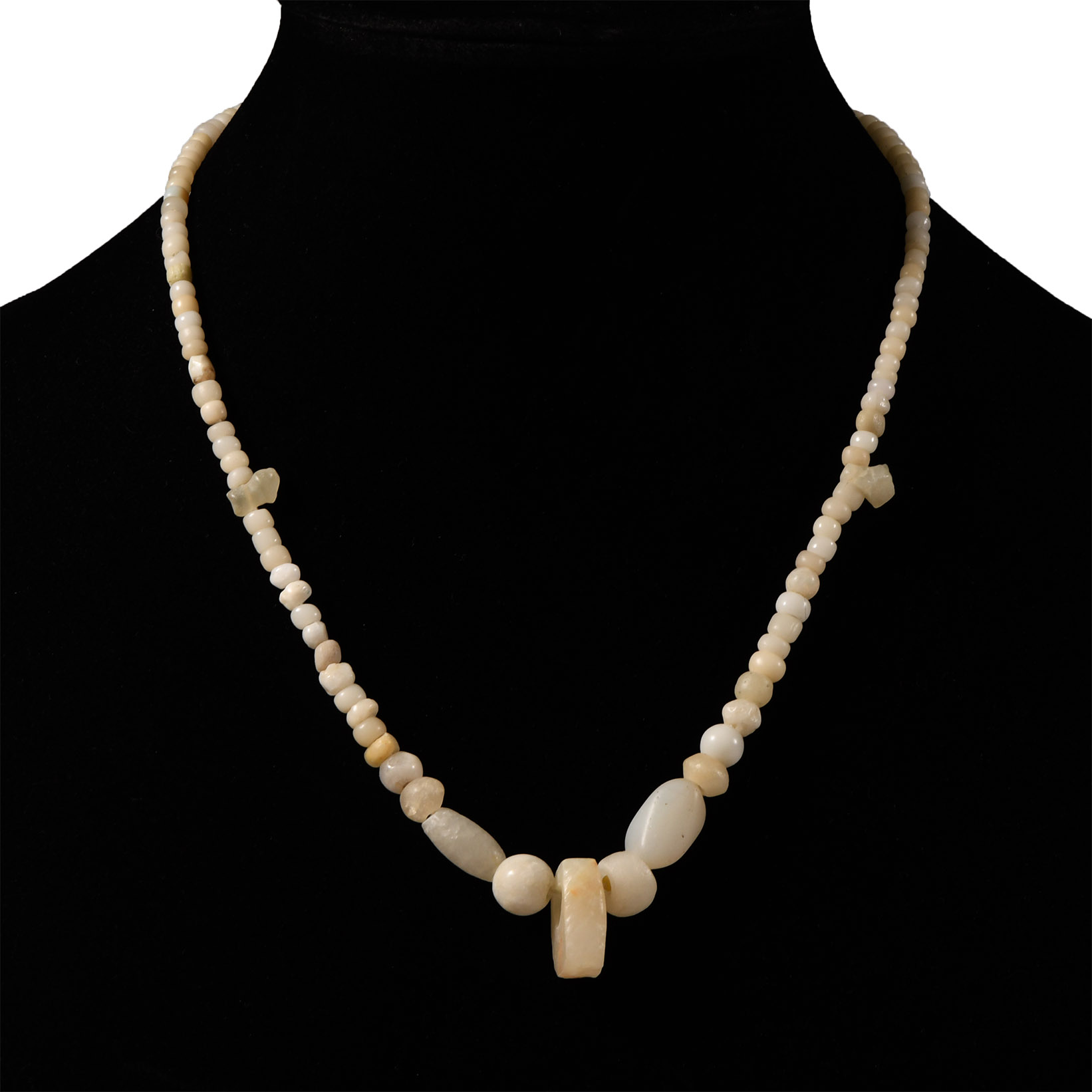
Western Asiatic Bead Necklace String
1ST MILLENNIUM B.C. AND LATER
17 3/4 in. (25.7 grams total, 45 cm).
Restrung designer necklace with two central feature beads; composed of graduated beads of various types of stone, glass and shell. [No Reserve]
ProvenanceAcquired 1980-2015.
Ex Abelita family collection.
Cf. Hussein, M.M., Altaweel, M., Gibson, McGuire, Nimrud The Queen’s Tombs, Baghdad-Chicago, 2016, pl.164, lett.b, for a similar bead necklaces made of a mixture of stones, glass and shell.
FootnotesSimilar beads were found during the excavations of the royal tombs of Nimrud. Thousands of beads were discovered in the sarcophagi, including those of Nimrud’s Queens; they probably originally formed part of wide collars with multiple strands.
CONDITIONTimeLine Auctions follows a vetting process to ensure the authenticity and legality of all items, reinforcing our commitment to integrity and responsible trading. Each antiquity, antique, and coin lot undergoes thorough examination by a vetting committee of at least ten external specialists, professional trade association members, scientists, and archaeologists: Our Vetting Process
AUCTIONS:
TimeLine is a leading auction house specialising in antiquities, ancient art, collectables, natural history, coins, medals, and books. Our auctions offer museums, collectors, historians, and enthusiasts the opportunity to acquire unique and historically significant pieces.
-
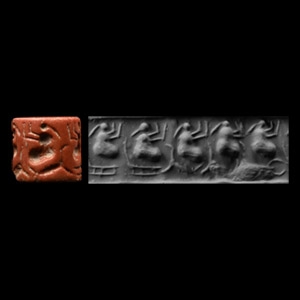
Mesopotamian Red Stone Cylinder Seal
3rd millennium B.C.Estimate: £700 - 900 (+bp*)
Opening Bid: £350
Drum-shaped with frieze of crouching worshippers, each with arms raised and hair worn in a braid behind the head; supplied with a museum-quality impression. 30 grams, 24 mm
Ex S. collection, London, UK, 1980s-2000s. -
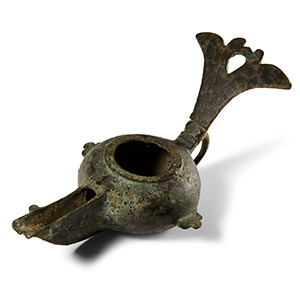
Western Asiatic Bronze Oil Lamp
12th-14th century A.D.Estimate: £200 - 300 (+bp*)
Opening Bid: £100
Comprising an oblate body with lateral trilobe ledge handles, raised rim to filler hole, long nozzle rectangular in plan with lip at forward edge, loop handle to rear and pierced leaf-shaped reflector. 143 grams, 15 cm
Private UK collection. Acquired in the 1980s. Property of a Cambridgeshire gentleman. -
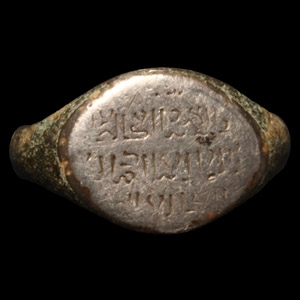
Western Asiatic Silver and Bronze Epigraphic Charm Ring
13th-14th century A.D.Sold for (Inc. bp): £65
Comprising a slender bronze hoop expanding at the shoulders, silver intaglio with an inscription in three lines. 1.56 grams, 17.76 mm overall, 15.90 mm internal diameter (approximate size British D, USA 1 3/4, Europe 1.15, Japan 1)
Acquired 1980-2015. Ex Abelita family collection.
