
Loading, please wait...
LOT 1253
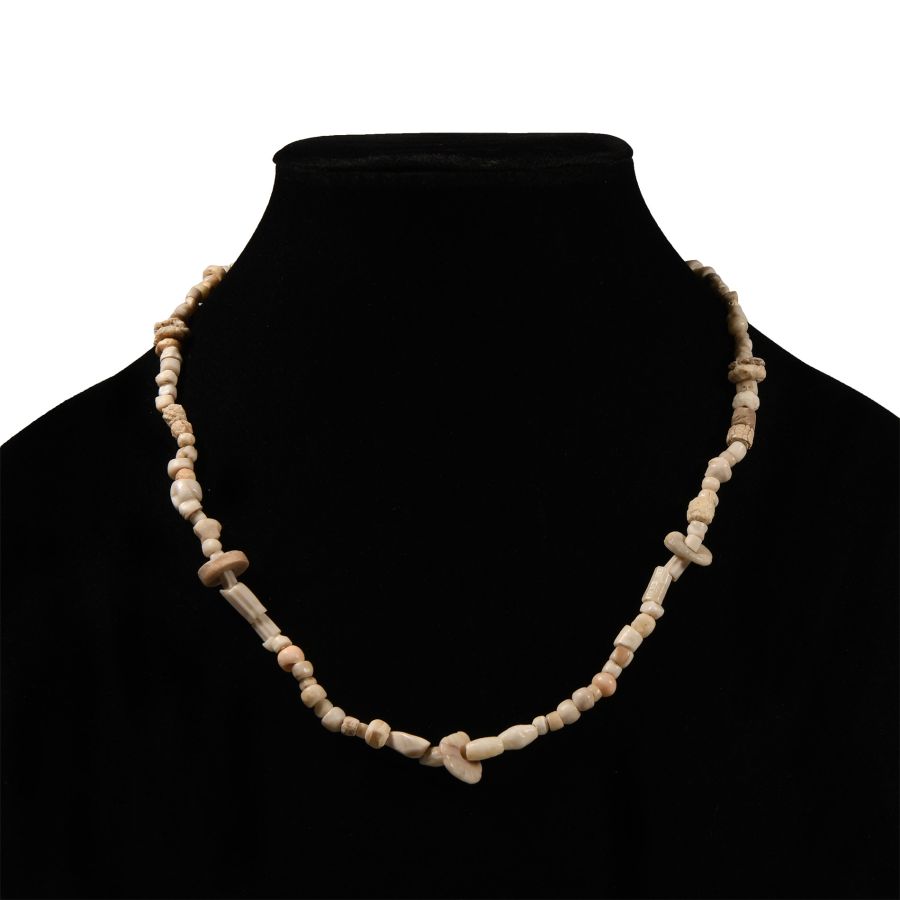
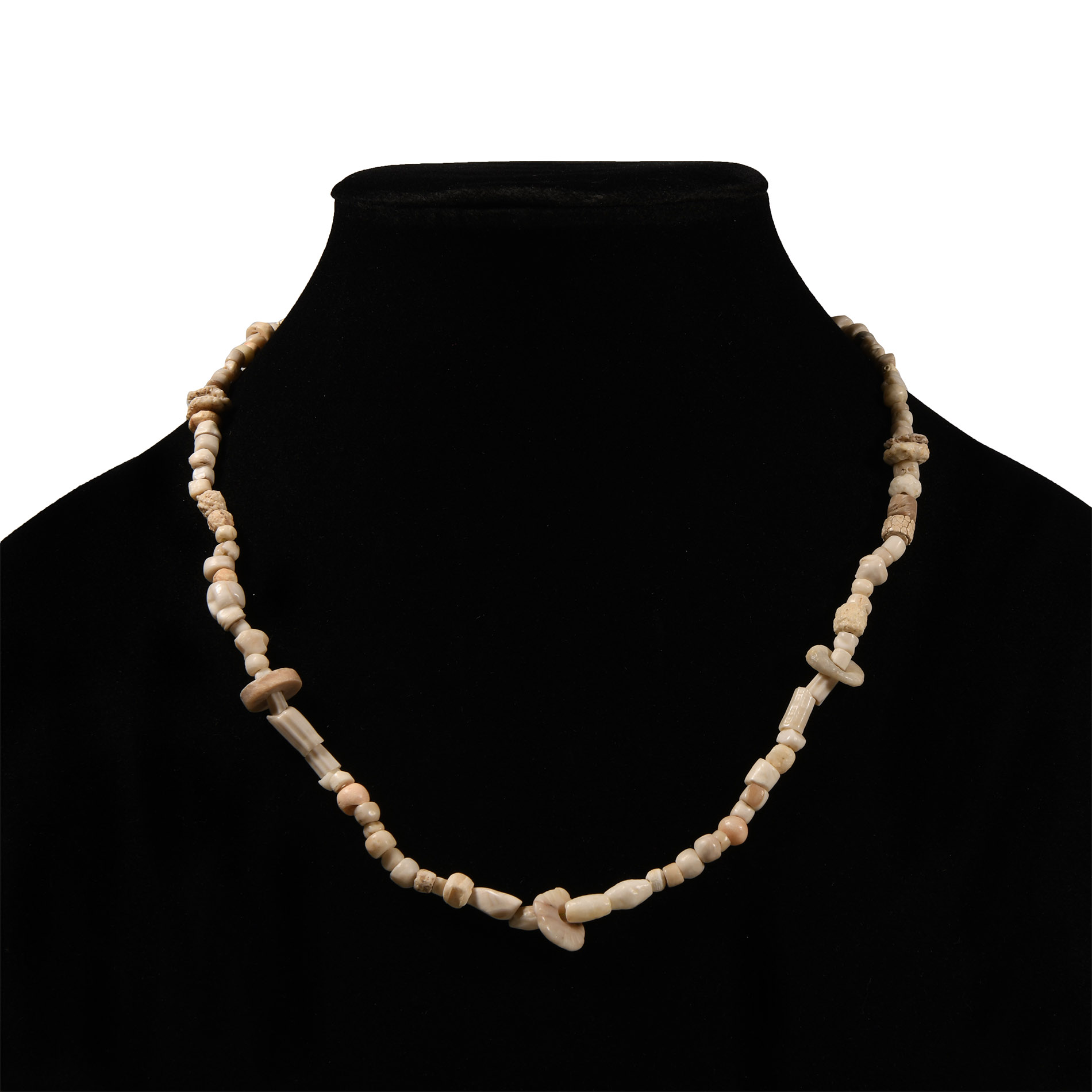
Western Asiatic Bead Necklace String
2ND-1ST MILLENNIUM B.C. AND LATER
19 3/4 in. (23 grams, 50 cm long).
Restrung; composed primarily of shell and ceramic beads of various types, including decoratively ribbed examples. [No Reserve]
ProvenanceUK gallery, early 2000s.
LiteratureCf. Hussein, M.M., Altaweel, M., Gibson, McGuire, Nimrud The Queen’s Tombs, Baghdad-Chicago, 2016, pl.164, lett.b, for a similar bead necklaces made of a mixture of stones, glass and shell.
FootnotesSimilar beads were found during the excavations of the royal tombs of Nimrud. Thousands of beads were discovered in the sarcophagi, including those of Nimrud’s Queens; they probably originally formed part of wide collars with multiple strands.
CONDITIONTimeLine Auctions follows a vetting process to ensure the authenticity and legality of all items, reinforcing our commitment to integrity and responsible trading. Each antiquity, antique, and coin lot undergoes thorough examination by a vetting committee of at least ten external specialists, professional trade association members, scientists, and archaeologists: Our Vetting Process
AUCTIONS:
TimeLine is a leading auction house specialising in antiquities, ancient art, collectables, natural history, coins, medals, and books. Our auctions offer museums, collectors, historians, and enthusiasts the opportunity to acquire unique and historically significant pieces.
-
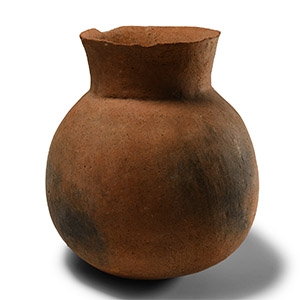
Trans Jordan Terracotta Jar
Early Bronze Age, 3rd millennium B.C.Sold for (Inc. bp): £124
With globular body and broad flared mouth; cracked. 415 grams, 15 cm high
Ex London, UK, collection, 1988. -

Early Parthian Faience Face Cup
1st millennium B.C.Estimate: £800 - 1,000 (+bp*)
Opening Bid: £400
Formed as a small circular vessel, the frontal part shaped as a female face, with well-defined nose, eyes and mouth, long hair on the sides framing the face, traces of colour still present on the upper edge. 71 grams, 60 mm
Collected from 1969-1999. From the collection of the late Mr S.M., London, UK.
Faience objects have been discovered in great numbers at various Middle Assyrian and later sites, including the capitals, provincial and administrative centres as well as small settlements. Functionally, the faience objects can be assigned to a variety of categories, among which vessels, fragments thereof, and jewellery are the most numerous. The vessels are predominantly open-shaped, such as bowls and cups, but miniature bottles, beakers and other types of vessels were also found. Our small cup was probably intended for female toilette usage. -
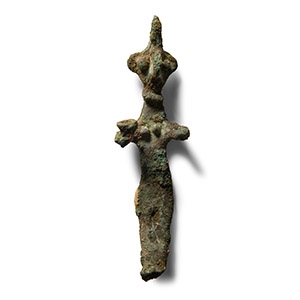
Syro-Hittite Bronze Figure
2nd millennium B.C.Estimate: £400 - 600 (‡+bp*)
Opening Bid: £200
Modelled in the round, standing figure with pinched facial features, transverse collar, applied pellet eyes and breasts, arms bent forward, legs closed together; the right hand holds a cup or bowl. 13.7 grams, 73 mm
Private collection of Mr S.A., Switzerland, 1990s, thence by descent.
