
Loading, please wait...
LOT 0285
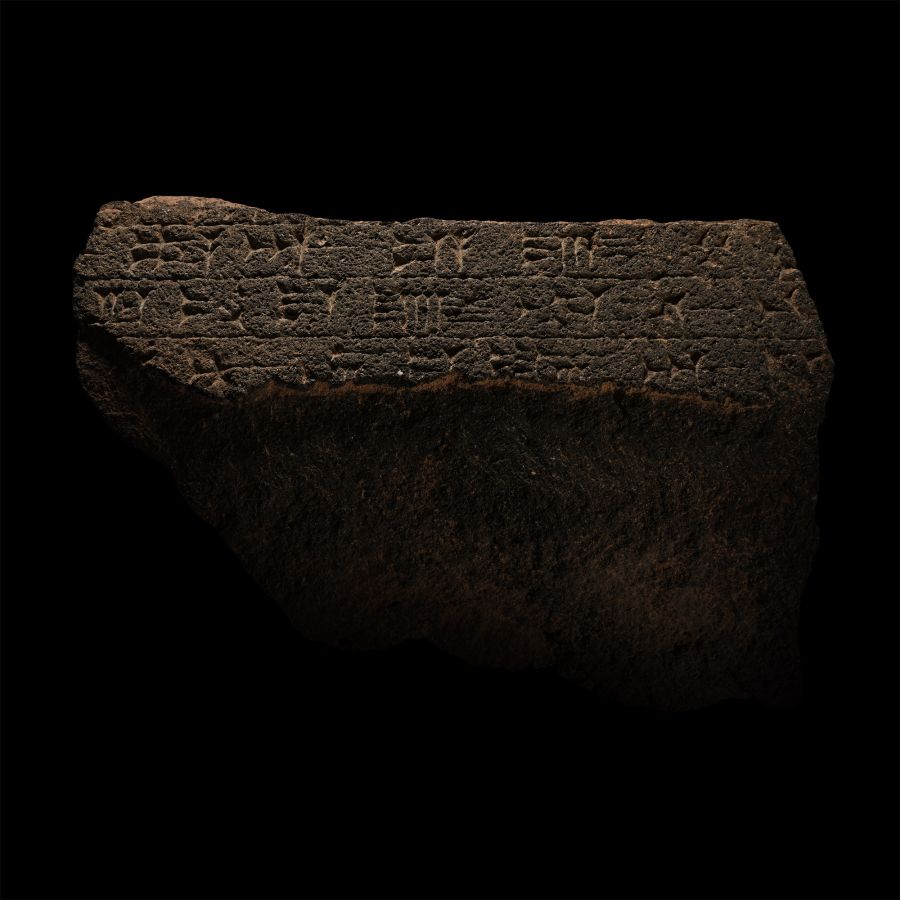
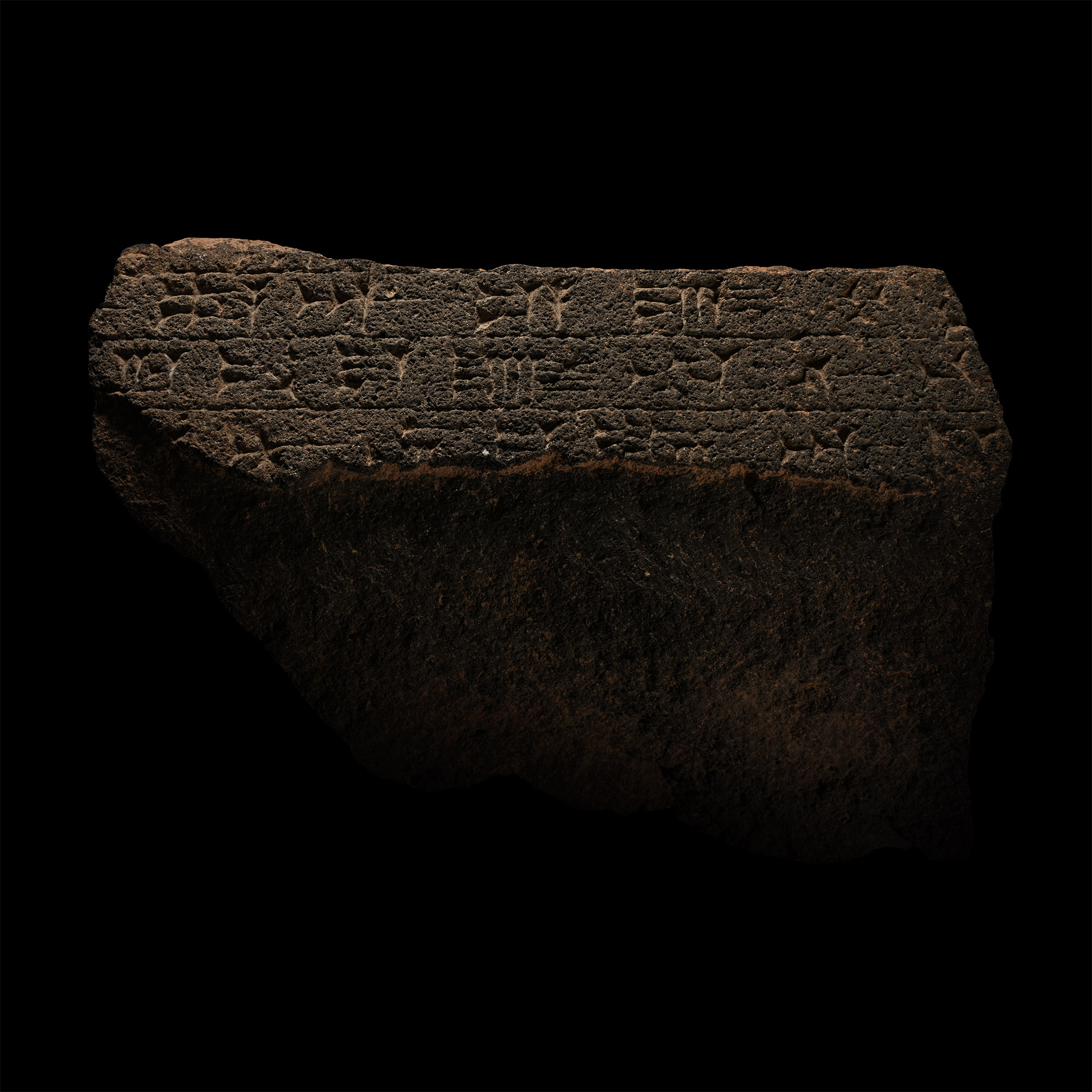
Western Asiatic Basalt Tablet with Cuneiform Inscription
2ND-1ST MILLENNIUM B.C.
12 3/4 in. (7.85 kg, 32.6 cm).
Architectural fragment with rectangular band to one edge, carved decorative detailing with inscription.
ProvenancePrivate collection, Europe, thence by descent.
Private collection, since the late 1980s.
This lot has been checked against the Interpol Database of stolen works of art and is accompanied by a search certificate number no.12521-231989.
This lot has been cleared against the Art Loss Register database, and is accompanied by an illustrated lot declaration signed by the Head of the Antiquities Department, Dr Raffaele D'Amato.
See similar inscriptions in basalt in Lauinger, J., Batiuk S., ‘A stele of Sargon II at Tell Tayinat’ in Zeitschrift für Assyriologie, 2015; 105(1), pp.54-68.
FootnotesAmid the many architectural, sculptural, and textual riches of Assyria and Mesopotamia, the broken pieces of basalt bearing fragmentary cuneiform inscriptions have received little attention, but are of fundamental importance. Despite being quite fragmentary, these broken pieces of basalt are the remains of an important witness to the Assyrian imperial presence in the Near East.
CONDITIONTimeLine Auctions follows a vetting process to ensure the authenticity and legality of all items, reinforcing our commitment to integrity and responsible trading. Each antiquity, antique, and coin lot undergoes thorough examination by a vetting committee of at least ten external specialists, professional trade association members, scientists, and archaeologists: Our Vetting Process
AUCTIONS:
TimeLine is a leading auction house specialising in antiquities, ancient art, collectables, natural history, coins, medals, and books. Our auctions offer museums, collectors, historians, and enthusiasts the opportunity to acquire unique and historically significant pieces.
LOT 0285
Western Asiatic Basalt Tablet with Cuneiform Inscription
Estimate £3,000 - 4,000€3,480 - 4,640 (for guidance only)$4,050 - 5,400 (for guidance only)
-
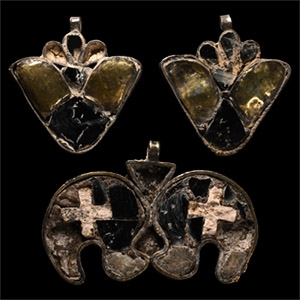
Elamite Silver Pendant with Gold Glass Inlays
2nd millennium B.C.Estimate: £1,000 - 1,400 (+bp*)
Opening Bid: £500
Comprising: two of triangular type with inlaid glass panels; one formed as a pair of opposed crescent cells, each with a glass inlay. 19.8 grams total, 31-49 mm
UK private collection before 2000. Acquired on the UK art market. Private collection, London. This lot has been cleared against the Art Loss Register database, and is accompanied by an illustrated lot declaration signed by the Head of the Antiquities Department, Dr Raffaele D'Amato. -
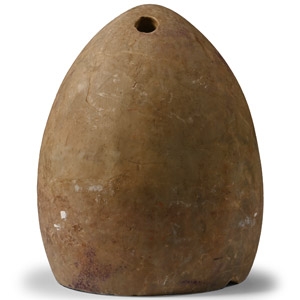
Bactrian Stone Weight
2nd millennium B.C. or laterSold for (Inc. bp): £325
Conical in profile with flat base and U-shaped channel through the apex. 10.6 kg, 21.5 cm
Ex Mayfair gallery, London, UK, 1990s. This lot has been cleared against the Art Loss Register database, and is accompanied by an illustrated lot declaration signed by the Head of the Antiquities Department, Dr Raffaele D'Amato. -
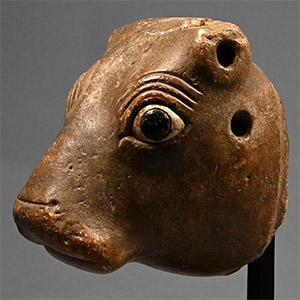
Sumerian Limestone Bull Head Protome
3rd millennium B.C.Sold for (Inc. bp): £25,350
With large eyes, the pupils inlaid in black chlorite, bone insert for the sclerae, three arching grooved brows, the wide muzzle with a horizontal incision between the nostrils, closed mouth; sockets to the sides of the head to accept separately made horns and ears; the edge of the neck contoured for attachment; mounted on a custom-made display stand. 1.24 kg total, 14.5 cm high including stand
Private European collection, 1985. with Christie’s, New York, 3 June 2009, no.35. Private collection, Europe. Accompanied by an academic report by Dr Raffaele D’Amato. This lot has been checked against the Interpol Database of stolen works of art and is accompanied by search certificate number no.12358-226703. This lot has been cleared against the Art Loss Register database, and is accompanied by an illustrated lot declaration signed by the Head of the Antiquities Department, Dr Raffaele D'Amato.
In Sumerian mythology, the bull was associated with the storm and rain god Hadad (Iškur), and is widely represented on artworks (Woolley, 1961, pp.46, 52; Kramer, 1979, figs.17, 18, 22). The round inlaid eyes are typical of Sumerian art of Early Dynastic Period, as well as the triple eyebrows.
