
Loading, please wait...
LOT 1342
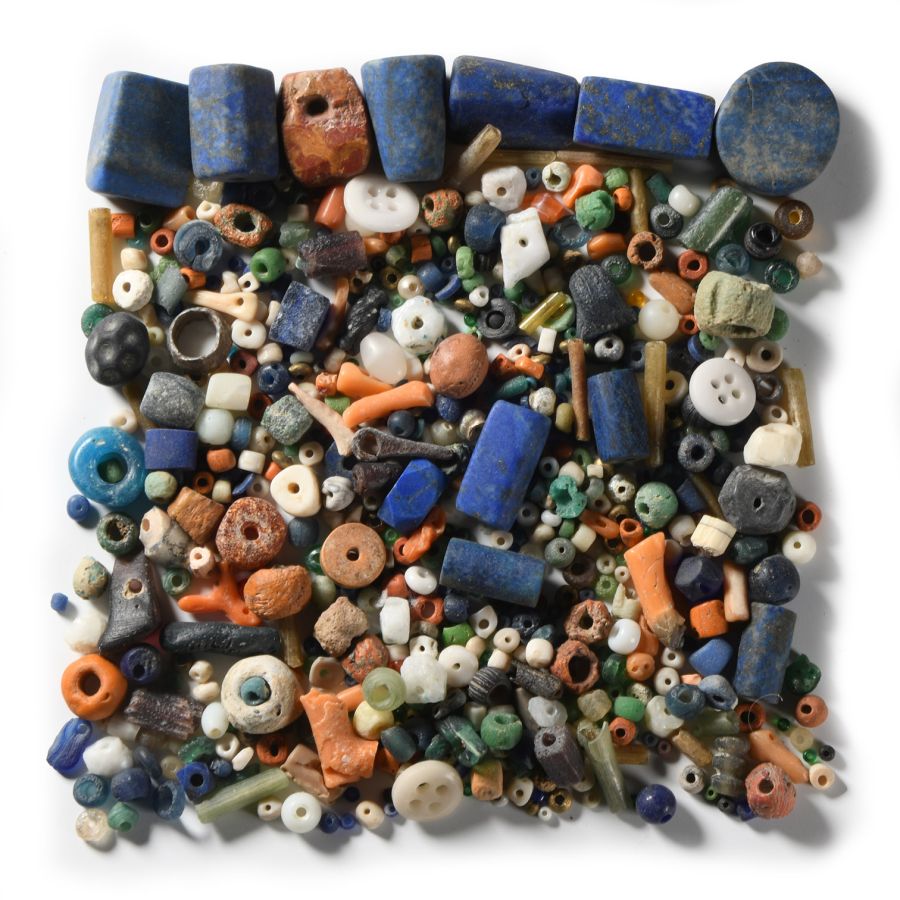
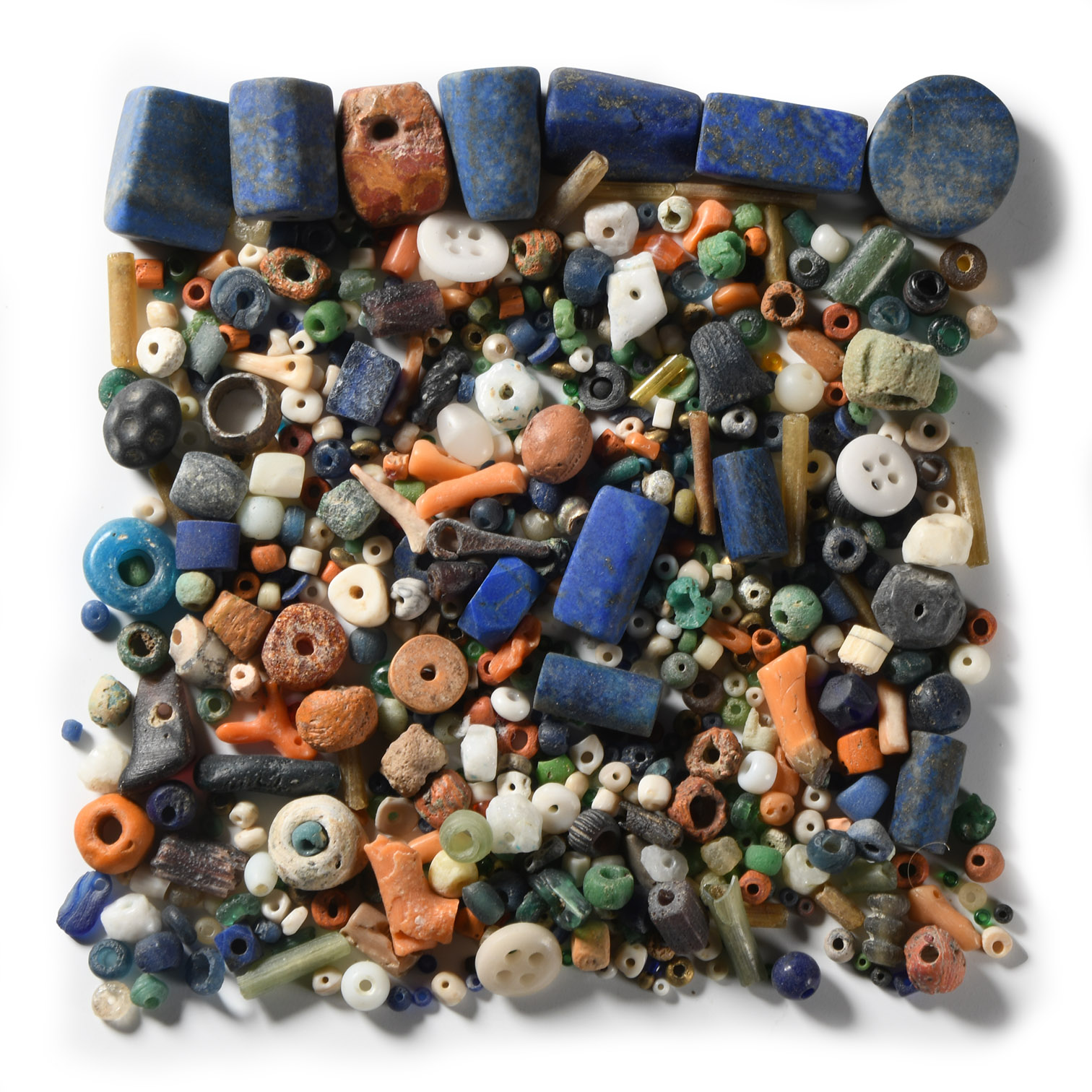
Western Asiatic and Other Stone Bead Group
1ST MILLENNIUM B.C. AND LATER
1/8 - 3/4 in. (122 grams total, 2-21 mm).
Including tabular, oblate, tubular, square-section and other types in lapis lazuli, carnelian, terracotta and other materials. [350+, No Reserve]
ProvenanceFrom the private collection of the late Mrs Belinda Ellison, a long time member of the Egyptian Exploration Society, c.1940-2020.
CONDITIONTimeLine Auctions follows a vetting process to ensure the authenticity and legality of all items, reinforcing our commitment to integrity and responsible trading. Each antiquity, antique, and coin lot undergoes thorough examination by a vetting committee of at least ten external specialists, professional trade association members, scientists, and archaeologists: Our Vetting Process
AUCTIONS:
TimeLine is a leading auction house specialising in antiquities, ancient art, collectables, natural history, coins, medals, and books. Our auctions offer museums, collectors, historians, and enthusiasts the opportunity to acquire unique and historically significant pieces.
-
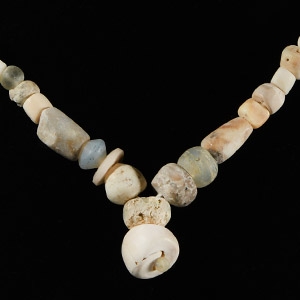
Western Asiatic Mixed Stone and Shell Bead Necklace
1st millennium B.C. and laterSold for (Inc. bp): £26
Restrung designer necklace of graduated annular, melon, oblate and irregular beads. 25.4 grams, 36 cm
Acquired on the London, UK, art market in the 1990s. Ex London, UK, gallery. -
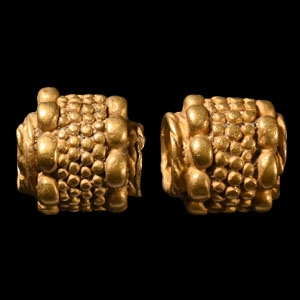
Western Asiatic Granulated Gold Beads
1st millennium B.C.Sold for (Inc. bp): £390
Comprising drum-shaped beads with median bands of small granules within outer bands of larger granules, filigree circlet to one end. 3.19 grams total, 6-7 mm
Ex property of a late Japanese collector, 1970s. -
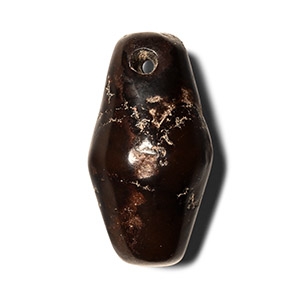
Mesopotamian Stone Bead
1st millennium B.C.Sold for (Inc. bp): £104
Biconical in profile with rounded ends, drilled for suspension. 16.2 grams, 31 mm
Ex Gilles Grimm collection, Paris, France. Acquired circa 2005-2010. Property of a French collector.
