
Loading, please wait...
LOT 1274
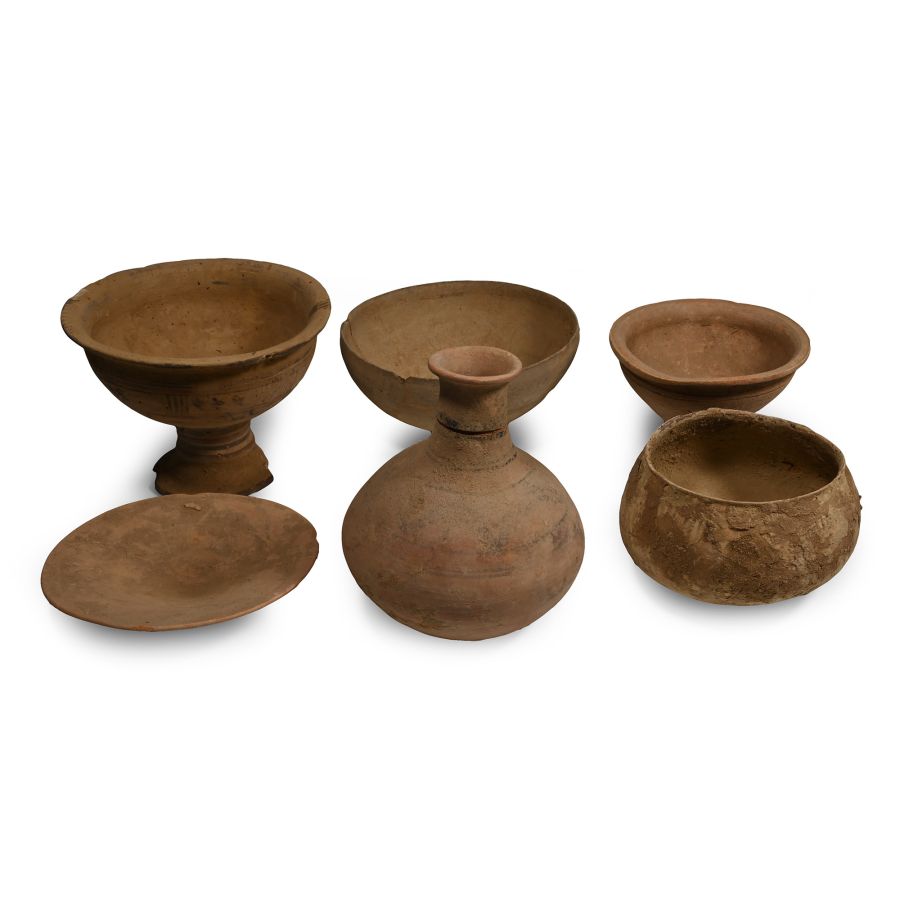
Western Asiatic and Other Pottery Collection
3RD-1ST MILLENNIUM B.C.
2 - 7 1/2 in. (2.74 kg total, 5-19 cm).
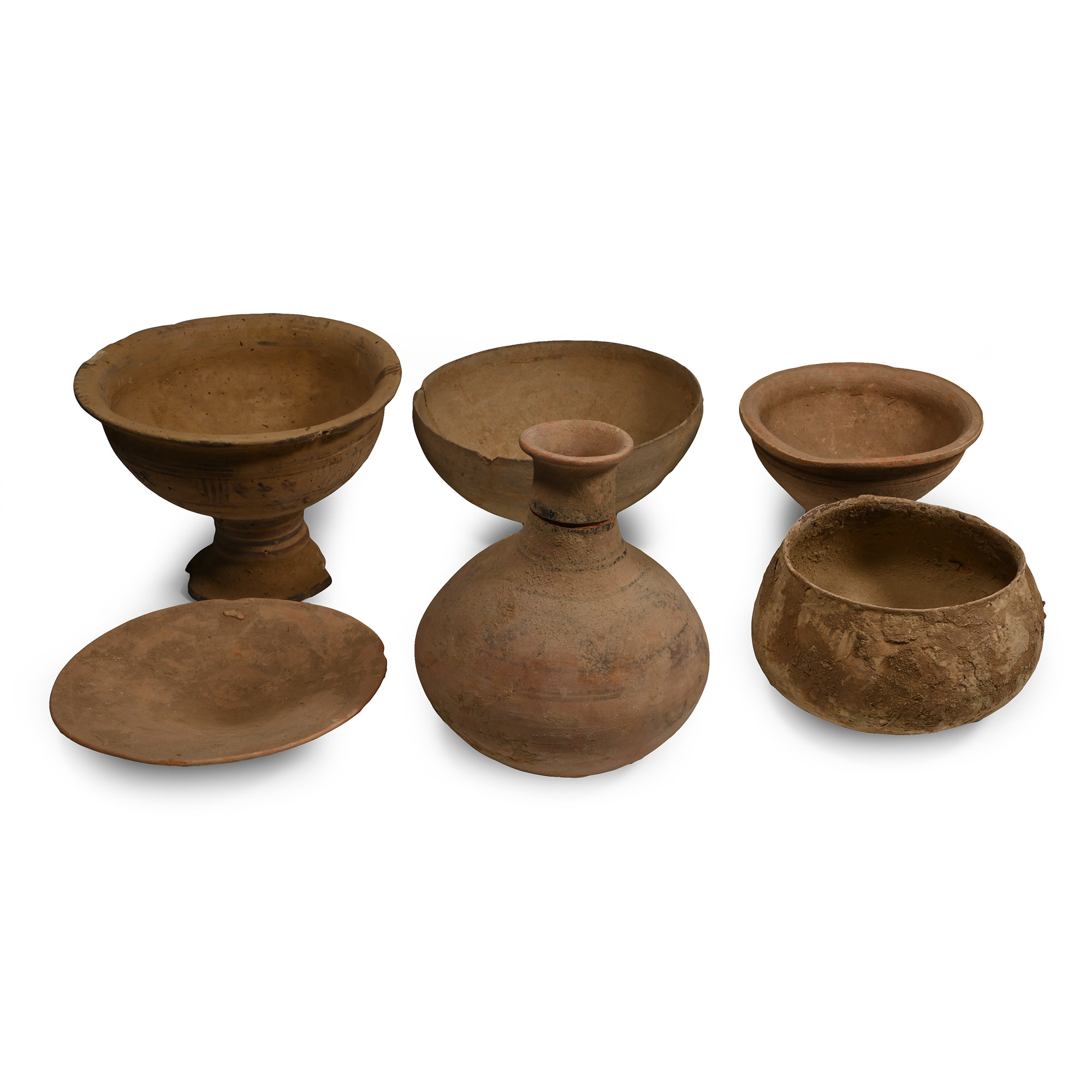
Comprising: a shallow dish and a bowl; bulbous jar with painted decoration to the upper body, top separated; two footed bowls, one with painted decoration; and a squat jar; some repaired. [7, No Reserve]
ProvenanceFrom a West Country collection, UK, 1990s.
This lot has been cleared against the Art Loss Register database, and is accompanied by an illustrated lot declaration signed by the Head of the Antiquities Department, Dr Raffaele D'Amato.
TimeLine Auctions follows a vetting process to ensure the authenticity and legality of all items, reinforcing our commitment to integrity and responsible trading. Each antiquity, antique, and coin lot undergoes thorough examination by a vetting committee of at least ten external specialists, professional trade association members, scientists, and archaeologists: Our Vetting Process
AUCTIONS:
TimeLine is a leading auction house specialising in antiquities, ancient art, collectables, natural history, coins, medals, and books. Our auctions offer museums, collectors, historians, and enthusiasts the opportunity to acquire unique and historically significant pieces.
-
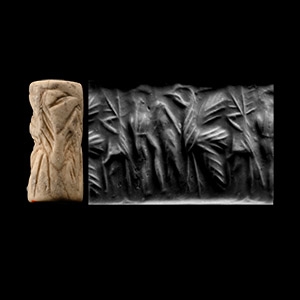
Syrian Grey Stone Cylinder Seal with Figure Holding Fish
Circa 2600-2300 B.C.Sold for (Inc. bp): £104
Cylinder with cord and bead handles; accompanied by a copy of an old scholarly note, typed and signed by W.G. Lambert, late Professor of Assyriology, University of Birmingham, 1970-1993, which states: 'Description of Cylinder Seal of cream/grey stone, 25 x 11.5 mm. Human figure, holding up large fish 9?), faces huge bird, behind which a stag is standing. The whole scene and deep cutting is typically Syrian c. 2600-2300 B.C. Clearly some mythological events are being portrayed, but this is not a common type and so far we cannot explain it. Condition is fine.'; supplied with a museum-quality impression. 6.6 grams, 25 mm
UK private collection, acquired 1980-1983. Accompanied by a copy of a scholarly note, typed and signed by Professor Wilfrid George Lambert in October 1987. This lot has been cleared against the Art Loss Register database, and is accompanied by an illustrated lot declaration signed by the Head of the Antiquities Department, Dr Raffaele D'Amato. -
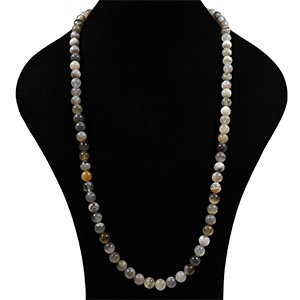
Western Asiatic Agate Bead Necklace String
20th century A.D.Sold for (Inc. bp): £65
A long restrung string composed of spherical beads. 115 grams, 82 cm
Ex collection of a late London, UK, collector, 1970s. This lot has been cleared against the Art Loss Register database, and is accompanied by an illustrated lot declaration signed by the Head of the Antiquities Department, Dr Raffaele D'Amato. -
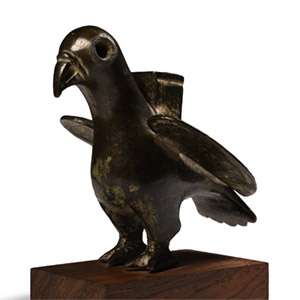
Western Asiatic Bronze Incense Burner in the Shape of an Eagle
9th-11th century A.D.Estimate: £4,000 - 6,000 (‡+bp*)
Opening Bid: £1,800
With outstretched wings and erect body, open beak and eyes hollowed to accept inserts, five-feather spread tail and a rectangular socket to the back; mounted on a custom-made display stand. 430 grams total, 11 cm including stand
Béla Hein collection, Paris, France, before 1931. Accompanied by an academic report by Dr Raffaele D’Amato. This lot has been checked against the Interpol Database of stolen works of art and is accompanied by a search certificate number no.12569-232077. This lot has been cleared against the Art Loss Register database, and is accompanied by an illustrated lot declaration signed by the Head of the Antiquities Department, Dr Raffaele D'Amato.
Béla Hein (1883-1931) was a prominent dealer and collector of African art in early 20th century Paris. In the early 1920s, he founded a gallery specialising in African art, contemporary sculpture, and a variety of curiosities, including antiquities. Hein's influence extended across the art world, and his collection reflected a keen eye for both historical and aesthetic significance.
