
Loading, please wait...
LOT 1330
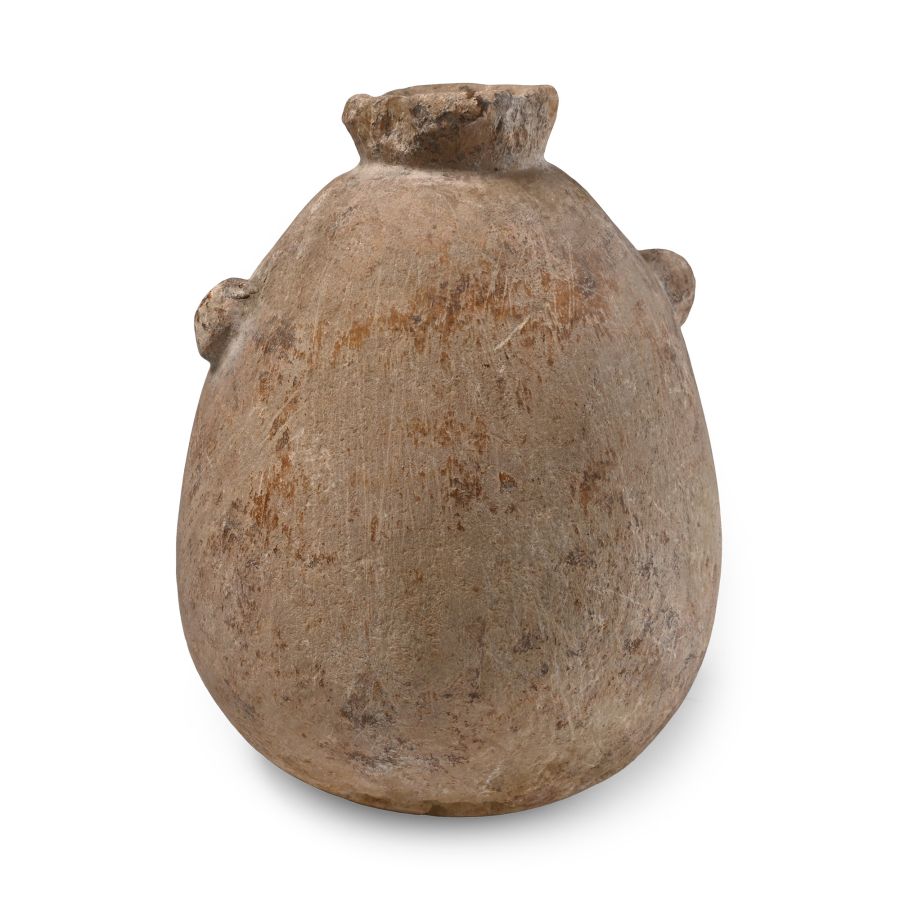
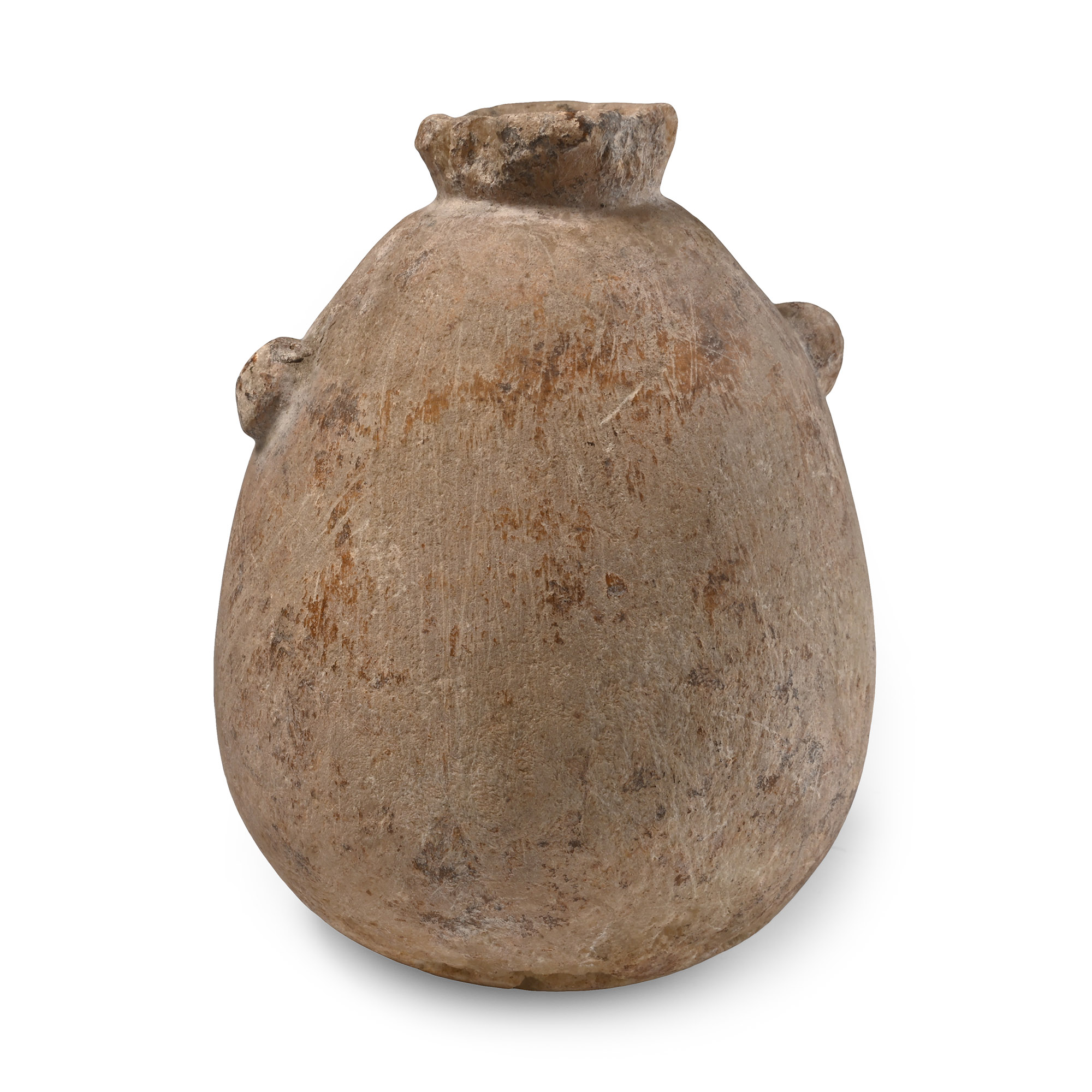
Western Asiatic Alabaster Vessel with Lug Handles
2ND-1ST MILLENNIUM B.C.
5 in. (984 grams, 12.5 cm).
Carved bag-shaped body with two lateral unpierced lug handles at the shoulder, flared rim to the mouth.
ProvenanceEx William Ohly, 1883-1955.
Ex Abbey Museum, Barnet, by descent.
Cf. Aston, B.G., Ancient Egyptian Stone Vessels: Materials and Forms, SAGA 5, Heidelberg, 1994, p. 163, no. 220, for the type.
CONDITIONTimeLine Auctions follows a vetting process to ensure the authenticity and legality of all items, reinforcing our commitment to integrity and responsible trading. Each antiquity, antique, and coin lot undergoes thorough examination by a vetting committee of at least ten external specialists, professional trade association members, scientists, and archaeologists: Our Vetting Process
AUCTIONS:
TimeLine is a leading auction house specialising in antiquities, ancient art, collectables, natural history, coins, medals, and books. Our auctions offer museums, collectors, historians, and enthusiasts the opportunity to acquire unique and historically significant pieces.
LOT 1330
Western Asiatic Alabaster Vessel with Lug Handles
Estimate £250 - 350€290 - 410 (for guidance only)$340 - 470 (for guidance only)
-
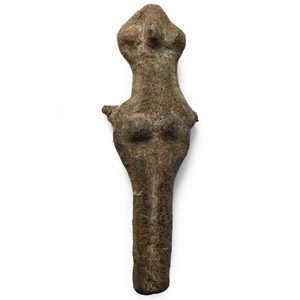
Syro-Hittite Bronze Female Idol Figure
2nd millennium B.C.Sold for (Inc. bp): £293
Modelled as a stylised female with large head with pinched nose, elongated neck and legs, short applied arms. 64 grams, 91 mm
From the collection of a gentleman, acquired on the London art market in the 1990s. -
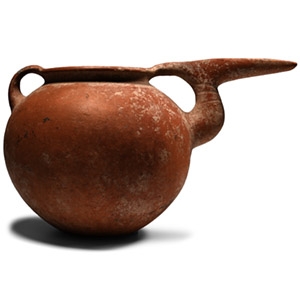
Large Amlash Terracotta Vessel
Early 1st millennium B.C.Estimate: £2,000 - 3,000 (+bp*)
Opening Bid: £864
Of zoomorphic form, with a globular body, u-section spout and loop handle to the rear. 846 grams, 30 cm wide
Acquired before 1978. Private collection, UK. Accompanied by a thermoluminescence analysis report no.N125e39 from Oxford Authentication. This lot has been checked against the Interpol Database of stolen works of art and is accompanied by a search certificate number no.12703-235149. -
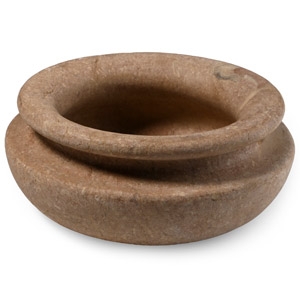
Mesopotamian Stone Vessel
1st millennium B.C.Sold for (Inc. bp): £111
With rounded rim undercut to the underside; carinated shoulder; body tapering to the broad base. 800 grams, 13.3 cm wide
Ex Mayfair, London, UK, gallery, 2000s.
