
Loading, please wait...
LOT 0943
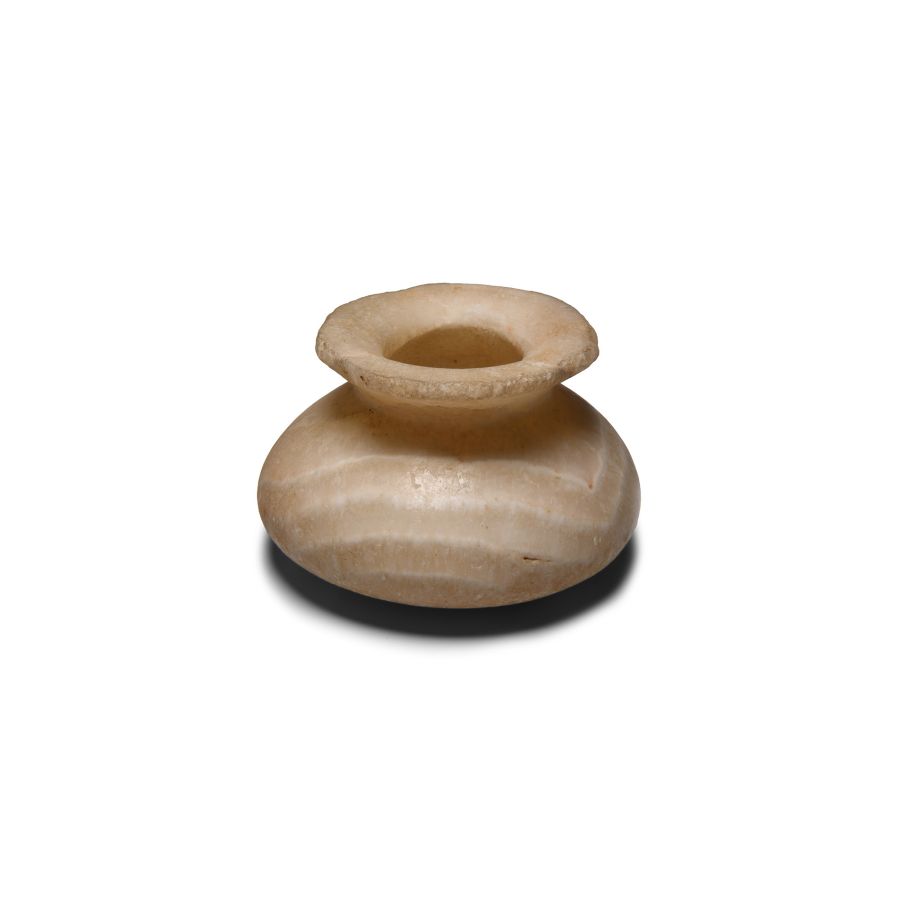
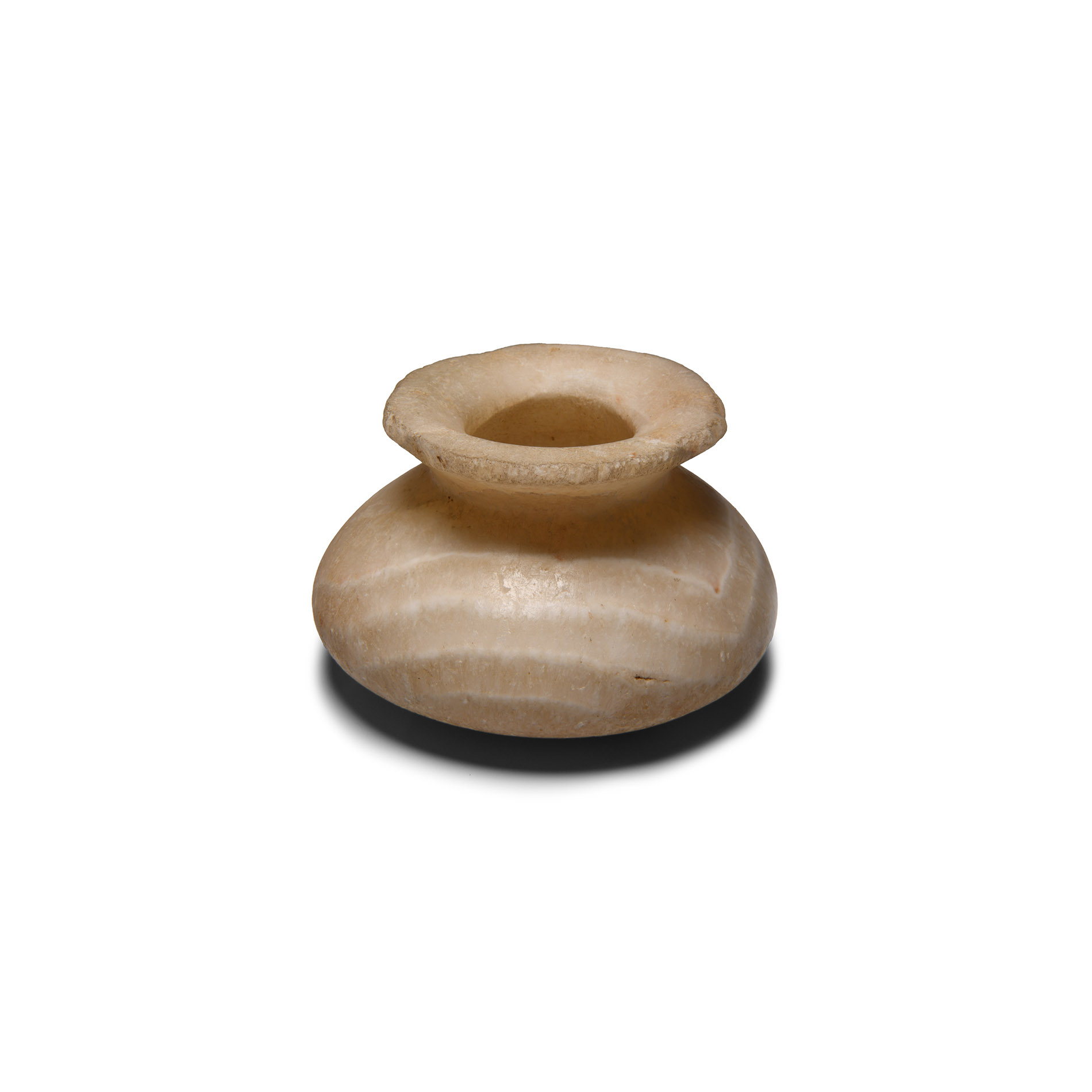
Western Asiatic Alabaster Jar
CIRCA 1ST MILLENNIUM B.C. OR LATER
3 1/8 in. (246 grams, 79 mm).
Of squat form with everted rim and slightly convex base. [No Reserve]
ProvenanceEx Campbell collection, 1990-2010.
CONDITIONTimeLine Auctions follows a vetting process to ensure the authenticity and legality of all items, reinforcing our commitment to integrity and responsible trading. Each antiquity, antique, and coin lot undergoes thorough examination by a vetting committee of at least ten external specialists, professional trade association members, scientists, and archaeologists: Our Vetting Process
AUCTIONS:
TimeLine is a leading auction house specialising in antiquities, ancient art, collectables, natural history, coins, medals, and books. Our auctions offer museums, collectors, historians, and enthusiasts the opportunity to acquire unique and historically significant pieces.
-
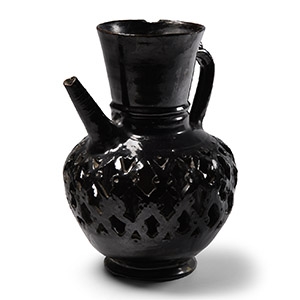
Western Asiatic Black-Glazed Ewer
12th-13th century A.D.Estimate: £300 - 400 (+bp*)
Opening Bid: £150
Piriform in shape with flared neck and tapering cylindrical spout; decorative piercing to body, restored. 815 grams, 22 cm
Heavily restored.
Acquired 1960s-1970s. Old stock-number to base. From a UK private collection, 1981. -
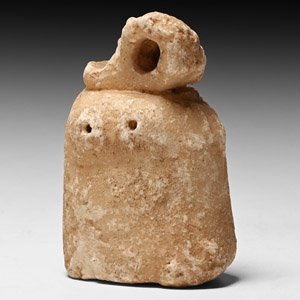
Tel Brak Type Alabaster Eye Idol
Circa 3rd millennium B.C.Sold for (Inc. bp): £234
Anthropomorphic eye idol, possibly of figurative female form, carved with a bell-shaped body, two 'breasts', remains of openwork 'eyes' above. 33.5 grams, 43 mm
Acquired 1969-1999. London collection of the late Mr S.M., thence by descent.
A classic artefact type from ancient Mesopotamia. Likely hand-carved using drills and string cutting. Eye idols were so named in the 1930s by the British archaeologist Max Mallowan. Whilst excavating a mound called Tel Brak, he discovered hundreds of anthropomorphic items of similar form, thus naming the mound 'Temple of the Eyes'. -

Trans-Jordan Alabaster Astarte Figure
1st millennium B.C.Sold for (Inc. bp): £650
Carved in the round with semi-naturalistic features, standing nude with her hands clasped together below her bust, hair dressed on top and flowing down her back. 36.1 grams, 79 mm high
From an important collection formed pre 1988, Geneva and London, by descent.
