
Loading, please wait...
LOT 1331
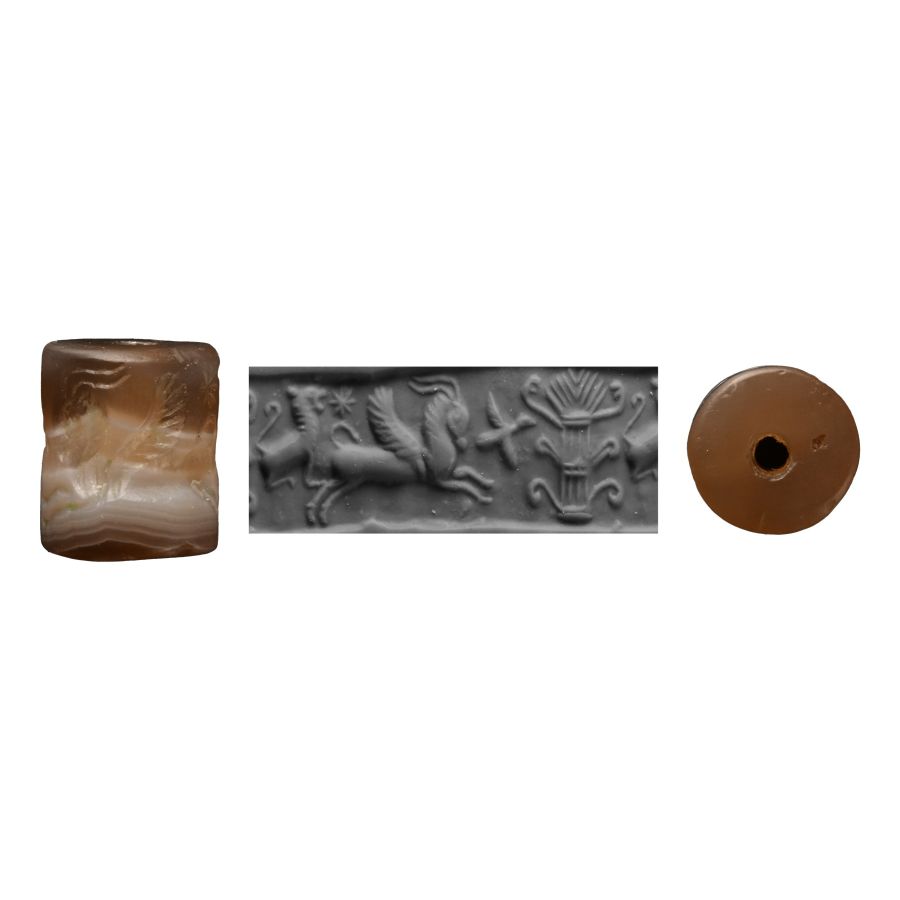
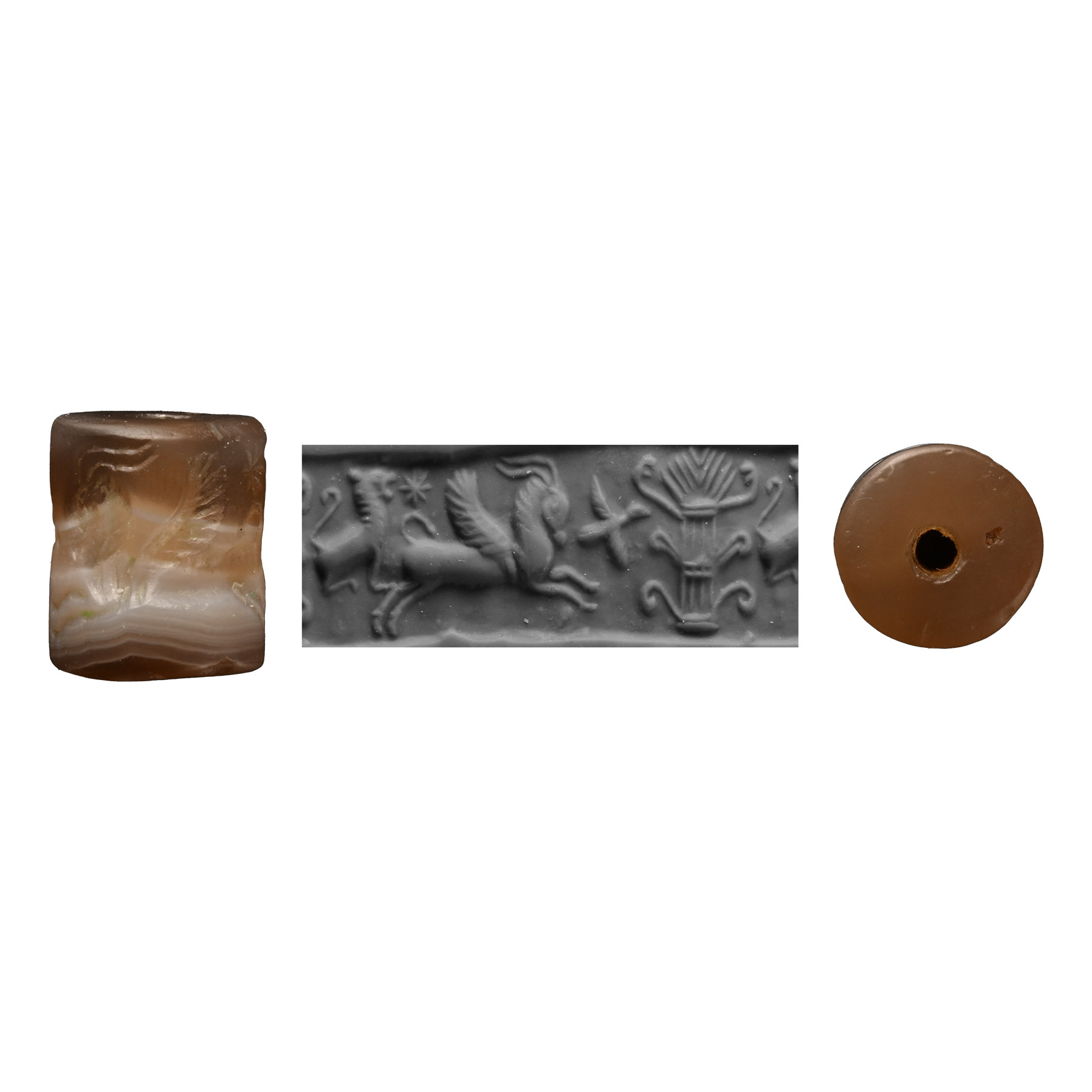
Western Asiatic Agate Cylinder Seal with Zoomorphic Motifs
CIRCA 2ND-1ST MILLENNIUM B.C.
5/8 in. (3.78 grams, 14 mm).
The frieze depicting a leaping winged ibex followed by a small bird in flight, behind the ibex a seated growling feline, a large fount-topped column before the animals with curving lines on each side, likely depicting the Neo-Assyrian 'sacred tree'; accompanied by a museum-quality impression.
ProvenanceFrom the property of late Mr SM, London, UK, 1969-1999.
Accompanied by an old collection ticket.
TimeLine Auctions follows a vetting process to ensure the authenticity and legality of all items, reinforcing our commitment to integrity and responsible trading. Each antiquity, antique, and coin lot undergoes thorough examination by a vetting committee of at least ten external specialists, professional trade association members, scientists, and archaeologists: Our Vetting Process
AUCTIONS:
TimeLine is a leading auction house specialising in antiquities, ancient art, collectables, natural history, coins, medals, and books. Our auctions offer museums, collectors, historians, and enthusiasts the opportunity to acquire unique and historically significant pieces.
LOT 1331
Western Asiatic Agate Cylinder Seal with Zoomorphic Motifs
Sold for (Inc. bp): £338
-
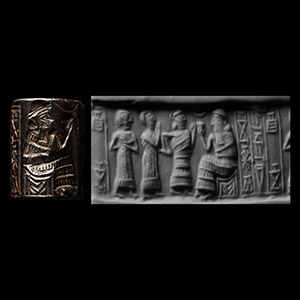
Akkadian Cylinder Seal with Presentation Scene
2nd millennium B.C.Sold for (Inc. bp): £572
Haematite with a seated bearded male figure in long robes and cap, hand held up and holding a cup, crescent moon above; to the front a male deity wearing long robes and a horned cap leading a male figure by the hand, male in long robes and hand held to mouth; behind a male figure in long robes and arms crossed over chest, rectangular panel with three columns of cuneiform text. 7.1 grams, 16 mm
From an important North London collection formed in the late 1980s. From a collection acquired from various auction houses in the UK. From the estate of Mr R.W., a private Wiltshire, UK, collector; thence by descent. -
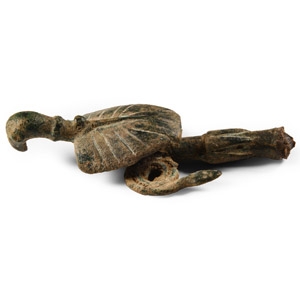
Luristan Bronze Zoomorphic Finial
13th-7th century B.C.Sold for (Inc. bp): £156
Formed as a bird with heater-shaped wings perched on a branch with coiled lateral tendrils and triangular panels. 72 grams, 94 mm
Acquired on the London, UK, art market, pre 1992. Ex Den of Antiquity, Cambridgeshire, UK. -
.jpg)
Sassanian Carnelian Stamp Seal
3rd-7th century A.D.Sold for (Inc. bp): £26
Composed of a small plano-convex body engraved with a ritualistic figure or symbol to the base; drilled for suspension. 1.19 grams, 10 mm
UK gallery, early 2000s.
According to some scholars, these seals originated as brands for cattle and contain elaborated hereditary notes. According to others they could represent monograms or Neshan (rank badges) or rank insignia. The crescent can be also associated with Zoroastrian shrines.
