
Loading, please wait...
LOT 1001
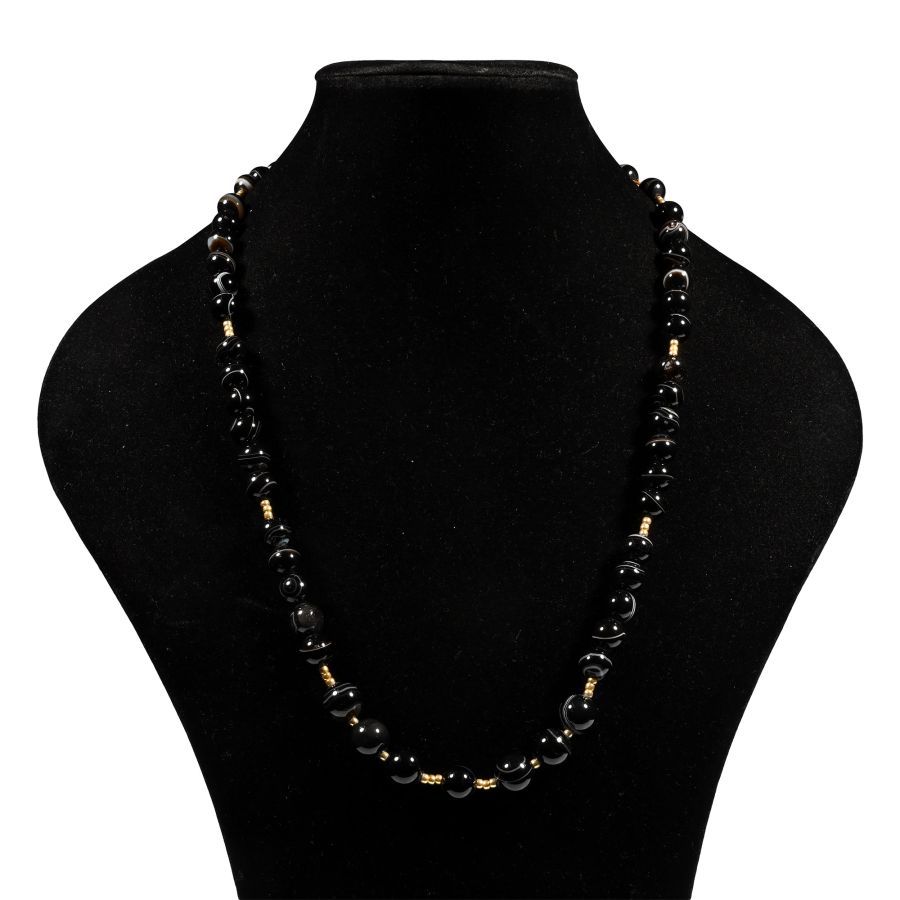
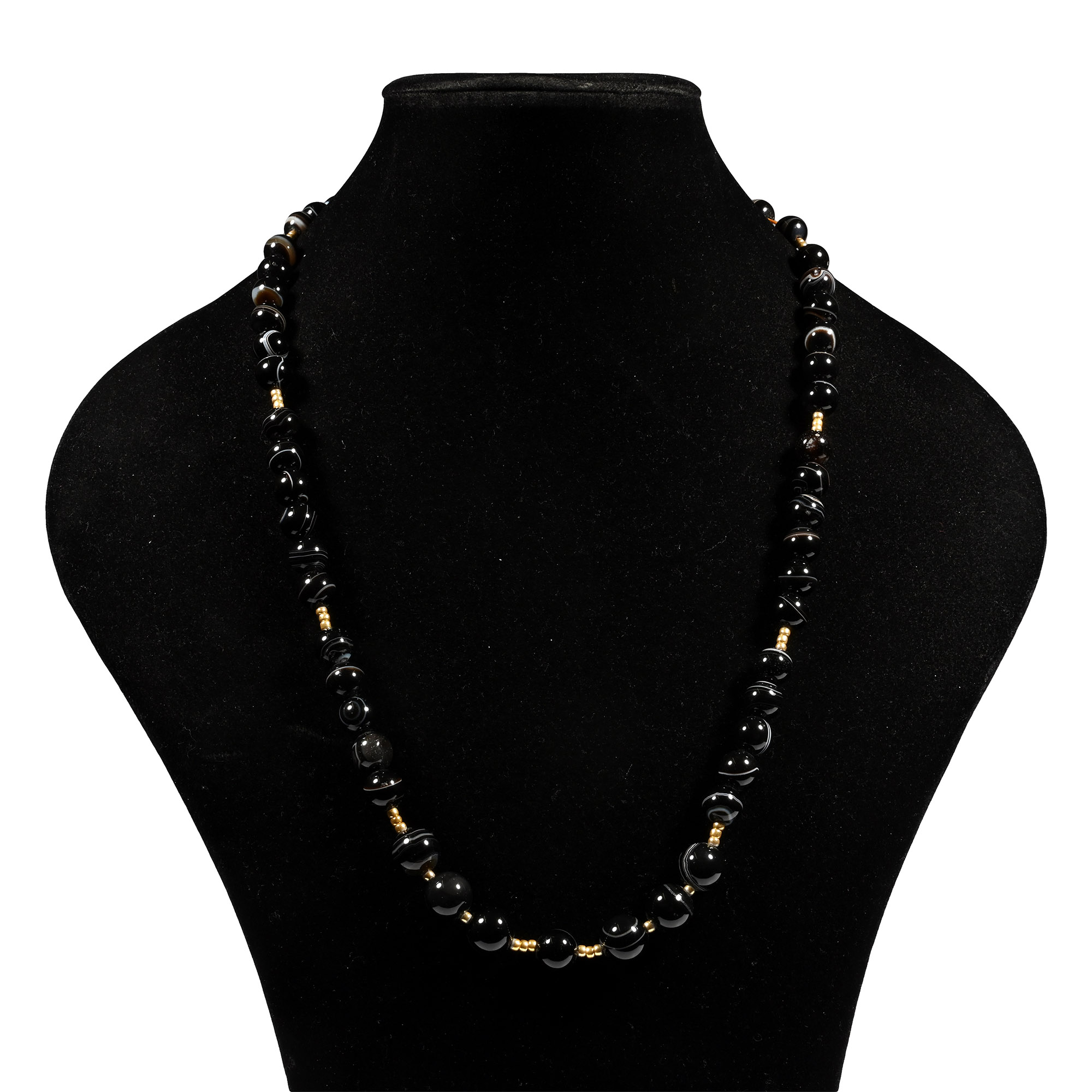
Western Asiatic Agate Bead Necklace String
20TH CENTURY A.D.
27 1/8 in. (86 grams, 69 cm).
Composed of spherical beads interspersed with smaller metal beads; restrung. [No Reserve]
ProvenanceEx collection of a late London, UK, collector, 1970s.
This lot has been cleared against the Art Loss Register database, and is accompanied by an illustrated lot declaration signed by the Head of the Antiquities Department, Dr Raffaele D'Amato.
TimeLine Auctions follows a vetting process to ensure the authenticity and legality of all items, reinforcing our commitment to integrity and responsible trading. Each antiquity, antique, and coin lot undergoes thorough examination by a vetting committee of at least ten external specialists, professional trade association members, scientists, and archaeologists: Our Vetting Process
AUCTIONS:
TimeLine is a leading auction house specialising in antiquities, ancient art, collectables, natural history, coins, medals, and books. Our auctions offer museums, collectors, historians, and enthusiasts the opportunity to acquire unique and historically significant pieces.
-
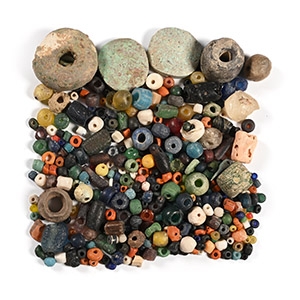
Western Asiatic Mixed Bead Group
1st millennium B.C. and laterSold for (Inc. bp): £20
Including tubular, tabular, annular and other beads in glass, shell, stone and ceramic. 56 grams total, 2-23 mm
Ex London, UK, collection, 1990s. This lot has been cleared against the Art Loss Register database, and is accompanied by an illustrated lot declaration signed by the Head of the Antiquities Department, Dr Raffaele D'Amato. -
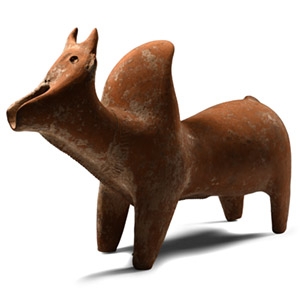
Amlash Terracotta Bull Rhyton
Early 1st millennium B.C.Sold for (Inc. bp): £6,500
A hollow-formed ceramic vessel formed as a standing zebu with large hump, ridged tail, pectoral ridge and horns; the head forming the U-channel spout. 601 grams, 25 cm
European private collection, 1983. Ex Anavian Gallery, New York. Private collection, UK. Accompanied by a copy of an Art Loss Register certificate, no.S00019651. Accompanied by a copy of a thermoluminescence analysis report, dated 22 November 1990. This lot has been checked against the Interpol Database of stolen works of art and is accompanied by a search certificate number no.12702-235146. This lot has been cleared against the Art Loss Register database, and is accompanied by an illustrated lot declaration signed by the Head of the Antiquities Department, Dr Raffaele D'Amato. -
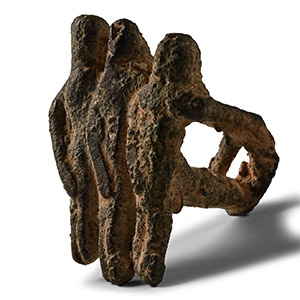
Bactrian Bronze Stamp Seal with Human Figures
1st millennium B.C.Sold for (Inc. bp): £52
Formed as three nude male figures each with one hand to the mouth and the other covering the anus; with vertical bar handle and ring finial. 99 grams, 54 mm
Acquired in the mid 1980s-1990s. Private collection, Switzerland, thence by descent. Private collection, since the late 1990s. This lot has been cleared against the Art Loss Register database, and is accompanied by an illustrated lot declaration signed by the Head of the Antiquities Department, Dr Raffaele D'Amato.
