
Loading, please wait...

LOT 2380
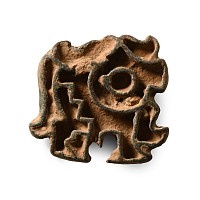
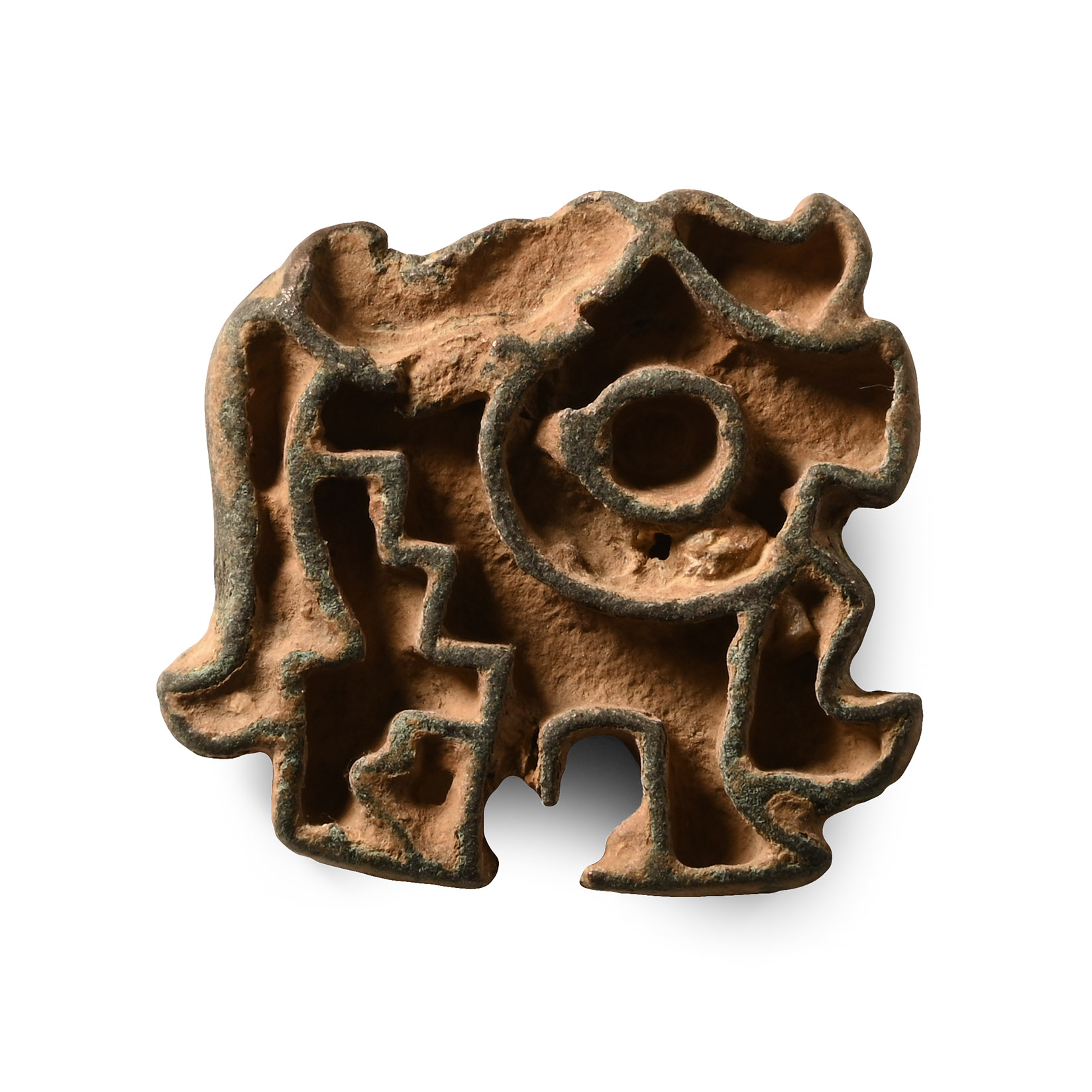
West Central Asian Stamp Seal with Quadruped
23RD-20TH CENTURY B.C.
1 5/8 in. (26 grams, 41 mm).
Zoomorphic stamp seal with loop handle to the reverse; accompanied by an old scholarly note, typed and signed by W.G. Lambert, late Professor of Assyriology, University of Birmingham, 1970-1993, which states: 'Stamp Seal of Bronze 38x38x12 mm. This bears the shape of the object depicted, with flat face and flat back, on which is mounted a handle of sheet metal with thickened edges. The design, which is compartmented, shows a standing quadruped with big snout and long tail hanging down the back. This comes from west central Asia and dates to c. 2300-2000 B.C. The upper part is bent back and is a little damaged, but generally this is in good condition and is a rare type. The metal is sound.'
ProvenanceEx Signo collection, the property of a West London businessman, formed in the late 1980s-early 1990s; collection number U-17, academically researched and catalogued by the late Professor Lambert in the early 1990s.
CONDITIONTimeLine Auctions follows a vetting process to ensure the authenticity and legality of all items, reinforcing our commitment to integrity and responsible trading. Each antiquity, antique, and coin lot undergoes thorough examination by a vetting committee of at least ten external specialists, professional trade association members, scientists, and archaeologists: Our Vetting Process
AUCTIONS:
TimeLine is a leading auction house specialising in antiquities, ancient art, collectables, natural history, coins, medals, and books. Our auctions offer museums, collectors, historians, and enthusiasts the opportunity to acquire unique and historically significant pieces.
-
Gandharan Schist Frieze Fragment
2nd-4th century A.D. or laterEstimate: £300 - 400 (+bp*)
Opening Bid: £150
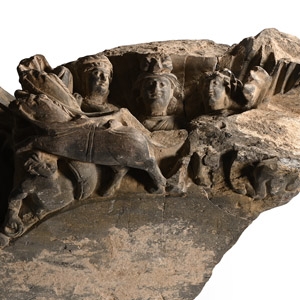
Carved corbel or column fragment with scrolled foliage to three faces and socket to upper face to accept a statue; three youthful figures - two females flanking a larger male - each wearing the hair dressed in a topknot, with radiating sunburst behind them and below a team of two horses galloping left with empty saddles and their reins flung back towards the central character, probably a charioteer. 13.3 kg, 37 cm wide
London, UK, collection, 1990s. -
Gandharan Terracotta Head
2nd-4th century A.D.Estimate: £200 - 300 (+bp*)
Opening Bid: £90
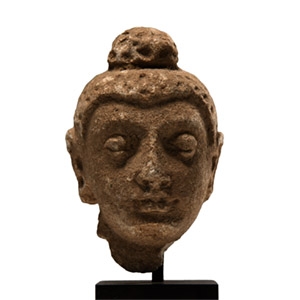
Modelled in the round with serene expression, heavily-lidded eyes, long lobed ears; wavy hair piled above in an ushnisha top-knot; mounted on a custom-made stand. 268 grams total, 92 mm including stand
Acquired in the London art market. Private collection, 1970s. -
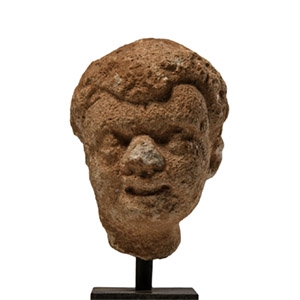
Gandharan Terracotta Head
2nd-4th century A.D.Sold for (Inc. bp): £234
With wavy hair and large lentoid eyes, rounded facial features; mounted on a custom-made stand. 292 grams total, 13.1 cm including stand
Acquired in the London art market. Private collection, 1970s.
