
Loading, please wait...
LOT 1318
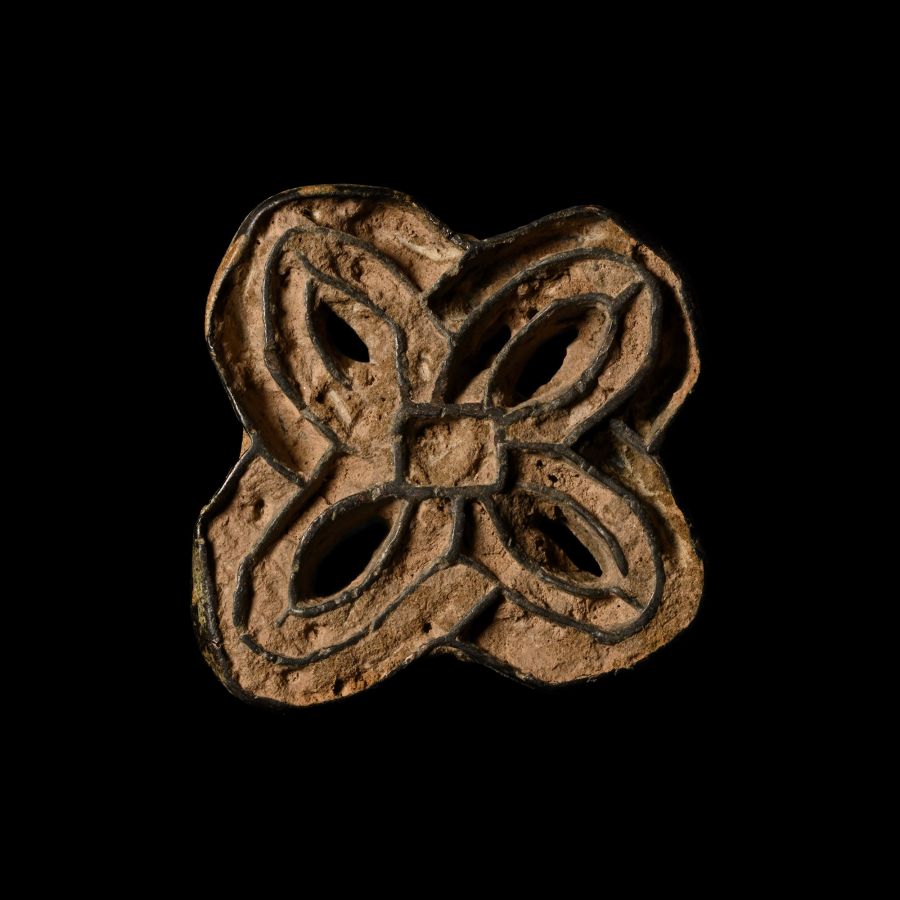
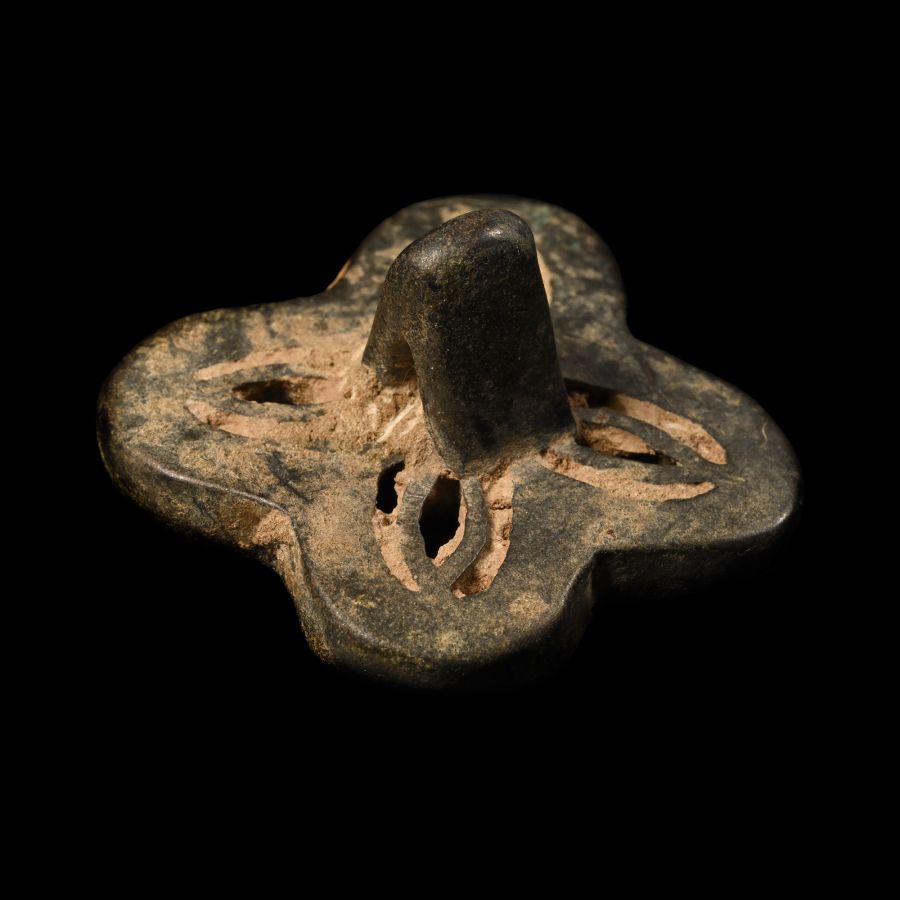
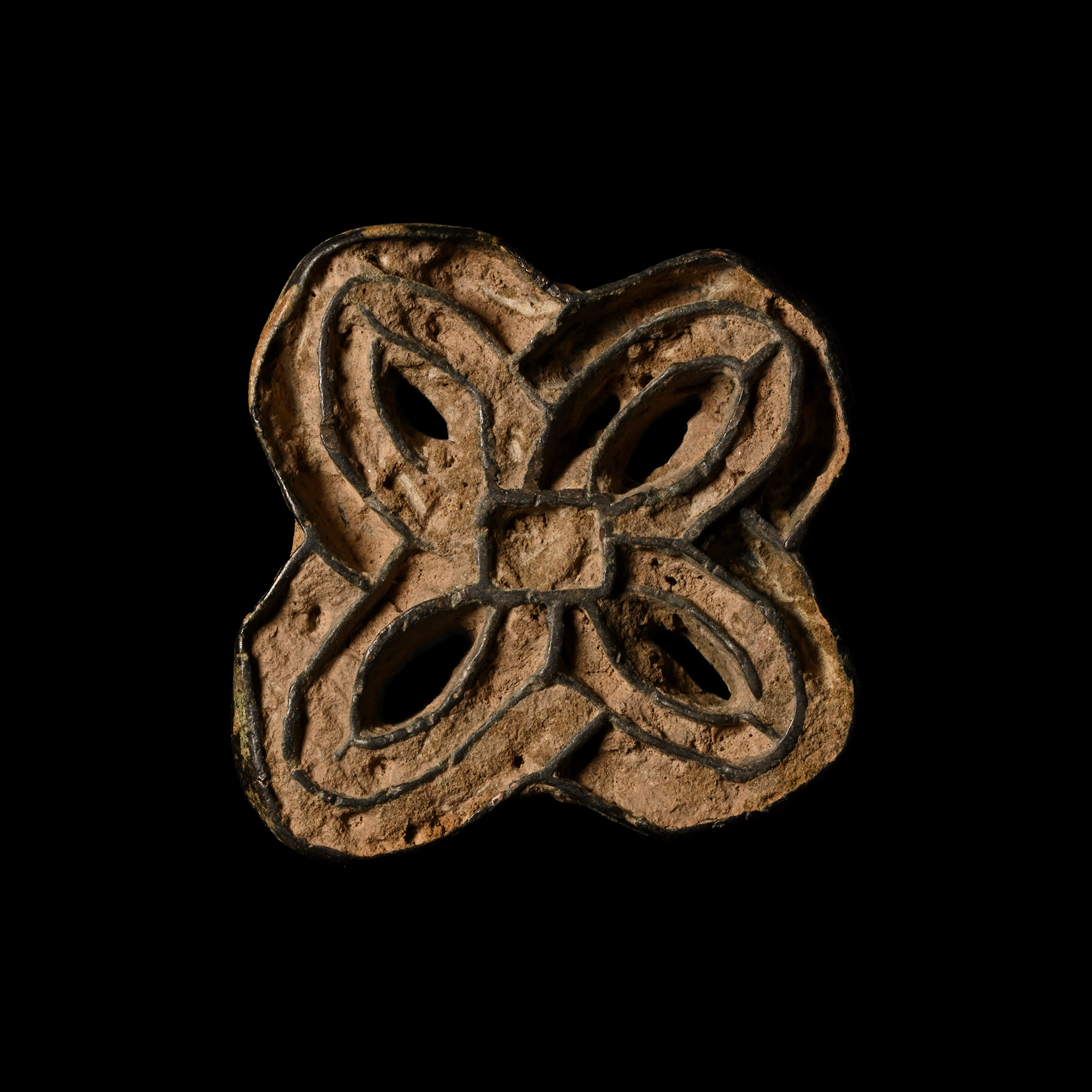
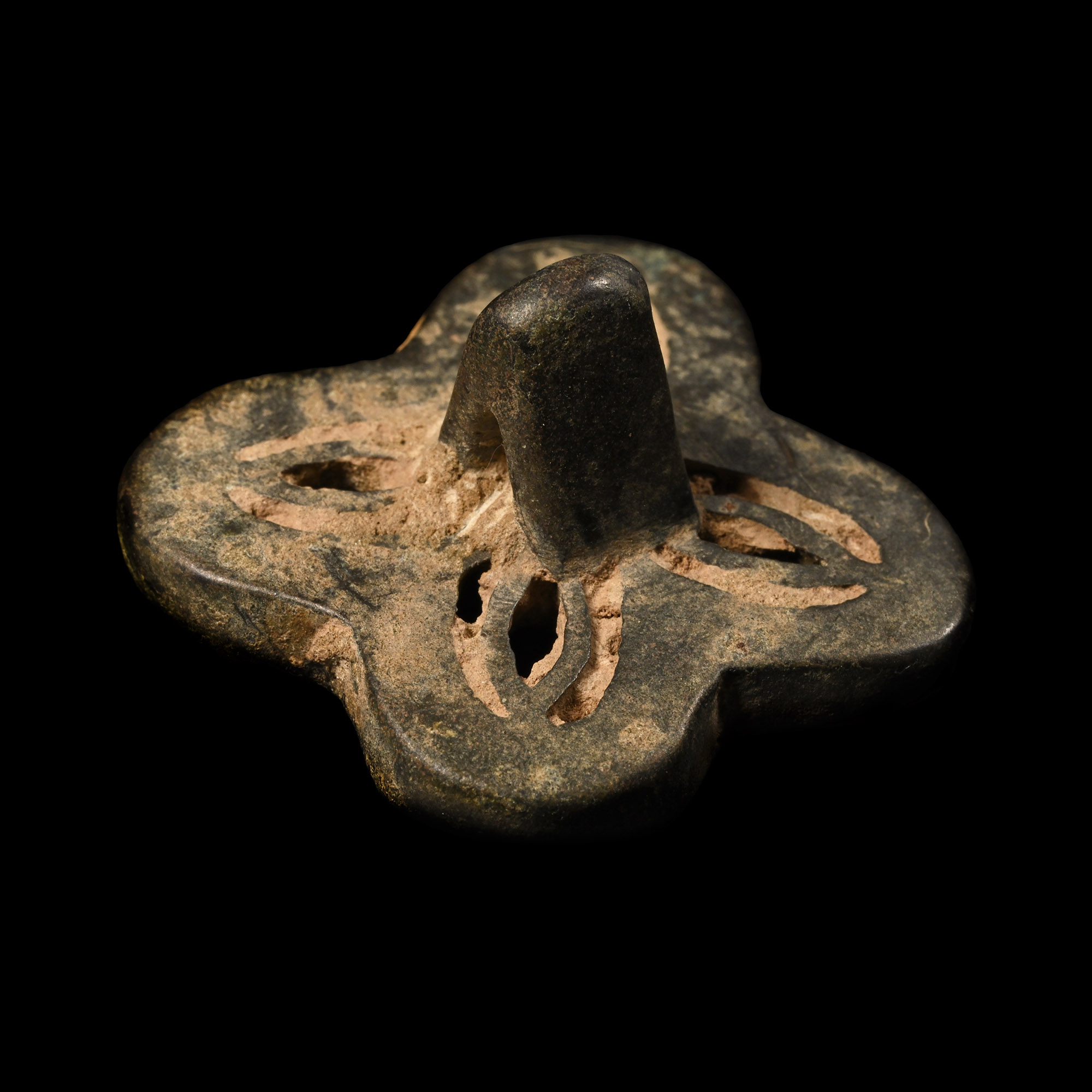
West Central Asian Bronze Stamp Seal Matrix with Rosette Cross
CIRCA 2300-2000 B.C.
1 3/4 in. (26 grams, 44 mm).
Openwork quatrefoil with triangular loop to the reverse; accompanied by typed and signed note by the late W.G. Lambert, Professor of Assyriology at the University of Birmingham, 1970-1993, which states: 'Stamp Seal of Bronze, 43 x 43 x 19 mm. This is an open-work compartmented seal bearing the shape of the design: a rosette with four petals, with an extra layer around the edge. on the back there is a handle of thick sheet metal in an inverted V-shape. This comes from West Central Asia and dates to c. 2300-2000 B.C. It is an unusual design. The outer rim is dented a little, otherwise it is in good condition.'
ProvenanceEx collection of a late London gentleman, 1990s.
Accompanied by an original typed and signed scholarly note by the late W.G. Lambert, Professor of Assyriology at the University of Birmingham, 1970-1993.
This lot has been cleared against the Art Loss Register database, and is accompanied by an illustrated lot declaration signed by the Head of the Antiquities Department, Dr Raffaele D'Amato.
TimeLine Auctions follows a vetting process to ensure the authenticity and legality of all items, reinforcing our commitment to integrity and responsible trading. Each antiquity, antique, and coin lot undergoes thorough examination by a vetting committee of at least ten external specialists, professional trade association members, scientists, and archaeologists: Our Vetting Process
AUCTIONS:
TimeLine is a leading auction house specialising in antiquities, ancient art, collectables, natural history, coins, medals, and books. Our auctions offer museums, collectors, historians, and enthusiasts the opportunity to acquire unique and historically significant pieces.
LOT 1318
West Central Asian Bronze Stamp Seal Matrix with Rosette Cross
Sold for (Inc. bp): £94
-
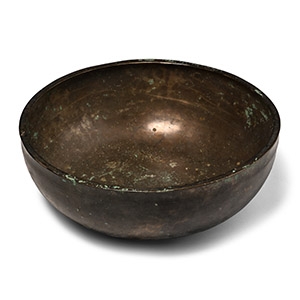
Western Asiatic Bronze Bowl
Mid 1st millennium B.C.Estimate: £100 - 140 (+bp*)
Opening Bid: £50
Broad and squat with lip to the inner edge of the rim. 150 grams, 14.2 cm wide
Ex 1990s collection and with a central London gallery. -
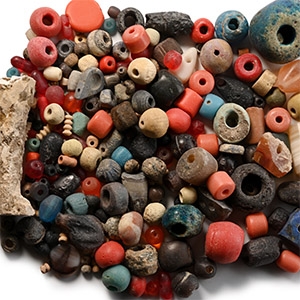
Mixed Ancient Bead Collection
1st millennium B.C. and laterSold for (Inc. bp): £59
Including fusiform, oblate biconical, polyhedral and other types in glass, and other materials. 107 grams total, 1-43 mm
London, UK, collection, 2000s. -
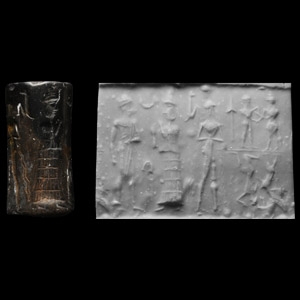
Old Babylonian Cylinder Seal with God Holding Mace
1900-1600 B.C.Sold for (Inc. bp): £975
Depicting two sets of figures; accompanied by a museum quality impression and a copy of an old scholarly note, typed and signed by W.G. Lambert, late Professor of Assyriology, University of Birmingham, 1970-1993, which states: 'Cylinder Seal of Hematite, 29.5 x 15 mm. The engraving consists of two separate sets of figures, the first consisting of two standing facing figures. on the right is a Lamma, wearing a horned tiara and long flounced robe. She raises both hands in greeting to the figure on the left. he is the god with mace, wearing a hat with broad brim and garments which reach only to the knees. In his right hand he holds a sceptre at the waist. In the sky between the two figures is the lunar crescent, and between them near the ground is a shepherd's crook. This pair of figures, like the whole, is Old Babylonian, and dates c. 1900-1700 B.C. The remainder of the engraving was added later, but not after 1600 B.C. There is one isolated figure, standing, but with his head not reaching the top of the seal. He appears to be nude and holds a spouting jar in both hands at his waist, from which two streams of water flow. By his head is the 'mongoose' (or monkey), and the spade symbol fills the space opposite the 'mongoose'. The rest of the area is divided vertically by a line, and each half contains a pair of contestants, put tête bêche to each other. The upper pair are a grappling human-like figure and bull man, the lower pair are a human-like figure grappling with a winged monster. Not enough is known to be sure whether this seal comes from southern or northern Mesopotamia, but it is of considerable interest for the two separate groups of figures engraved by different craftsmen. There is some surface wear, but the whole of the design is well preserved.' 18.45 grams, 29 mm
UK private collection, acquired 1990-1993. Accompanied by a copy of a scholarly note, typed and signed by Professor Wilfrid George Lambert in 1990.
Seals were the working signatures of the ancient Near East. Pressed or rolled into wet clay, they secured jars, bags, doors and tablets, and left a distinct impression that identified the owner, authorised a transaction, and showed whether a container had been opened. Stamp seals (pressed once to leave a single emblem) appear from the 7th–4th millennia BC and continue throughout later periods; cylinder seals (rolled to create a repeating frieze) developed in Mesopotamia in the late 4th millennium BC and are used into the 1st millennium BC. Beyond administration, seals were miniature artworks and amulets. Their images—gods and worshippers, royal hunts, banquets, heroes and mythic beasts—broadcast rank, piety and profession, and were believed to protect the owner. Materials range from soft stones to hard chalcedonies, haematite and lapis, worked with drills and abrasives to achieve crisp intaglio cutting. Many were worn on cords or rings and followed their owners through life, sometimes into the grave. Seals matter because they underpin the earliest systems of record-keeping and trade. Impressions on tablets and bullae are primary documents for ancient law, economy and religion; the seals themselves preserve that imagery in the round. For collectors, well-cut examples with sharp impressions, good polish and honest ancient wear are especially desirable, and pieces with early collection histories are keenly sought.
