
Loading, please wait...
LOT 2334
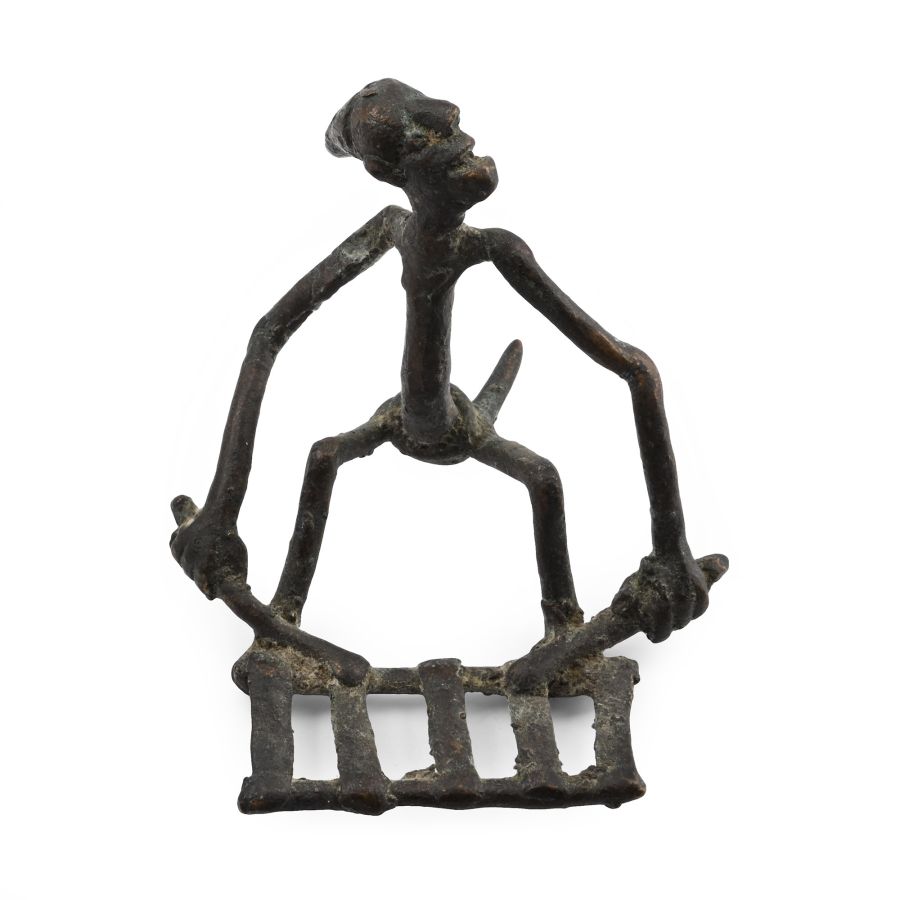
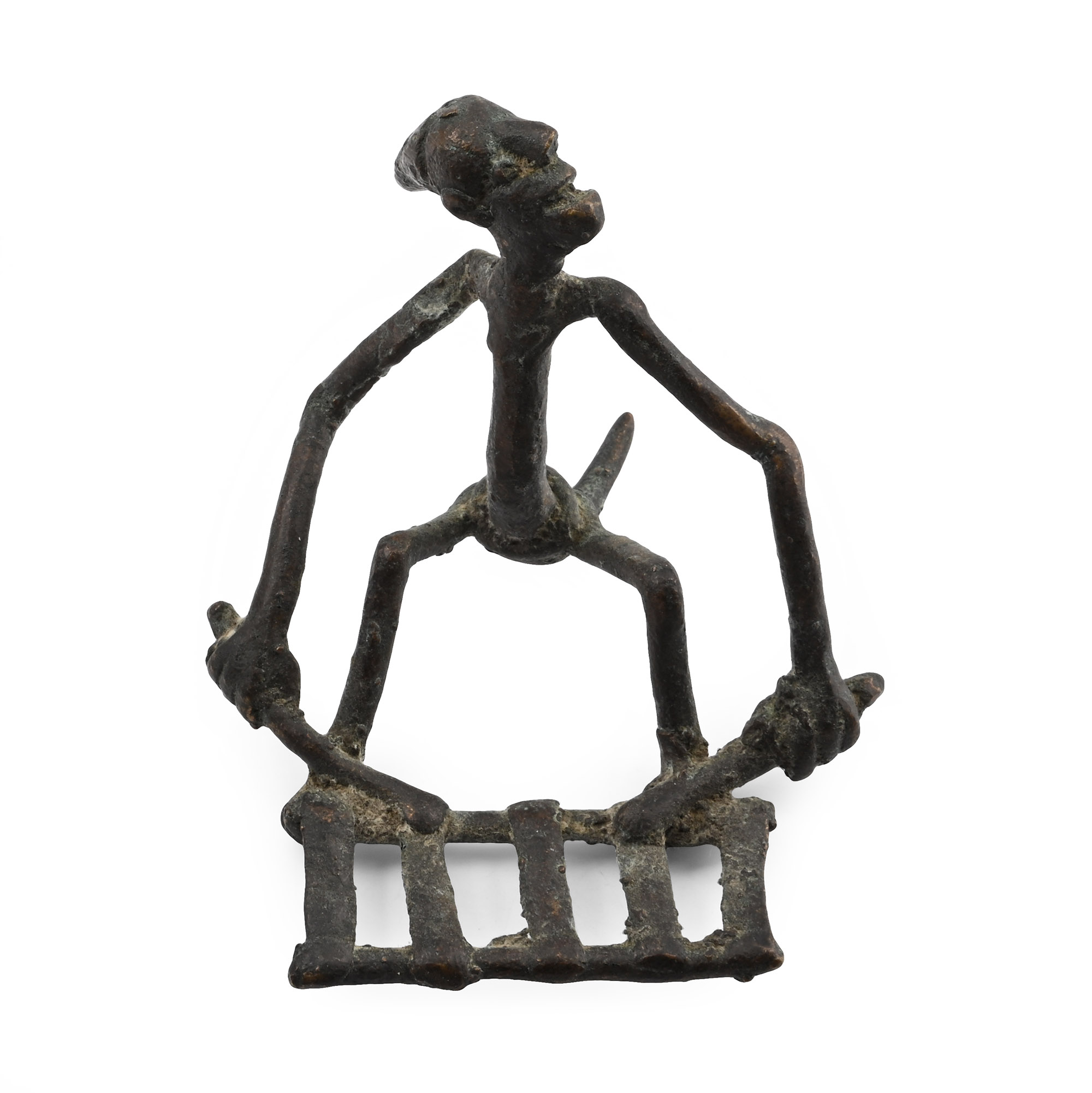
West African Bronze Figure of a Musician
19TH-20TH CENTURY A.D.
3 5/8 in. (89 grams, 93 mm).
Figure of a musician playing a type of xylophone with a beater in each hand. [No Reserve]
ProvenanceFrom an old Oxford, UK, collection.
From the property of a late Lincolnshire, UK, gentleman.
TimeLine Auctions follows a vetting process to ensure the authenticity and legality of all items, reinforcing our commitment to integrity and responsible trading. Each antiquity, antique, and coin lot undergoes thorough examination by a vetting committee of at least ten external specialists, professional trade association members, scientists, and archaeologists: Our Vetting Process
AUCTIONS:
TimeLine is a leading auction house specialising in antiquities, ancient art, collectables, natural history, coins, medals, and books. Our auctions offer museums, collectors, historians, and enthusiasts the opportunity to acquire unique and historically significant pieces.
-
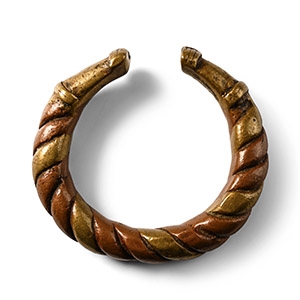
African Bi-Metal Slave Bracelet
19th century A.D.Sold for (Inc. bp): £20
Penannular in form and D-shaped in section formed from bronze and brass coils, with clubbed beast-head finials. 182 grams, 76 mm
Private collection, London, UK. -
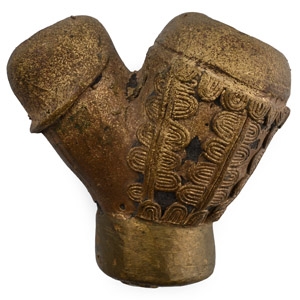
Central African Brass Smoking Pipe Bowl
Early-mid 20th century A.D.Sold for (Inc. bp): £7
Comprising an elongated bowl with rounded rim and bands of integral geometric ornament to the sidewall, drum-shaped foot, angled hoe to accept the drawing pipe. 336 grams, 88 mm
From Cameroon, Cental Africa. From an old Dorset, UK, specialist collection. From the property of a late Lincolnshire, UK, gentleman.
Cameroon had by far the most elaborate smoking culture in Africa and the tobacco pipe was a highly respected item, both as a daily commodity and as an object with solemn ceremonial function. -
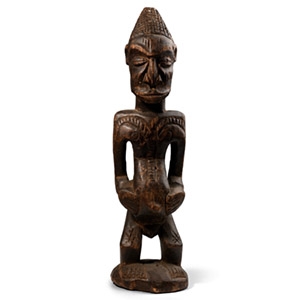
African Wooden Fertility Figure
Yoruba Tribe, mid 20th century A.D.Sold for (Inc. bp): £39
Carved in the round standing male figures with tall hatched headdress extending to the rear, hands placed either side of his distended abdomen, knees flexed, standing on a plano-convex base. 1.1 kg, 48.5 cm
From South West Nigeria, West Africa. From the property of a late Lincolnshire, UK, gentleman.
The Yoruba are the largest nation in Africa with an art-producing tradition. Their figures, more often of Shango (also spelled Sango and Sagoe), deity of thunder and lightning are carved from wood and kept in shrines.
