
Loading, please wait...
LOT 0296
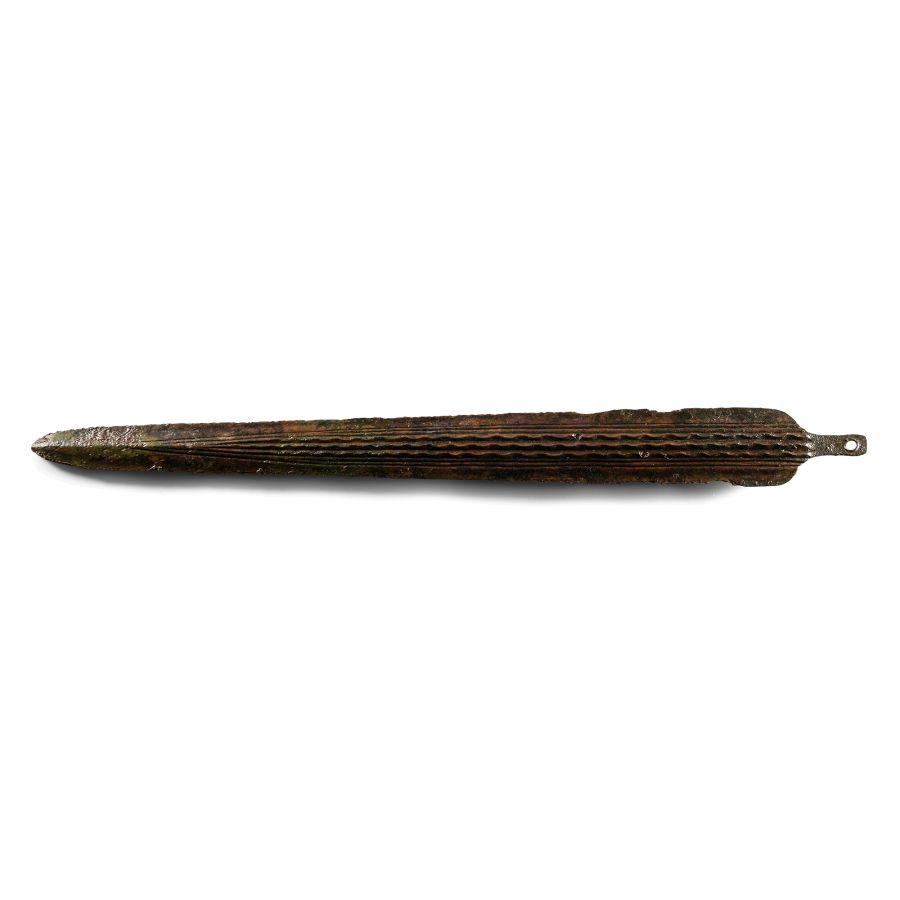
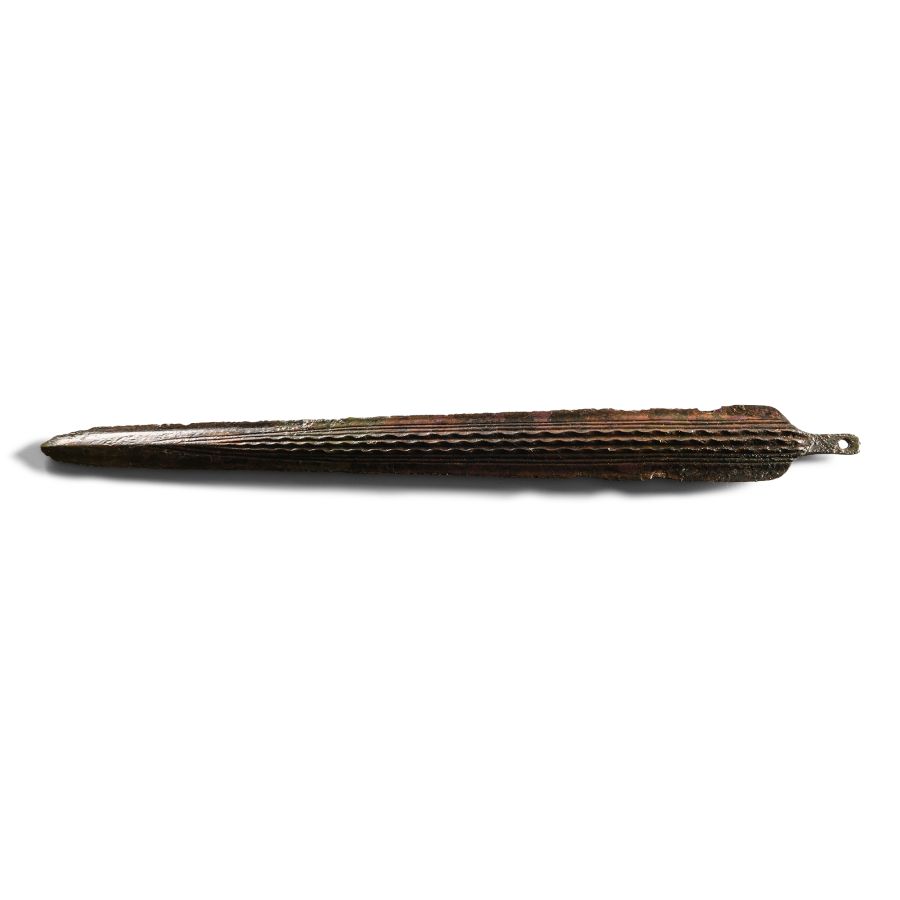
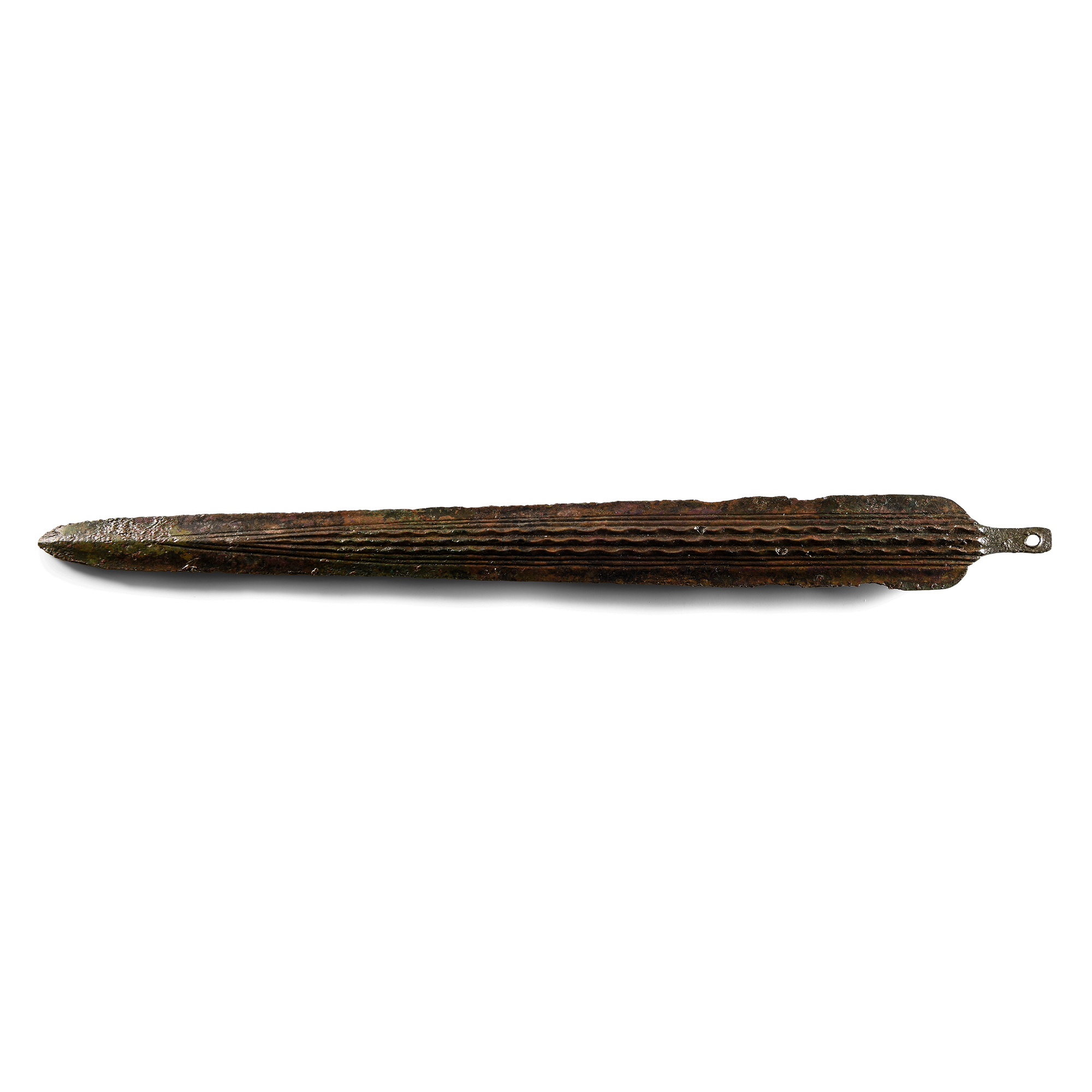
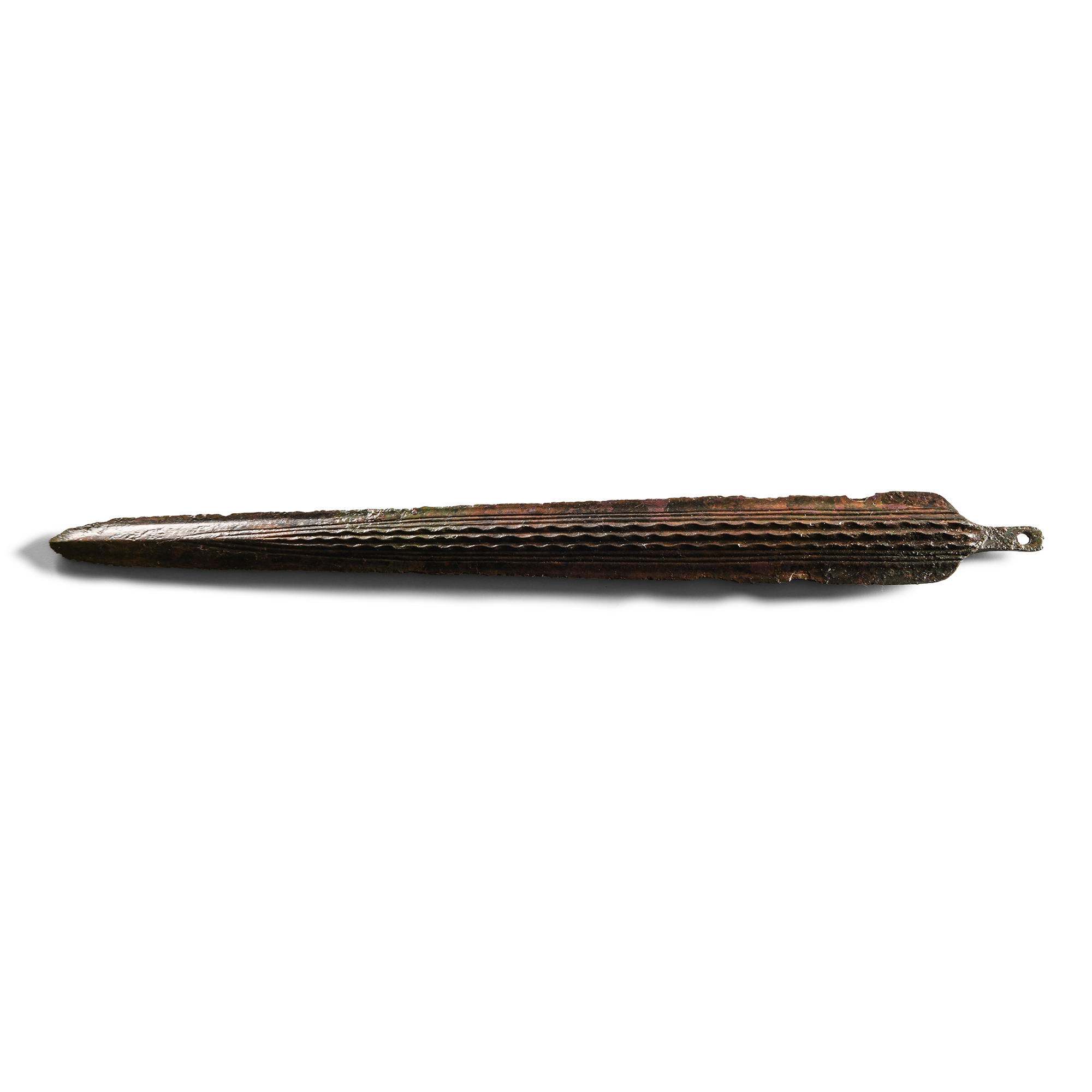
Wavy Blood Channelled Bronze Short-Sword
LATE 2ND MILLENNIUM B.C.
13 3/8 in. (258 grams, 34 cm).
A North-Western Persian dagger or short-sword blade with rounded shoulders and thick mid-rib with undulated blood-channels running to the blade tip; short tang with fastening hole.
ProvenanceAcquired 1980-2015.
Ex Abelita family collection.
Cf. Thrane, H., ‘Tepe Guran and the Luristan Bronzes’ in Archaeology, Vol. 23, No.1, January, 1970, pp. 26-35, fig.p.30, for a similar dagger with a simpler mid-rib.
FootnotesThe Luri people produced a quantity of fine metalwork, which according to Dr Khorasani, could be due to a settled period which arose as a result of the defeat of the Elamites by the Babylonians, leaving the Luristani people in relative peace for a period of time after 1200 BC. According to Khorasani 'A culture of innovation and experimentation flourished, and the repertoire of the Luristan smiths expanded in the period between 1150-1050 BC.'.
CONDITIONTimeLine Auctions follows a vetting process to ensure the authenticity and legality of all items, reinforcing our commitment to integrity and responsible trading. Each antiquity, antique, and coin lot undergoes thorough examination by a vetting committee of at least ten external specialists, professional trade association members, scientists, and archaeologists: Our Vetting Process
AUCTIONS:
TimeLine is a leading auction house specialising in antiquities, ancient art, collectables, natural history, coins, medals, and books. Our auctions offer museums, collectors, historians, and enthusiasts the opportunity to acquire unique and historically significant pieces.
LOT 0296
Wavy Blood Channelled Bronze Short-Sword
Estimate £600 - 800€700 - 930 (for guidance only)$810 - 1,080 (for guidance only)
-
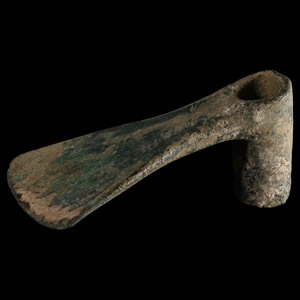
Luristan Bronze Socketted Adze
13th-7th century B.C.Sold for (Inc. bp): £117
With short tubular socket and flared cutting edge perpendicular to the socket. 590 grams, 14.5 cm
From an old English collection formed in the 1980s. Property of an Essex gentleman; acquired on the UK art market. -
.jpg)
Viking Age Bronze Sword Scabbard Chape Collection
9th-11th century A.D.Estimate: £500 - 700 (‡+bp*)
Opening Bid: £250
Comprising: one heater-shaped with openwork raven motif to each face; one similar with openwork raven enmeshed in tendrils; one with fleur-de-lys to the centre of each upper edge and a lobed spur to each side; one with openwork quatrefoil to each face and knop finial to the apex. 145 grams total, 55-85 mm
From the collection of a North American gentleman, formed in the 1990s. -
Iron Age Celtiberian Dagger
Circa 2nd-1st century B.C.Sold for (Inc. bp): £975
Hand-forged with leaf-shaped blade and three pronounced midribs, rounded shoulder, stepped lower guard square-section tang, upper guard with stepped upper face. 186 grams, 37.5 cm
Ex Mayfair gallery, London, UK, before 1999. Property of a London, UK, gentleman. Accompanied by a copy of a previous catalogue information page.
