
Loading, please wait...
LOT 2002
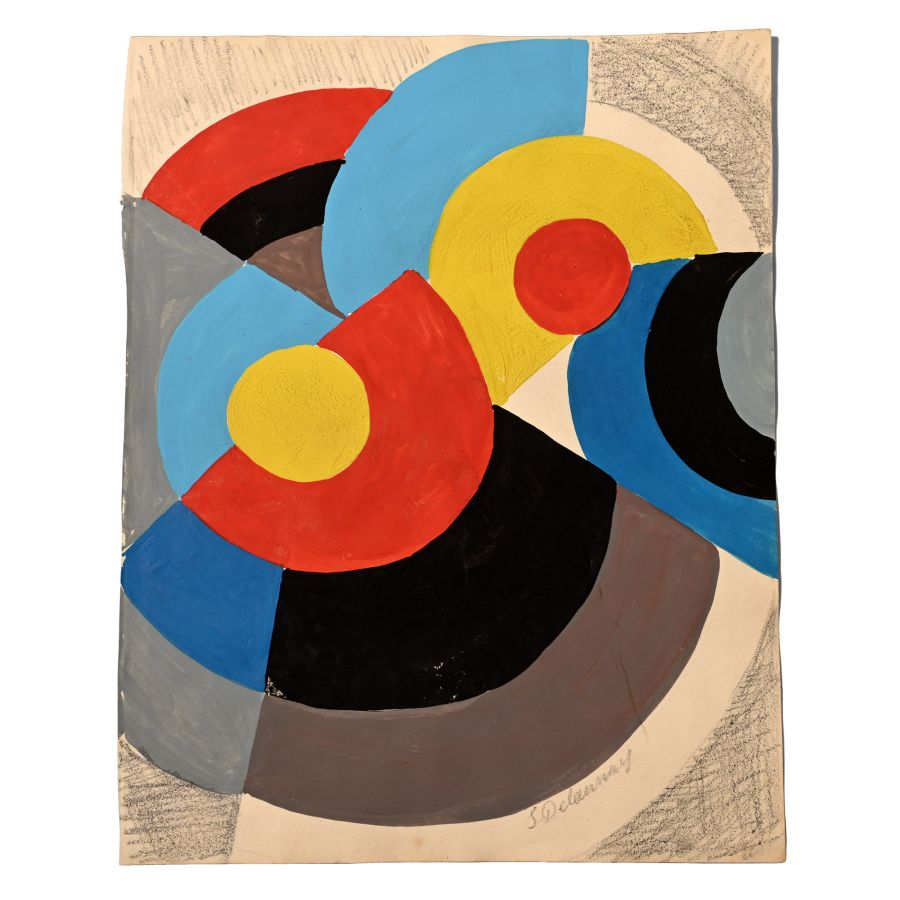
Watercolour Painting, Attributed to Sonia Delaunay (1885-1979)
19TH-20TH CENTURY A.D.
10 x 7 7/8 in. (7 grams, 25.6 x 20 cm).
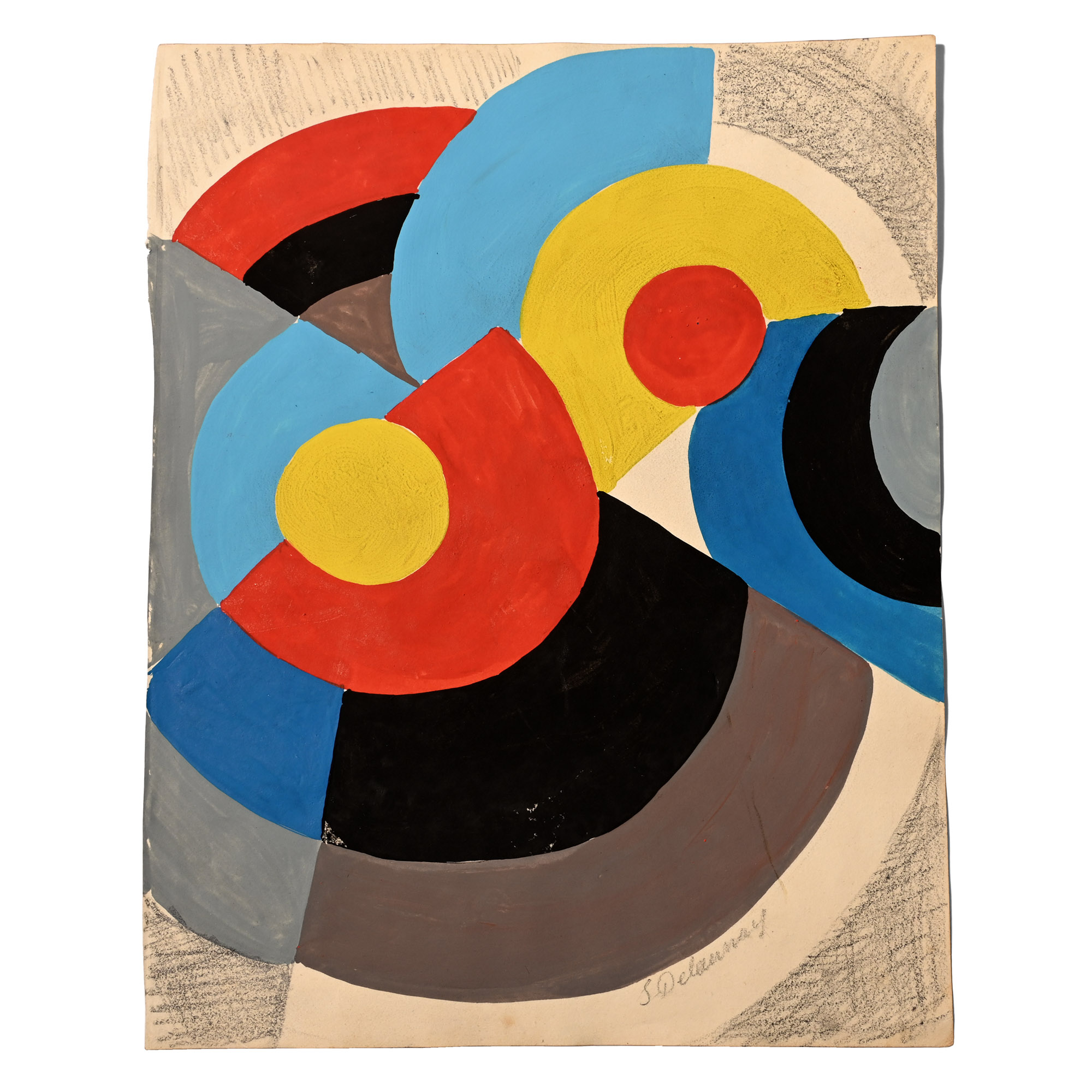
An abstract painting of watercolour on paper, showing geometric motifs in contrasting colours, signed in pencil to the lower right hand corner 'S Delaunay'. [No Reserve]
ProvenancePrivate collection of a London gentleman, acquired between 1965-2020.
This lot is accompanied by an illustrated lot declaration signed by the Head of the Antiquities Department, Dr Raffaele D'Amato.
TimeLine Auctions follows a vetting process to ensure the authenticity and legality of all items, reinforcing our commitment to integrity and responsible trading. Each antiquity, antique, and coin lot undergoes thorough examination by a vetting committee of at least ten external specialists, professional trade association members, scientists, and archaeologists: Our Vetting Process
AUCTIONS:
TimeLine is a leading auction house specialising in antiquities, ancient art, collectables, natural history, coins, medals, and books. Our auctions offer museums, collectors, historians, and enthusiasts the opportunity to acquire unique and historically significant pieces.
LOT 2002
Watercolour Painting, Attributed to Sonia Delaunay (1885-1979)
Sold for (Inc. bp): £1,820
-
Stuart Period Gold Ring with Jupiter Gemstone
17th century A.D.Estimate: £3,000 - 4,000 (+bp*)
Opening Bid: £1,600
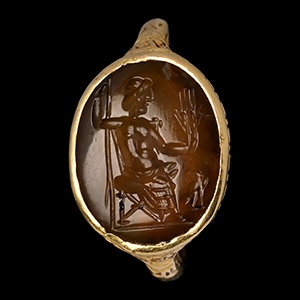
Bezel with petal detailing extending to the underside and shoulders, inset onyx intaglio with figure of Jupiter seated on a throne with perching eagle and flame in his extended hand; supplied with a museum-quality impression. 7.64 grams, 24.67 mm overall, 17.09 mm internal diameter (approximate size British N 1/2, USA 6 3/4, Europe 14.35, Japan 13)
Acquired on the London art market in the late 1980s-1990s. From the family collection of an East London, UK, gentleman. This lot has been checked against the Interpol Database of stolen works of art and is accompanied by a search certificate no.12349-222567. This lot has been cleared against the Art Loss Register database, and is accompanied by an illustrated lot declaration signed by the Head of the Antiquities Department, Dr Raffaele D'Amato. -
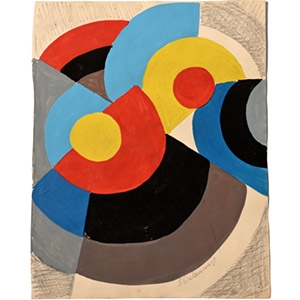
Watercolour Painting, Attributed to Sonia Delaunay (1885-1979)
19th-20th century A.D.Sold for (Inc. bp): £1,820
An abstract painting of watercolour on paper, showing geometric motifs in contrasting colours, signed in pencil to the lower right hand corner 'S Delaunay'. 7 grams, 25.6 x 20 cm
Private collection of a London gentleman, acquired between 1965-2020. This lot is accompanied by an illustrated lot declaration signed by the Head of the Antiquities Department, Dr Raffaele D'Amato. -
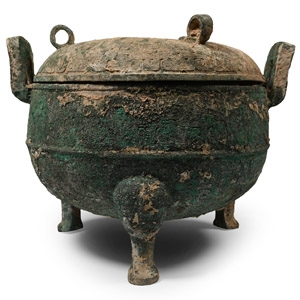
Chinese Archaic Style Bronze Vessel
20th century A.D.Estimate: £120 - 170 (+bp*)
Opening Bid: £60
Drum-shaped pan with ring to the equator and three curved legs, square loops to the rim, domed lid with three loops; dense low-relief cloud pattern. 2.66 kg, 25.5 cm wide
Ex West Country, UK, collection, 1990s, and Desmond Morris. This lot is accompanied by an illustrated lot declaration signed by the Head of the Antiquities Department, Dr Raffaele D'Amato.
