
Loading, please wait...
LOT 1925
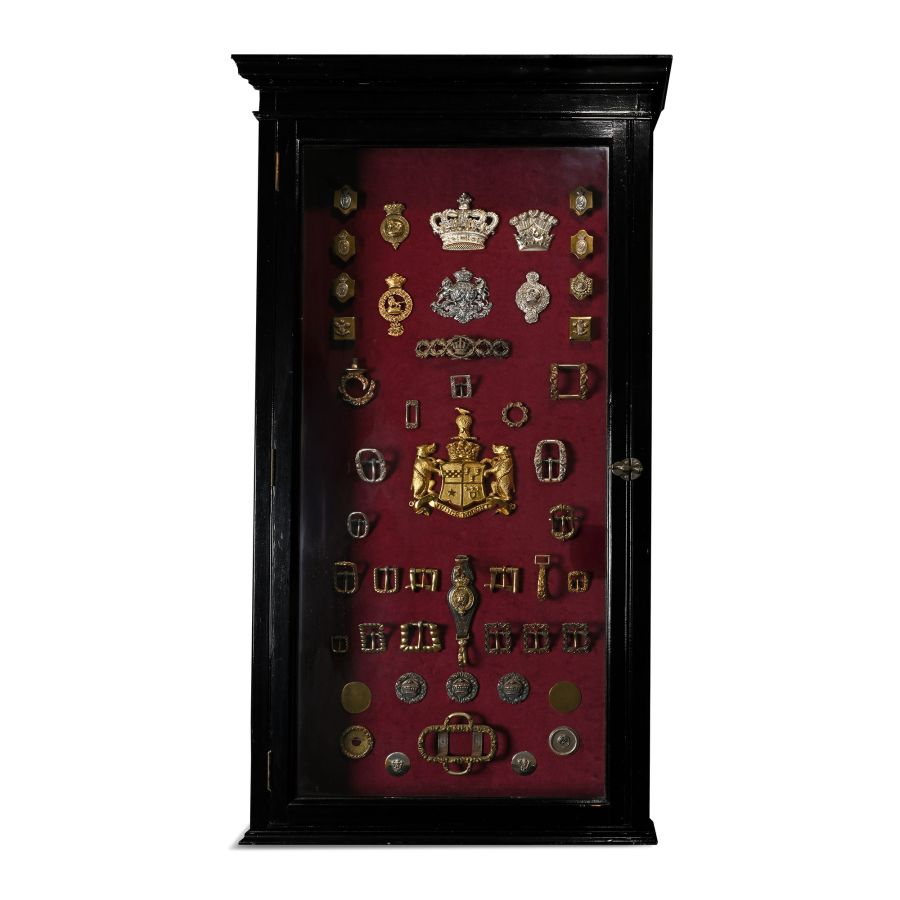
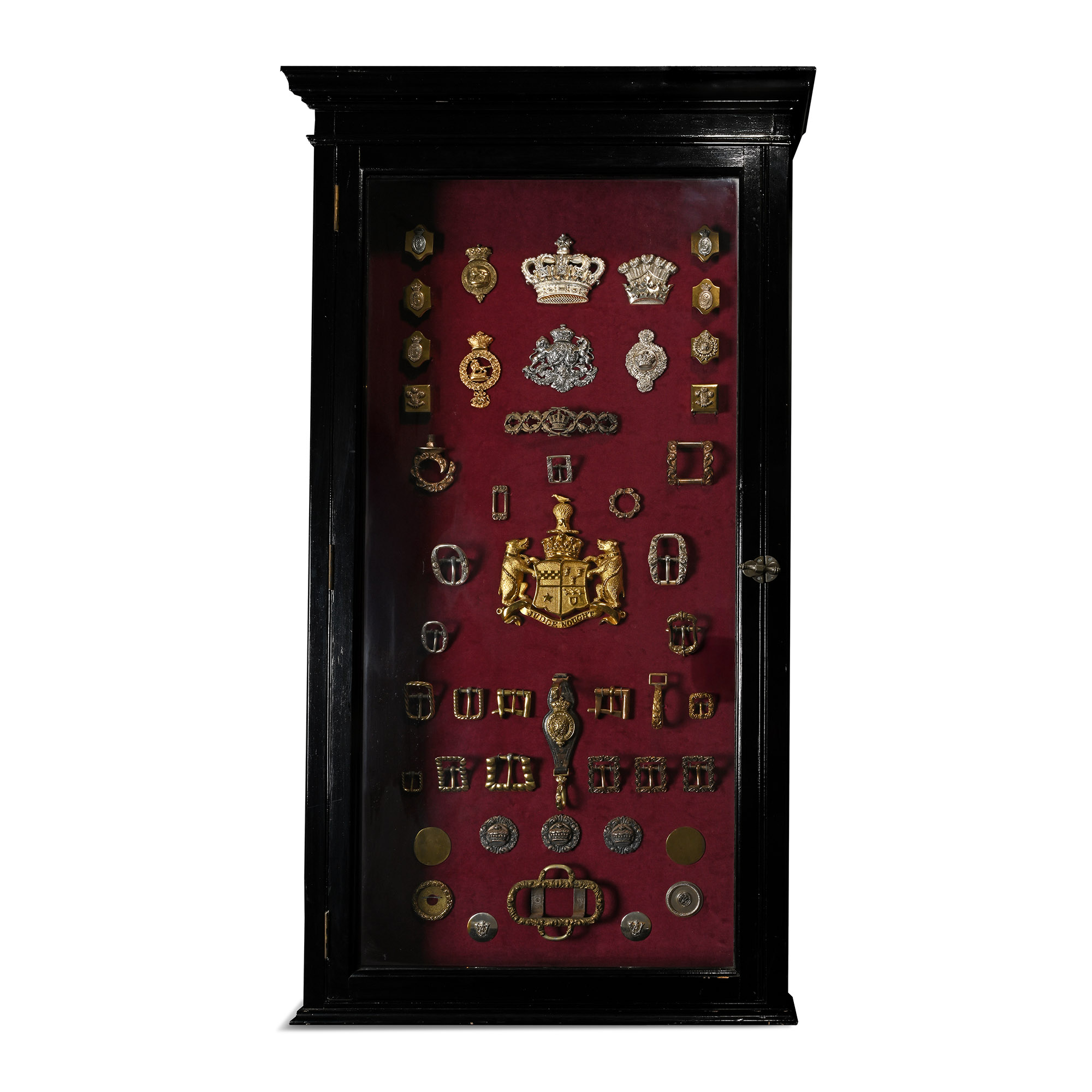
Wall Cabinet Containing an Assembly of Military and Livery Badges
52 x 26 3/4 x 5 1/2 in. (23.8 kg, 132 x 68 x 14 cm).
A display of forty-six livery and military badges and metalled horse trappings, housed in a glazed wall cabinet with opening front.
ProvenanceEx Morningthorpe Manor, Norfolk, UK.
FootnotesThe parish of Morningthorpe is situated in south Norfolk, east of Long Stratton and west of Hempnall. The parish was certainly well established by the time of the Norman Conquest, its population, land ownership and productive resources being detailed in the Domesday Book of 1086.
CONDITIONTimeLine Auctions follows a vetting process to ensure the authenticity and legality of all items, reinforcing our commitment to integrity and responsible trading. Each antiquity, antique, and coin lot undergoes thorough examination by a vetting committee of at least ten external specialists, professional trade association members, scientists, and archaeologists: Our Vetting Process
AUCTIONS:
TimeLine is a leading auction house specialising in antiquities, ancient art, collectables, natural history, coins, medals, and books. Our auctions offer museums, collectors, historians, and enthusiasts the opportunity to acquire unique and historically significant pieces.
LOT 1925
Wall Cabinet Containing an Assembly of Military and Livery Badges
Estimate £1,000 - 1,400€1,160 - 1,620 (for guidance only)$1,350 - 1,890 (for guidance only)
-
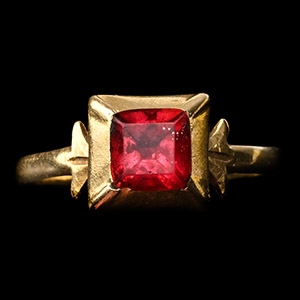
Post Medieval Gold Ring with Red Glass
Italy, 18th century A.D.Sold for (Inc. bp): £1,170
With a slender D-section hoop, raised rectangular bezel set with glass paste in a red-foiled setting. 2.13 grams, 23.86 mm overall, 18.06 mm internal diameter (approximate size British P, USA 7 1/2, Europe 16.23, Japan )15
Private collection, UK. -
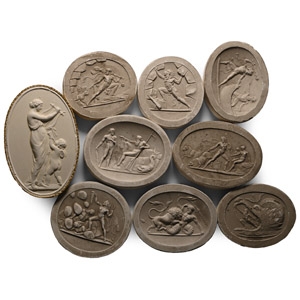
Greek Plaster Cast Collection
Late 19th-early 20th century A.D.Sold for (Inc. bp): £156
Comprising casts taken from cameos and intaglios featuring labours of Hercules and other subjects, smaller ones numbered. 135 grams total, 50-76 mm
From a private Tyneside collection, formed since the early 2000s. -
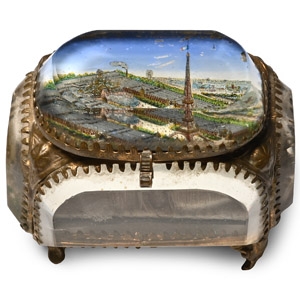
Parisian Lidded Ring Box
20th century A.D.Sold for (Inc. bp): £46
A small lidded box with brass frame and silk lined cushion, the lid with a painted Eiffel Tower scene. 176 grams, 78 mm
From a private Tyneside collection, formed since the early 2000s.
